Destinations: Madrid ↔ Shanghai Direct Flight
This 10‑day educational study tour departs and returns via direct Madrid‑Shanghai flights, designed exclusively for Spanish ESO, Bachillerato and Erasmus+ student delegations. It strikes a balanced learning journey between ancient Chinese civilisation, cutting‑edge digital technology, classical arts and peer‑to‑peer school exchange. We recommend travelling during Spanish summer holidays, Semana Santa or Christmas breaks. All activities, learning worksheets and final certificates are aligned with Spanish curriculum requirements, with optional Spanish‑speaking on‑site assistance to remove language barriers. Visit our Help Center for visa, flight and safety guidance.
Target group: Spanish ESO / Bachillerato student groups
Best travel window: Spanish summer holiday (late June – mid‑September), Semana Santa (Easter week) and Christmas break
Core themes: Modern technology + ancient Chinese history & culture
Start & End airport: Madrid Barajas (MAD) ↔ Shanghai Pudong (PVG) (direct flight)
Note: Flight numbers and timings are for reference only. We reserve group seats 3–5 months in advance for school holiday periods.
Early morning group assembly at Madrid Barajas Airport. Our team supports teachers with group check‑in, passport verification, document review and baggage inspection. Students receive a final pre‑flight briefing covering basic Mandarin phrases, cross‑cultural etiquette and group safety rules. Board the direct flight to Shanghai. Light meals and drinks are served on board. Students can rest or complete simple pre‑tour reflection tasks. Arrive at Shanghai Pudong Airport the next morning. Our local educational guide waits at the arrival hall with a PandaStudyTour sign. Private air‑conditioned coach transfers the whole group to the centrally located hotel. Check‑in, simple welcome lunch and early rest to ease jet lag.
Morning guided visit to Shanghai Museum. Students explore bronze wares, ancient ceramics and calligraphy exhibits, with guided explanations linking artefacts to Chinese dynastic history. Students work on their Erasmus+ learning worksheet to record observations. Afternoon: Visit a high‑tech innovation park and AI or smart manufacturing enterprise. Students tour R&D labs, watch product demonstrations and join a Q&A session with young engineers. The session focuses on digital innovation, sustainable development and China’s tech talent training. Evening: Walking tour along the Bund. Students compare historic colonial architecture with the futuristic skyline of Pudong across the Huangpu River. Brief introduction to Shanghai’s urban transformation. Group dinner and back to hotel.
Morning: Scheduled China‑Spain school pairing exchange. Spanish students meet their Chinese buddy students. Activities include classroom observation, short student presentations on education and daily life in Spain and China, group discussion and ice‑breaker games. Teachers join a peer exchange meeting with the host school’s teaching team. Afternoon: Hands‑on cultural workshop. Professional folk artists teach Chinese calligraphy and paper‑cutting. Each student creates their own artwork to take home. The guide explains the cultural meaning behind these intangible heritage crafts. Evening: Group dinner, free quiet time for students to write travel journals. Teachers hold a short daily debrief with our local coordinator.
Morning: Transfer to Shanghai Hongqiao Railway Station and board high‑speed train to Suzhou (approx. 25 minutes). Students experience China’s high‑speed rail system as part of the learning content. Full‑day Suzhou classical garden visit, focusing on the philosophy of Chinese landscape design, spatial layout and harmony between buildings and nature. Afternoon: Suzhou Silk Museum and silk weaving workshop. Students learn about the ancient Silk Road trade, traditional sericulture and weaving techniques. They can touch raw silk and watch live demonstrations by artisans. Overnight in Suzhou.
Morning breakfast, check out and travel to Suzhou railway station for the high‑speed train to Xi'an. This long rail journey gives students a chance to observe the changing landscape of eastern and central China. Afternoon arrival in Xi'an. Check into hotel, then cycle along the ancient Xi'an City Wall. The guide explains the city's history as the starting point of the Silk Road, military defence functions and urban planning of ancient capitals. Evening: Optional Tang Dynasty cultural performance (extra cost). Group dinner with local Shaanxi cuisine. Overnight in Xi'an.
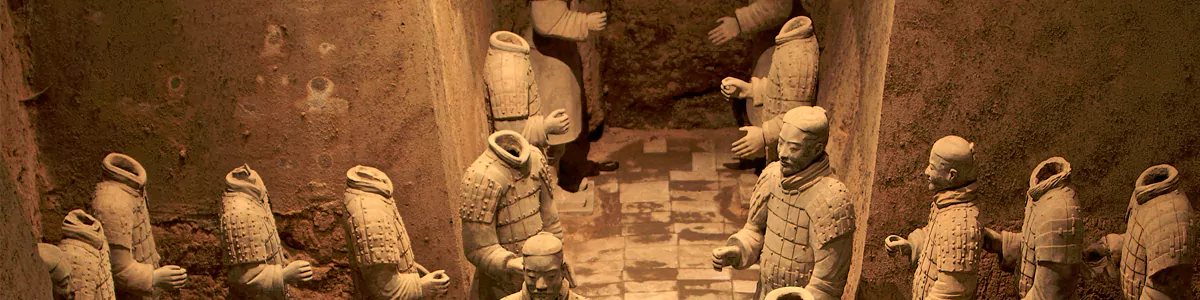
Full day dedicated to the Terracotta Army of Qin Shi Huang. The educational guide delivers a curriculum‑adapted explanation of the archaeological discovery, ancient military organisation, sculpture art and Qin Dynasty history. Students complete worksheet questions about archaeology and ancient technology. Afternoon: Visit Big Wild Goose Pagoda and the Tang cultural pedestrian district. Learn about the spread of Buddhism, Tang Dynasty international trade and cultural exchange. Students have time to observe traditional Tang‑style costumes and folk performances. Return to hotel for rest.
Morning check out and transfer to Xi’an North Railway Station for the high‑speed train to Hangzhou. Afternoon arrival in Hangzhou, check‑in. Take a relaxing West Lake cruise. The guide introduces classic Chinese poetry, landscape aesthetics and the cultural stories behind West Lake. Students enjoy the lakeside scenery and discuss how nature shapes Chinese art and literature. Evening: Local Zhejiang cuisine dinner, featuring fresh lake ingredients. Overnight in Hangzhou.
Morning: Visit a leading e‑commerce and digital economy enterprise in Hangzhou. Students learn about China's e‑commerce ecosystem, big data applications, live streaming commerce and supply‑chain operation. The Q&A session covers entrepreneurship, digital marketing and global online trade, perfectly matching social science and business curriculum topics. Afternoon: Longjing tea plantation and tea‑making experience. Students walk through the tea terraces, learn about tea planting, hand‑firing techniques and traditional tea ceremony culture. They taste fresh Longjing tea and understand the integration of traditional agriculture and modern branding. Back to hotel.
Morning: Check out and take high‑speed train back to Shanghai. Afternoon: Formal group reflection session. Students share their biggest discoveries and cross‑cultural insights. They finish Erasmus+ evaluation forms and learning logs. We issue digital participation certificates for every student and teacher. Short free time for souvenir shopping at a local cultural supermarket. Evening: Farewell group dinner to celebrate the completion of the study tour. Pack luggage for departure the next day.
Early morning check out from hotel. Private coach transfer to Shanghai Pudong Airport. Our coordinator assists teachers with airport procedures, customs guidance and document check. Board the direct flight back to Madrid. Arrive at Madrid Barajas on the same local day, concluding the Erasmus+ study tour.