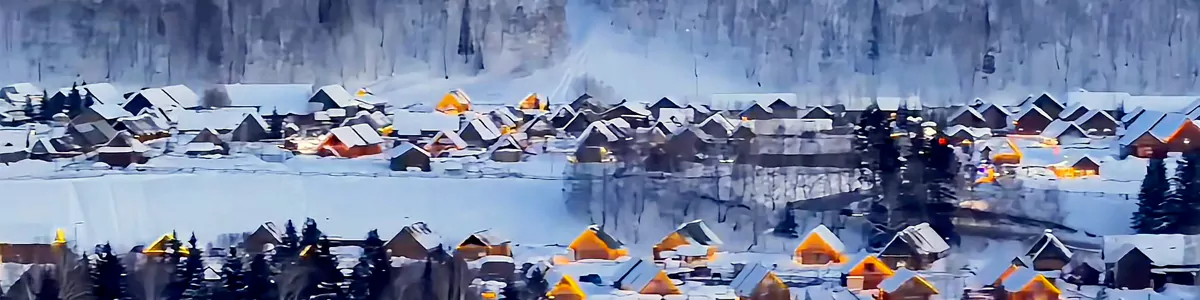
Destinations: Tuva Ethnic Winter Camp
This snow‑science‑themed winter camp centers on Altay, widely celebrated as China's "Snow Capital", where stable, high‑quality snowpack and pristine boreal forest create a natural outdoor classroom. Beyond spectacular winter scenery, this program balances environmental science education, outdoor winter safety training and deep cultural immersion with the indigenous Tuva community. Students will move beyond passive sightseeing to conduct guided field observations, record snow data in custom study journals, learn basic alpine survival principles, and stay inside traditional wooden log cabins. They will share daily life with local Tuva families, join cross‑cultural activities with local youth, and witness how this nomadic community adapts to long, freezing winters. Each student will complete a small group research project about snow ecology or Tuva winter traditions and present findings at the closing ceremony. This itinerary is ideal for students who love nature, outdoor exploration and experiential learning.
Tour Highlights
Day1 Urumqi Arrival
Your international student group lands at Urumqi Diwopu International Airport. Our bilingual camp leaders will meet you right after immigration, assist with baggage collection, and escort the whole group on a private coach transfer to the pre‑booked comfortable hotel. After check‑in, we hold an opening orientation briefing. Our camp coordinator will walk through the full camp schedule, strict winter safety protocols, cold‑weather protection rules, learning objectives, and introduce the customized student study workbook that every student will use throughout the trip. We also share practical tips on how to adjust to the dry, cold climate of Xinjiang. In the evening, enjoy a welcome dinner featuring classic local Xinjiang dishes, and students have time to relax and get ready for the journey north to Altay.
Day2 Urumqi → Altay (Domestic Flight)
Early in the morning, transfer to Urumqi airport for your domestic flight to Altay. Upon arrival in Altay, our local team greets the group and transfers you to your hotel. After settling in, we head to the Altay Snow Science Exhibition Hall in the afternoon. Professional snow scientists and instructors will deliver a special lecture covering the local snow formation mechanism, regional winter climate characteristics, alpine wildlife distribution and forest ecological protection work. After the indoor lecture, we move outdoors for a hands‑on snow‑crystal observation practice. Students use portable magnifying tools to examine fresh snowflakes, record differences in crystal shapes and learn how temperature and humidity affect snow structures. In the evening, we organize a guided group sharing session; students write down their first observations and raise questions for the science team.
Day3 Altay: Ski Experience & Snow‑Science Field Study
Morning: Travel to Jiangjun Mountain Ski Resort, one of China's top alpine ski destinations. Professional certified ski coaches split students into small groups according to age and skill level for beginner skiing lessons. Students learn fundamental skiing postures, stopping techniques, turning skills and critical winter outdoor safety knowledge, including how to identify avalanche risk signs and self‑rescue basics. Afternoon: We launch a snow ecosystem field investigation. Students hike along marked, safe forest trails to observe snow cover thickness, examine how native trees and shrubs adapt to heavy snow and freezing temperatures, and document winter animal traces such as footprints in the snow. Each student fills in their field notes and sketches the landscape in their workbook. Evening: A warm bonfire activity is arranged, accompanied by live local folk music and traditional performances. Students can interact with local artists and experience the joyful winter atmosphere of Altay.
Day4 Altay → Hemu Village
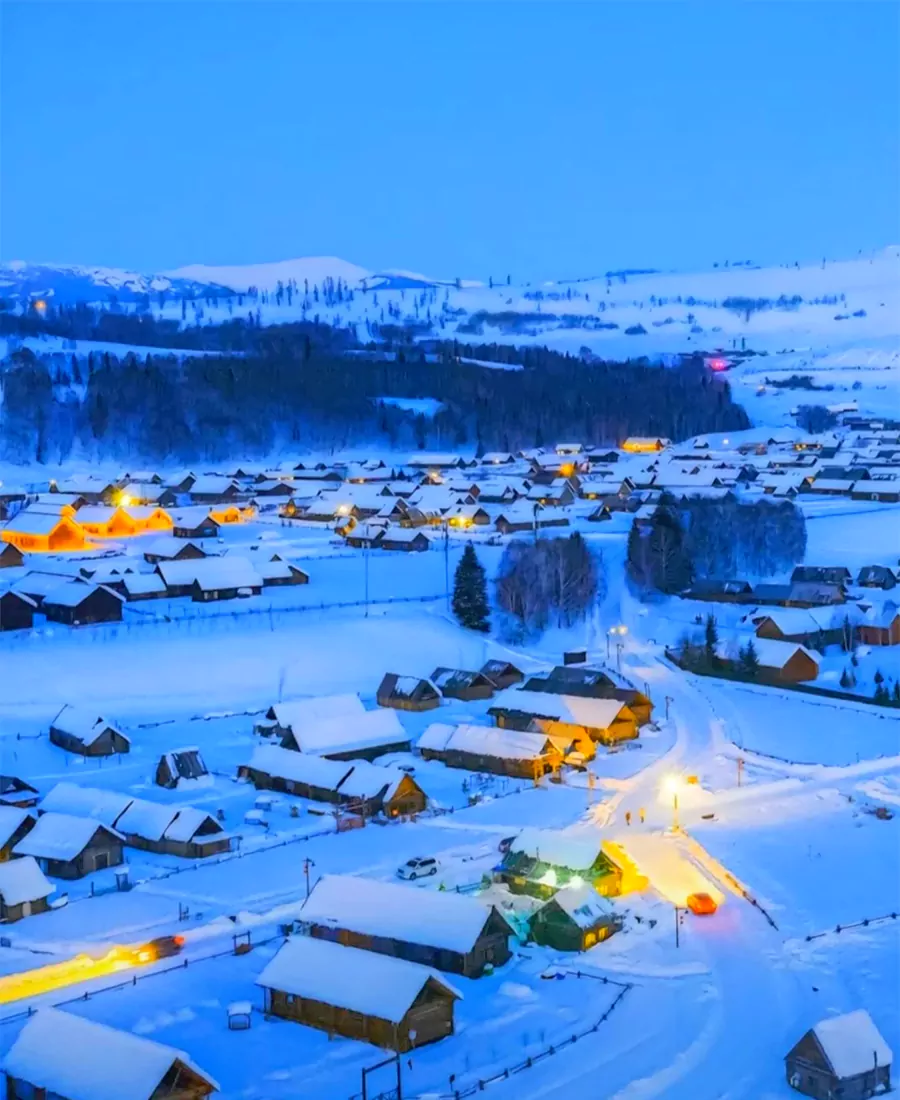
We depart Altay by private coach and travel toward Hemu, the iconic snow village of the Tuva people. The drive passes rolling snow‑covered hills and frozen streams, offering plenty of photo opportunities. After arriving at Hemu, check into distinctive local wooden log cabins built with traditional Tuva construction techniques. In the afternoon, we take a slow guided walking tour through the quiet snow village. We visit Tuva households, learn about their log‑cabin architecture, winter heating methods, food storage traditions and nomadic winter lifestyles. Students join a folk handicraft workshop, trying their hand at simple traditional Tuva crafts under the guidance of local artisans. In the evening, everyone gathers for a warm local hot pot dinner, perfect for the cold mountain weather.
Day5 Hemu Village Cultural Immersion
Early in the morning, we climb the Haden viewing platform to watch the sunrise spill over the snow‑covered rooftops and forest of Hemu. This is one of the most famous winter views in northern Xinjiang. Back down to the village after sunrise, we start a full cross‑cultural exchange session with local middle school students. Students from both sides take part in collaborative group games, cultural sharing presentations and casual conversations, exchanging stories about school life, hobbies and festivals.
Afternoon: Fun guided snow activities including ice skating and snowshoe hiking on designated safe routes. Students learn how to walk steadily on deep snow with snowshoes and explore the outskirts of the village.
Evening: A professional astronomy guide hosts a star‑gazing field lesson. The winter mountain sky here has extremely low light pollution. Students learn to identify major winter constellations, use portable telescopes and record what they observe for their science projects.
Day6 Hemu → Kanas Scenic Area
We transfer to Kanas National Scenic Area in the morning. Inside the scenic zone, we visit the famous Three Bays: Shenxian Bay, Moon Bay and Wolong Bay. Under winter conditions, the river sections are partially frozen, creating stunning fog‑rime, ice ribbons and smooth frozen lake surfaces. Our ecology instructor delivers a guided lecture on boreal forest ecology, the food chain in winter and the conservation work protecting Kanas’ unique aquatic and terrestrial wildlife. We take slow walks along the boardwalks for observation and photography. We stay overnight inside the Kanas scenic area to fully enjoy the quiet winter forest environment.
Day7 Kanas → Altay
In the morning, we take a gentle guided hike along the shore of frozen Kanas Lake. Students continue to collect observation data, finish remaining field notes and start sorting materials for their final group presentation. After the hike, we pack up and drive back to Altay. The evening is reserved for group project work. Students work in teams to organize photos, data and stories they collected during the camp, prepare slides and rehearse their closing presentations. Our bilingual instructors provide guidance and help students polish their sharing content.
Day8 Altay → Urumqi, Departure
Morning closing ceremony: Every student group delivers their research presentation to the whole camp. After all presentations, we hold an award session, hand out official study certificates and take group photos. Then transfer to Altay airport for the flight back to Urumqi. Students connect with their international outbound flight at Urumqi Diwopu Airport for the journey home.