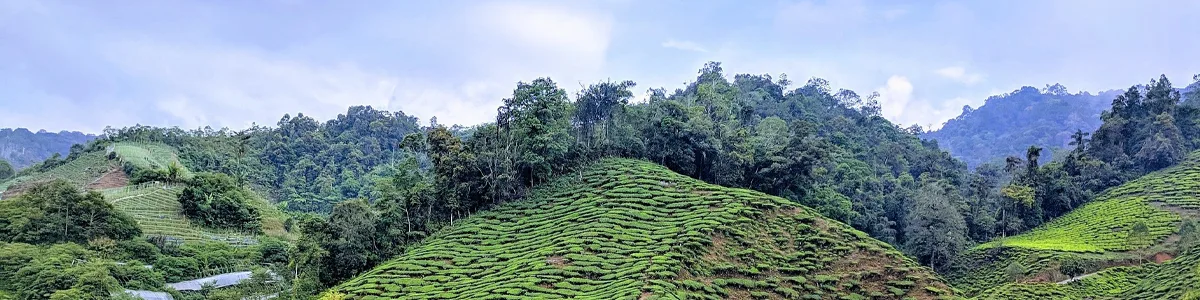
Destinations: Pu'er
Yunnan is widely recognised as the birthplace of the tea plant. This origin study tour focuses on world-famous ancient tea forests, including the UNESCO-listed Jingmai Mountain, Nannuo Mountain and Bulang Mountain. You will walk old-growth tea groves tended by Blang, Hani and Dai ethnic communities for centuries.
Trace the complete Pu'er tea workflow: tender bud picking, withering, pan-firing (kill-green), rolling, sun drying, raw Pu'er storage and artificial fermentation for ripe (shu) Pu'er. Side-by-side comparative tastings help you learn the flavour differences between ancient tree vs terrace tea, raw (sheng) vs ripe Pu'er, and terroir variations across different tea mountains.
This trip is tailored for tea importers, tea brand owners, QC specialists, tea sommeliers and serious tea lovers. All transport and logistics are fully handled. We can add extensions to the Ancient Tea Horse Road heritage sites or combine this tour with the Yunnan coffee study tour.
Tour Type: Tea Study Tour (under Study Tours category)
Transport: Private vehicle + licensed local driver + bilingual English guide
Best travel window: February – April (spring tea picking season, highest priority for tea buyers); October–November for autumn tea
Important policy note: We arrange regular cultural & farm visits. Scientific field research on ancient tea trees requires special official approval. Foreign guests may not collect ancient tea germplasm, seeds or saplings. Farms close to border zones require advance border permits.
Day 1: Arrival in Jinghong, Welcome Briefing & Introductory Pu'er Tasting
Arrive at Xishuangbanna Gasa Airport. Our private driver and English guide meet you and transfer to your accommodation in Jinghong or Menghai. Settle in before an afternoon orientation session covering the origin story of Yunnan tea, the definition of ancient arbor tea vs terrace plantation tea, the difference between raw and ripe Pu'er, trip etiquette in ethnic villages, and protection rules for ancient tea trees. The opening guided tasting introduces classic raw Pu'er and ripe Pu'er, establishing the flavour baseline you will explore deeper in the mountains. In the evening, enjoy a Dai ethnic dinner featuring local herbal dishes. Overnight Jinghong / Menghai.
Day 2: Nannuo Mountain – Ancient Tea King Tree & Hani Tea Village
Early departure for Nannuo Mountain, home to the famous 800-year-old cultivated ancient tea king tree. Hike along shaded forest trails through mixed ancient tea and subtropical vegetation, accompanied by a local Hani tea farmer. Learn about agroforestry growing methods, canopy management and how local families harvest only high-quality spring buds. During picking season, you can join gentle hand picking practice under farmer guidance. After a farm lunch, visit a village family workshop to watch traditional kill-green in iron woks, hand rolling and sun drying on bamboo mats. End the day with a village courtyard tasting of fresh sun-dried maocha. Overnight Menghai.
Day 3: Bulang Mountain & Laobanzhang Tea Community
Today we travel deep into Bulang Mountain, the legendary home of Laobanzhang, famous for powerful, bold raw Pu'er. Walk the high-altitude ancient tea groves with Bulang elders who have maintained these trees across many generations. Learn how Bulang culture is tightly woven into tea harvesting, offering rituals and seasonal village traditions. Visit a small family processing house and discuss how microclimate, soil and tree age shape the strong, distinctive profile of Bulang mountain tea. We will also cover topics such as traceability, authenticity challenges and market grading for high-value ancient tree Pu'er. Overnight Menghai.
Day 4: Menghai Tea Factory Visit, Fermentation Workshop & Pu'er Aging Seminar
Spend the day at a professional large-scale Pu'er factory in Menghai. Tour the raw material sorting warehouse, sun-drying platform, and the controlled fermentation workshop for ripe Pu'er. The factory technician explains the microbial transformation process, pile fermentation management, moisture and temperature control, and how fermentation time changes flavour and texture. You will also visit the ageing storage library and learn best practices for dry storage vs wet storage, plus long-term cellaring logic for raw Pu'er. A structured comparative cupping contrasts fresh raw, well-aged raw and properly fermented ripe Pu'er. Overnight Menghai.
Day 5: Transfer to Jingmai Mountain (UNESCO Ancient Tea Forest)
Scenic cross-provincial drive to Jingmai Mountain, the UNESCO World Cultural Heritage site of ancient tea forests. The mountain is shared by Blang and Dai communities, with tea trees integrated naturally into old-growth forest rather than neatly planted terraces. Check into a mountain lodge near Wengji Ancient Village. In the late afternoon, wander the moss-covered stone lanes of Wengji, visit traditional stilt houses and join a quiet forest-edge tasting of Jingmai floral, honey-forward raw Pu'er. Overnight Jingmai Mountain.
Day 6: Jingmai Ancient Forest Hike, Hand Tea Cake Pressing & Ethnic Sharing
Early morning hike across the vast Jingmai ancient tea forest, with panoramic sunrise views over layers of tea trees and forest canopy. Visit Nuogan Dai village to understand intergenerational community tea management systems. The afternoon hands-on workshop lets you press your own souvenir Pu'er tea cake with traditional bamboo moulds, guided by local craftspeople. We also cover certification, sustainable harvest limits and community fair-trade models for Jingmai tea. In the evening, join a cultural sharing session with village tea leaders. Overnight Jingmai Mountain.
Day 7: Closing Tasting, Souvenir Tea Pack & Departure
Final round-table comparative tasting summarising all the mountain profiles you sampled on the journey: Nannuo, Bulang and Jingmai. Exchange questions and takeaways with our tea guide. Each guest receives a carefully selected set of Yunnan Pu'er samples as a keepsake. Afterwards, private transfer to Jinghong airport for departure, or arrange onward transfer to Pu'er, Kunming or join our Yunnan coffee tour extension.
A: Spring harvest runs February–April and delivers the most sought-after spring buds. Autumn tea harvest falls October–November. Outside harvest windows, factory visits, forest walks and tastings remain available, but fresh picking experience will not be offered.
A: No. This is fully chauffeur-guided. Our licensed local driver manages all transport; you do not need a Chinese temporary driving permit.
A: Yes. We can arrange formal supplier meetings, sample ordering, quality inspection sessions, traceability document reviews and supply chain discussions for trade delegations.
A: Main ancient tea mountains including Jingmai, Nannuo and Bulang do not require special entry permits for regular cultural visits. If we add stops at tea farms close to the Myanmar border, PandaStudyTour will apply for mandatory border travel permits in advance for all foreign guests. Scientific field investigation focused on ancient tea trees requires separate government approval.