China Summer Camp for International High School Students: What a Serious Programme Actually Looks Like
High school is the narrowest window in a student's education. Between the ages of fourteen and eighteen, a young person has enough intellectual capacity to engage with a foreign society seriously, but still enough openness to be changed by it. Two years later, university applications, internships and career pressure begin to crowd the calendar. This is why the summer camp decision carries disproportionate weight for families and schools considering China — and why the quality of the programme matters far more than the destination list.
Most China summer camps marketed to international high school students fall into one of two traps. The first is the "study tour" that is 80 per cent tourism with an hour of classroom time bolted on. The second is the "academic camp" that keeps students inside a campus for two weeks and never lets them meet a Chinese teenager. Neither produces the outcome parents are actually paying for: a young person who returns more capable, more confident and more internationally literate than when they left.
This article sets out what a well-designed China summer camp for international high school students should contain, how to judge one before booking, and the practical questions — safety, supervision ratios, academic credibility, age-appropriate pacing — that determine whether the experience is genuinely developmental or merely photogenic.
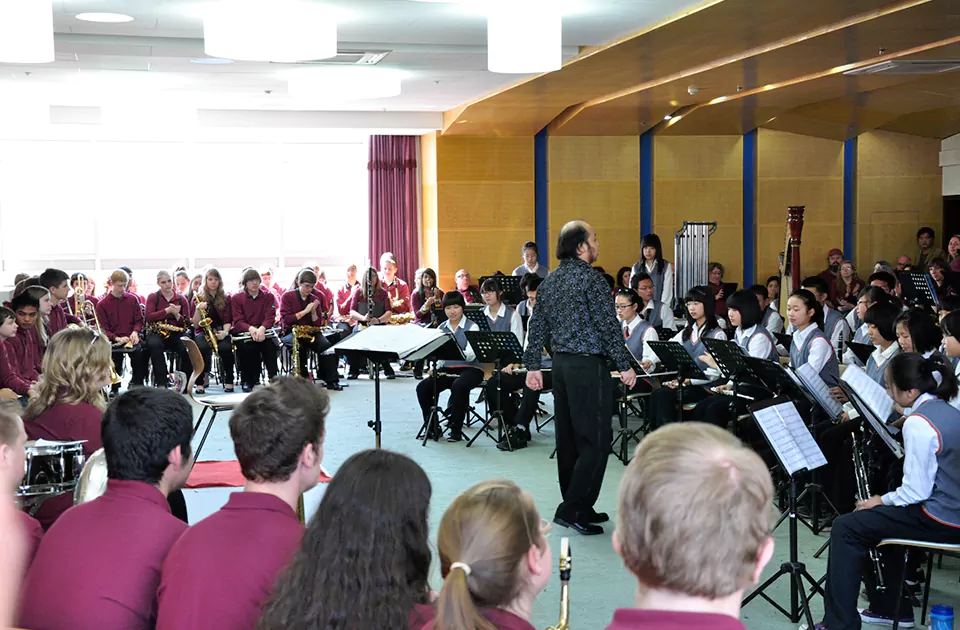
Structured learning with visible output. A credible camp produces something at the end: a research poster, a group presentation, a design prototype, a documentary short, a portfolio of fieldwork notes. Output creates accountability. It also gives the student something concrete to reference in university applications, and gives the school something to report to parents.
Sustained peer interaction with local students. Not a single welcome ceremony, but repeat contact — a buddy pairing maintained across several days, a joint project, a shared classroom session, a sports afternoon. Teenagers learn most from other teenagers. Programmes that segregate international students into a bubble miss the single most valuable resource China offers.
Deliberate cultural sequencing. Cultural content should build rather than accumulate. A first visit to a heritage site with orientation and context, then a hands-on workshop that applies that context, then a free exploration period where students navigate independently. Three stages, not three separate excursions.
Age-appropriate supervision and freedom balance. Fourteen-year-olds need structured supervision. Seventeen-year-olds need supervised independence — enough freedom to negotiate a metro journey, order food, and manage a small budget, with an adult present but not hovering. Programmes designed for one age group rarely serve the other.
Parents reasonably want to know whether the camp "counts" for anything. The honest answer is that almost no short summer programme in China confers formal academic credit unless it is run through an accredited institution with an agreement in place. What a good camp does confer is demonstrable intellectual engagement: a research topic pursued seriously, a university lecture attended and discussed, a technical workshop completed with an artefact.
Ask the operator three specific questions. First: who teaches, and what are their actual qualifications — a PhD researcher, a working engineer, a licensed teacher, or a tour guide with a script? Second: what is the student-to-instructor ratio during academic sessions, and is the instruction in English? Third: what evidence does the student receive — a written assessment, a certificate with named instructors, a project report?
A programme that answers these clearly is usually a serious one. A programme that answers vaguely is usually selling photographs.
For a school sending a group abroad, duty of care is the deciding factor. The requirements are concrete and should be documented rather than promised verbally.
Every student group should travel with a documented supervision ratio — typically one supervising adult per eight to twelve students depending on age. Accommodation should be vetted, with student-appropriate rooms, secure access and night supervision. Transport should be licensed and insured, with seat belts, and no long-distance overnight road transfers. Every participant should have travel medical insurance that covers repatriation. There must be a written emergency protocol with named local contacts, hospital routing for each city on the itinerary, and a parent communication schedule.
Dietary and medical information must be collected before departure and passed to every kitchen and venue. Allergy protocols need to be in the local language, not only in English. And someone on the ground must be reachable at any hour, not only during office time.
Younger high school students benefit from a tighter geographic footprint — one or two cities, shorter days, more hands-on making, more structured evening activity, earlier curfews. Their programme should be rich in sensory and physical engagement: cooking, craft, sport, wildlife, performance.
Older students can handle a broader itinerary, longer academic blocks, independent research time and more demanding physical activity. They respond well to ambition — a genuine technical challenge, a debate, a pitch presentation, an industry visit where they must ask their own questions and report back.
Mixing the two groups within one itinerary usually means compromising both. Where a school sends a mixed cohort, the better solution is parallel tracks at certain points rather than a single lowest-common-denominator schedule.
Beijing delivers the national narrative: the imperial core, the Great Wall, top universities, research institutes, and the scale of a capital. It is the strongest opening city for a first-time group.
Xi'an delivers depth: the Terracotta Army, the ancient city wall, Silk Road heritage, and a visible link between ancient engineering and modern manufacturing. It is also the most effective place to teach students that "ancient" and "advanced" are not opposites.
Shanghai delivers contrast and modernity: urban design, finance, museums, and the strongest environment for students to observe a globalised Chinese city on its own terms.
Hangzhou delivers aesthetics: West Lake, tea culture, craft heritage, and a pace that lets a group decompress after the big cities.
Chengdu delivers science and warmth: conservation biology, biodiversity, Sichuan cuisine, and the most sociable urban culture in China.
A well-designed twelve-day programme typically uses three of these rather than five. Fewer cities, deeper engagement.
Serious camps fill six to nine months ahead. A sensible sequence for a summer programme:
Six to nine months out — settle the theme, city mix, group size and budget band. Confirm whether the school requires its own staff to accompany the group.
Four to six months out — lock dates, accommodation and the core academic components. Begin passport checks and identify which students need visas.
Three months out — collect medical, dietary and guardian consent documentation. Confirm flights. Begin pre-departure curriculum so students arrive with context rather than blank.
One month out — pre-departure briefing for students and parents: money, phones, clothing, behaviour expectations, what to do if separated from the group.
Is China safe for teenage student groups? Major Chinese cities are low-crime and well-policed, and public transport is safe. The real risks for student groups are traffic, altitude or heat, dietary issues and simple disorientation. All are manageable with proper supervision and briefing.
Can students who study no Chinese participate? Yes. Programmes are delivered in English with bilingual support. Students with some Mandarin gain more from interaction, but no prior language is required.
Do parents need to accompany students? No. Most school groups travel with their own teachers plus local guides. Family-accompanied versions exist for younger students but are not the norm at high school level.
How much physical activity is involved? Variable and adjustable. A cultural programme may involve five to eight kilometres of walking daily. Hiking components can be added or removed.
The right China summer camp for an international high school student is not the one with the longest list of landmarks. It is the one that produces a visible change — in confidence, in capability, in the ability to operate in a society that does not work the way theirs does. That requires academic substance, genuine peer contact, honest supervision and a pace designed for the age group rather than for the brochure.
PandaStudyTour builds high school summer programmes with each of those elements written into the itinerary from the start. Explore the wider programme range in our China Summer Camp Insights hub, or speak to us about a custom schedule for your school's cohort.
