The residential model is the one families picture when they imagine a summer camp: a campus, a dining hall, rooms, a curfew, and a group of young people who arrive as strangers and leave as friends.
It is also the model where marketing and reality diverge most widely, because the campus photographs tell you nothing about the three things that determine whether a child has a good four weeks: who is on duty at night, what happens when someone is unwell, and how the social groupings are managed.
A residential camp is a 24-hour operation. A day programme is a nine-hour product with the child returning to a family. The additional twelve hours are where the quality actually lives.
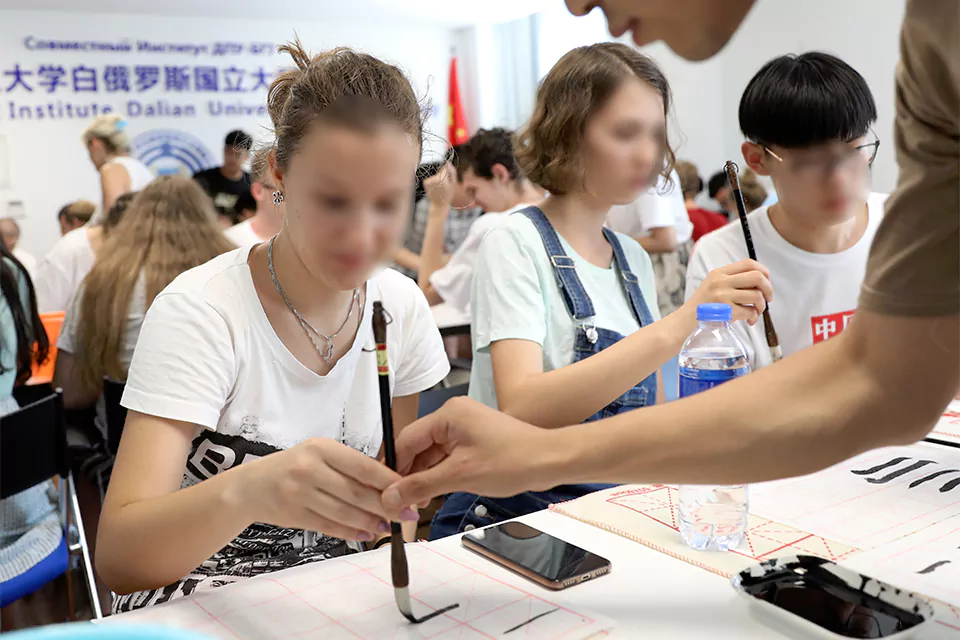
This article sets out what a well-run residential Chinese summer camp in China involves, from the room allocation to the night rota, and what parents should insist on seeing in writing.
Three variants exist, and they are not equivalent.
Campus residence (school or university). Purpose-built dormitories, shared bathrooms in older facilities, a dining hall, classrooms in the same compound. The most authentically "camp" model, strongest for peer bonding, weakest for privacy and comfort.
Hotel-based programme. Students in hotel rooms, classes in a meeting room, activities off-site. More comfortable, less camp-like, stronger supervision control because hotel staff provide an additional layer. Common for premium programmes and for older teenagers.
Homestay-plus-day-programme. Technically residential in the sense that the student is not with parents, but the evening environment is a family rather than a cohort. Different product entirely; covered separately in our homestay guide.
Most programmes blend: campus residence for the core weeks with hotel-based excursions. The question to ask is not "is it residential" but "what exactly is the room, and who is responsible for my child between 21:00 and 07:00."
A residential day is longer than a day-camp day, and the extra hours need structure without becoming surveillance.
The free block at 16:30 and the low-intensity evening are not slack. They are the mechanism that makes the other hours work.
This is the part parents should scrutinise hardest, and the part programmes describe most vaguely.
What should be documented:
Ask a direct question: "At 2 a.m., if my child is vomiting and cannot reach anyone, what is the sequence of events?" A programme that pauses before answering has not thought about it.
Room allocation is treated as administration. It is actually pastoral design.
Matching principles that work:
Roommate conflict is normal and should be handled as a learning process, not suppressed. A documented mediation step - talk to the room mentor, then a joint conversation, then a move if needed — is better than either ignoring it or moving students immediately.
Residential catering is where complaints concentrate, and where most issues are preventable.
What to insist on:
Residential camps face a phone problem that day camps do not, because the evening is unsupervised in a way that daytime is not.
The architecture that works:
For younger children, phone contact with home should be structured around a fixed time, with staff support. A child who calls home at random moments in the day repeatedly relives the separation.
The residential emotional curve is predictable and can be planned for.
Days 1–3: novelty. Everything is interesting. Homesickness is absent. Do not over-schedule; children are tired from travel.
Days 4–7: friction. Roommate irritations, food fatigue, language frustration. The first complaints surface here. Staff who normalise this - "everyone feels this on day five, it passes" - prevent escalation.
Days 8–12: the dip. This is the lowest point, and it is structural rather than personal. A mid-programme anchor helps: a bigger excursion, a showcase, a change of activity type, a rest day. Programmes that front-load excitement and offer nothing at the mid-point see real attrition here.
Days 13 onward: belonging. The group coheres, friendships consolidate, and the last week is usually the best. Students who wanted to leave on day ten often do not want to leave on day twenty.
Parents should be told this curve in advance. A parent who receives a distressed message on day nine and immediately books a flight is responding to a predictable phase as if it were a crisis. Programmes that brief parents on the curve get fewer of those calls, and better outcomes.
Beyond language, the residential experience produces outcomes that a day programme cannot.
These outcomes are the ones parents mention years later. They are also the ones no programme can guarantee, because they depend on how well the social architecture was designed in Part Four.
What is the minimum age for residential?
Commonly eleven or twelve, with tighter ratios below fourteen. Under eleven, a day programme or a parent-accompanied arrangement is generally better.
Can siblings share a room?
Usually not, for the same reason friends should not: shared first language reduces Mandarin use and reinforces existing social patterns.
How are roommates chosen?
By age, different first language, and personality balance. Ask whether rooms rotate at the mid-point - programmes that rotate tend to have healthier group dynamics.
Who is responsible for my child at night?
There should be a named duty person with a documented rota and a contact number, plus a written night protocol. Ask for it, in writing.
What if my child is homesick?
Expect it around day eight to twelve. Ask what the programme's specific response is, and whether they brief parents on the curve in advance. A good answer describes a plan; a weak one offers reassurance.
Can we speak to our child every day?
Most programmes allow a scheduled daily or twice-weekly contact. Unlimited contact tends to increase homesickness rather than reduce it. Ask what is standard.
What if a student is unwell?
A named medical lead, an identified clinic, a documented escalation, and prompt parental notification. Insurance requirements should be stated before booking.
Is the accommodation single-sex?
Should be, with explicit rules on entry. Ask directly.
A residential Chinese summer camp in China is a 24-hour product, and the twelve hours outside the classroom are where quality is won or lost. Ask about the night rota, the roommate policy, the mid-point rotation, the phone architecture, and the plan for day nine.
A programme that answers those questions in specific, documented language will almost certainly have thought about the rest.
If you are considering a residential placement, our Chinese Mandarin Summer Camp page sets out the accommodation options, the supervision model by time of day, the roommate policy, the catering arrangements and the settling-in protocol - and we will share the duty rota and the medical escalation procedure before you book anything.
