Programming for children aged seven to twelve is a completely different discipline from programming for teenagers, and the difference is not simply "shorter days and more supervision." Younger children cannot self-manage, cannot be relied on to study unsupervised, lose attention within twenty minutes, and need physical activity and rest in a rhythm that adults find pointless but children require absolutely.
They are also, in some ways, better language learners than teenagers. Their tolerance of error is higher, their willingness to imitate sound is higher, and they are less self-conscious about speaking. A well-designed camp for this age band can produce remarkable pronunciation gains.
What it cannot do is produce literate intermediate speakers in three weeks, and programmes that suggest otherwise are selling to parents rather than teaching children.
This article sets out how a summer language camp in China for kids should be designed, what to expect, and what questions to ask - including whether to accompany your child.
There are three genuine arguments for a Chinese language camp at this age, and one common argument that does not hold.
Arguments that hold:
The argument that does not hold: "Children absorb languages like sponges." Children do not absorb on exposure alone; they acquire when the input is comprehensible and the interaction is meaningful. A child in a Chinese city for three weeks who attends structured sessions with English-speaking staff between them will learn what was taught, and roughly that.
That is still valuable. It is just not magic.
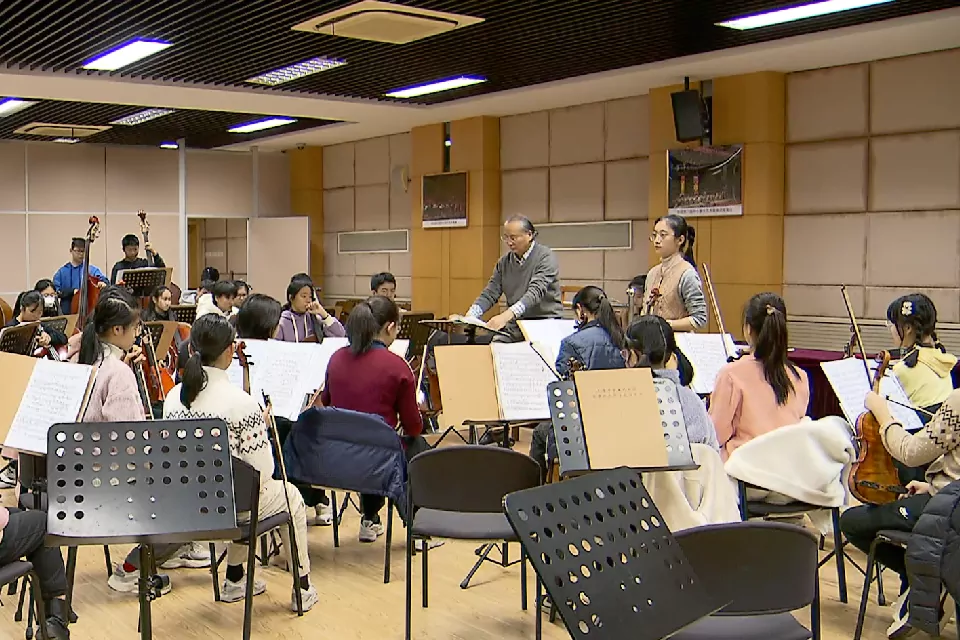
These two sub-bands are different enough to warrant separate design.
Programmes that put an eight-year-old and a twelve-year-old in the same class usually serve neither.
For a daytime programme, one adult per six to eight children is the practical minimum for 7–9. Two-thirds of the way through a long hot day, ratios matter more than curriculum. Ask the specific number, and ask whether it includes activity leaders or only teaching staff.
Residential programmes for this age band need considerably higher density and near-continuous adult presence, which is one reason most operators begin residential placements later.
Young learners are not small adults and should not be taught through adult methods slowed down.
Total Physical Response and physical anchoring. Language tied to movement sticks. "Sit down, stand up, open the window, touch your nose" is not childish filler; it is how a seven-year-old maps sound to meaning.
Songs and chants. Excellent for tone and rhythm, especially with repetitive structures. Children who can sing a song will produce its grammar naturally later.
Story and picture sequences. A simple story with repeated structures - the same pattern with one element changed - is one of the most reliable input devices available.
Play. Games are not a reward for the classroom; they are the classroom. A shopping role-play with pretend money teaches numbers, questions, and politeness formulas in one activity.
Making things. Cooking, clay, paper cutting, lanterns. Making produces language because the materials, actions and colours all need vocabulary.
Repetition without boredom. Children need far more repetition than adults, and the skill is repeating the same structure through different activities. A programme that repeats through variety looks chaotic and works.
Immediate, warm correction. Correction should be instant and gentle. A child told "not quite - try again like this" with a smile fixes the error. A child told they are wrong stops speaking.
For a daytime programme, ages 7–10:
Notice how much of the day is not instruction. That is not a weakness; it is the correct ratio for young children.
For children under ten, this is the most consequential decision.
Parent-accompanied model. The parent stays in the same city, sometimes the same accommodation, and the child attends a day programme. Advantages: the child sleeps in familiar company, homesickness is minimal, medical and dietary handling is the parent's responsibility, and the parent can explore the city independently. Disadvantages: the child's language environment reverts to English every evening, and the separation-independence benefit is reduced.
Drop-off residential model. The child stays in supervised accommodation with the group. Advantages: fuller language environment, genuine independence, strong peer bonds. Disadvantages: requires emotional readiness, tighter staffing, and reliable parent communication. Most operators set a minimum age around eleven or twelve for this, which tells you something.
A workable hybrid. Parent-accompanied for a first visit; residential when the child is older and has done a shorter trip successfully. Families who follow this sequence report far fewer mid-programme crises.
Whatever the model, the parent wants three things: a daily communication cadence, a named adult responsible for their child, and a clear answer about what happens if the child is unwell.
Children this age require a level of operational care that teenagers do not.
None of this appears in a brochure. All of it is what a parent is actually buying.
Realistic outcomes for a child aged seven to ten attending three weeks of a well-run camp:
For ages ten to twelve, add: the ability to hold a short structured conversation, a beginning of character writing, and often a genuine motivation to continue.
What they will not gain: literacy, fluency, or an ability to read beyond a menu. Promises otherwise are best treated as marketing.
What is the youngest age you accept?
Day programmes typically start around six or seven; residential placements usually begin later, commonly eleven or twelve. The distinction is emotional readiness, not language ability.
Should I stay with my child?
For a first trip under ten, yes, in the parent-accompanied model. It removes most of the risk and still delivers the language programme during the day.
How much Mandarin will a seven-year-old learn in three weeks?
Realistically, a functional core of around 100–200 words, greatly improved pronunciation, recognition of common characters, and a willingness to speak. Not literacy, not fluency.
Are classes mixed age?
They should not be. Ask specifically how the 7–9 and 10–12 bands are separated, and how placement works for a child with prior exposure.
What if my child does not want to go to class?
Good programmes expect this in the first two or three days and handle it with warm persistence rather than force. Ask what the settling-in protocol is.
Can dietary or allergy requirements be handled?
Yes, with written documentation given to the kitchen and to every adult who supervises meals. Ask for the process, not the assurance.
Do children get free play? They must. A programme with no unstructured time produces tired, unregulated children by the second week.
A summer language camp in China for kids works when it is designed around how children actually learn and behave: short activity blocks, physical language, making things, repeated structures through varied tasks, real rest, and adults close enough to notice when a child is struggling or overheating.
Parents should evaluate ratios, day rhythm, sub-band separation, and the medical and allergy protocol - then think about whether to accompany. Those factors determine the experience far more than the campus or the city.
If you are planning a placement for a younger child, our Chinese Mandarin Summer Camp page sets out the age bands, the parent-accompanied and residential options, the daily structure and the supervision ratios - and we will answer the health and allergy questions in writing before you commit.
