
Many international students, business school teams, and cross-border entrepreneurs who inquire about corporate visit programs often fail to distinguish the actual value of the four key components: exhibition halls, production lines, executive roundtables, and specialized courses. Many low-cost, superficial itineraries merely involve quick stops at exhibition halls without substantive content, making it difficult to meet the genuine needs for academic research, industry exploration, and business insights. Drawing on our network of leading companies across multiple cities nationwide—including Beijing, Shanghai, Shenzhen, Hangzhou, and the Chengdu-Chongqing region—and leveraging standardized visit arrangements from companies such as Alibaba, Huawei, Sany, BOE, BYD, and ByteDance, we have thoroughly mapped out the learning outcomes, experiential features, and suitable scenarios for each of the four components. This enables us to help you tailor an itinerary that aligns with your specific research and study objectives.

Showroom Visits
The showroom serves as the introductory foundation of the entire visit and is a channel for quickly gaining a holistic understanding of the company. Upon entering the showroom, visitors can first trace the company's complete development journey from its founding to becoming an industry leader. Timelines on the walls, stories of key milestones, and the founders' career paths provide a clear, visual understanding of the market opportunities and strategic choices behind each transformation and expansion—making it ideal for international students who need to write basic industry analysis reports. The exhibition hall features a comprehensive display of the company's full product lineup, core patented technologies, and various practical solutions. Whether it's BOE's display panels, BYD's new energy vehicles, or the AI applications from Baidu and SenseTime, visitors can gain a complete understanding of the company's business landscape in one place. This allows them to distinguish between core businesses, innovation tracks, and future strategic directions without needing to delve into R&D facilities.
At the same time, various corporate culture exhibition areas vividly showcase each company's unique management philosophy. Alibaba's "wuxia" culture, Xiaomi's ecosystem-oriented thinking, and Haier's "Ren-Dan Heyi" model are all brought to life through cultural walls and themed exhibition zones, helping international visitors understand the distinct Chinese organizational culture that differs from that of Western companies. The global expansion maps, authoritative industry rankings, and client case studies displayed in the exhibition halls also provide objective industry data that can be directly used in college applications and coursework. The content generally consists of standardized promotional materials available to the public, making it suitable for short-term study tour participants new to the industry. However, it rarely delves into deeper, authentic information such as internal operational challenges or cost control, and is typically served as a foundational introductory segment at the beginning of all visit itineraries.
Production Line Tours
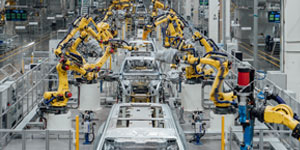
Production line tours are exclusively available to manufacturing, hardware, new energy, and heavy industry companies; internet and pure-software companies do not offer this option. This is the on-site learning component most valued by engineering students, manufacturing professionals, and international trade buyers. If the exhibition hall showcases a company's external achievements, the production line reveals the true core of its operations. Walking through Sany's Lighthouse Factory, SAIC Volkswagen's vehicle assembly shop, Foxconn's industrial facilities, and BOE's cleanroom production lines, participants can witness firsthand the complete operational workflow of AGV (Automated Guided Vehicles), robotic arms, automated high-bay warehouses, and digital management screens in the production areas. Abstract concepts found in textbooks—such as Industry 4.0, digital factories, and 5G-enabled smart manufacturing—can be fully understood through these real-world examples.
The entire production line comprehensively covers the full process—from raw material intake to semi-finished product processing, finished product assembly, quality inspection, and warehousing—allowing participants to clearly experience the practical operational models of supply chain flow, production scheduling, and inventory management. The visual kanban boards, standardized operating procedures, and end-to-end quality inspection systems visible throughout the workshop also provide an intuitive opportunity to learn about the lean production systems that companies like Honda and Bosch have been implementing for many years. On-site, participants can also observe details of human resource management, such as front-line shift scheduling, emergency response to workshop anomalies, and digital performance evaluations, enabling overseas manufacturing professionals to benchmark their own factories’ management models against these practices. Due to corporate confidentiality policies, unannounced new products, core precision processes, and proprietary cost data will not be disclosed. To gain insight into the company’s top-level strategic planning, participants will need to supplement this experience with executive roundtables or specialized courses.
Executive Roundtable
Face-to-face discussions with executives are the only opportunity to obtain internal, non-public, first-hand information—and they serve as the key distinction between superficial "check-in" visits and in-depth study tours. While exhibition halls and production lines only offer a view of the company's objective operational scenarios, department heads and business unit executives can share long-term strategic plans that are not disclosed to the public—including market positioning for the next three to five years, overseas expansion plans, and the direction of R&D resource allocation. Such exclusive industry insights are difficult to find amid fragmented online information and serve as core material for MBA research and business startup planning.
During roundtable discussions, executives candidly share the operational bottlenecks encountered on the company's growth path, the detours taken during transformation, and the corresponding solutions—such as the profitability challenges faced by new energy vehicle manufacturers, the trial-and-error experiences of manufacturing firms undergoing digital transformation, and the traffic growth ceilings faced by internet platforms. These real-world industry pain points offer extremely high reference value. At the same time, participants can gain an in-depth understanding of companies' comprehensive internal management systems—such as ByteDance's OKR evaluation system, Huawei's IPD R&D process, and Lenovo's 721 talent development mechanism. Executives will explain the adjustments and optimization strategies involved in implementing these systems, drawing on real-world case studies from their companies. Groups can submit specific questions in advance for one-on-one interaction during the session, receiving targeted answers on topics ranging from cross-border collaboration channels and overseas internship opportunities to strategies for global brand expansion. Since the discussion format focuses on bite-sized Q&A sessions rather than a systematic theoretical framework, we recommend pairing this session with complementary thematic courses for those seeking a comprehensive understanding of management methodologies.
Thematic Courses
Delivered by senior corporate trainers and internal executives, thematic courses are the only learning module among the four components that offers a complete, systematic knowledge framework. Each partner company maintains a fixed, well-established course library, ranging from Alibaba's "Three Management Tools" and Huawei's Integrated R&D Process to Sany's Lighthouse Factory Transformation and NIO's User Operations System—all featuring standardized syllabi. The courses build a comprehensive theoretical framework from basic to advanced concepts. Rather than offering fragmented on-site observations, they thoroughly dissect the management, production, and operational methodologies refined by these companies over many years. These are complemented by numerous exclusive internal project reviews, transformation case studies, and practical tools that can be directly replicated and implemented. Overseas participants can bring the entire system back to their home countries for use in business operations and academic research.
Instructors will specifically address the perspectives of overseas study groups by comparing differences in business models, manufacturing systems, and talent management between China and other countries, and will provide targeted answers to overseas visitors' various questions about China's industrial models. While the course content is standardized and comprehensive, it is difficult to address each individual's unique entrepreneurial or business management challenges. Therefore, a complete, in-depth itinerary typically allocates the first half of the program to establishing a knowledge framework, while the second half features executive roundtables for in-depth discussions addressing participants' specific questions. This program is suitable for long-term university study groups, overseas executive training programs, and learners seeking a systematic understanding of China's industrial logic. For half-day introductory itineraries, course duration can be shortened as needed, focusing only on core modules relevant to participants' specific fields.
Program Design Approaches for Different Audiences
For short-term, half-day general-knowledge study tours, a visit to the exhibition hall alone is sufficient to meet basic industry awareness needs; for short one-day programs for undergraduate business students, a combination of the exhibition hall and executive roundtables provides both an overview of the company and first-hand industry strategic insights; for research groups specializing in engineering and supply chain management, the focus is on visiting the exhibition hall and production lines, supplemented by brief thematic presentations; In-depth tours for international MBA students and corporate executives should comprehensively cover all four modules—theory, on-site experience, top-level strategy, and one-on-one Q&A sessions; for cross-border entrepreneurship tours involving multiple companies, each visit should primarily consist of an exhibition hall tour and an executive roundtable, with specialized courses added selectively based on the startup's sector to balance learning depth and itinerary efficiency.
Conclusion
There is no hierarchy among the four visit components; they form a complete and complementary system. Exhibition halls establish a foundational understanding of the industry; production lines provide a real-world view of operations; thematic courses deliver comprehensive theoretical methodologies; and executive roundtables provide exclusive internal insights and personalized Q&A sessions. Most low-cost tours on the market merely involve a single "check-in" at an exhibition hall, lacking the three key elements of production line visits, specialized courses, and roundtables—making it difficult to achieve the core objectives of academic research and business study tours. PandaStudyTour can flexibly adjust the combination of these four modules based on the group's demographics, learning objectives, and budget. Leveraging stable partnerships with leading companies across China, we customize exclusive corporate visit itineraries tailored to international students, entrepreneurs, and business executives. These itineraries include bilingual guided tours, pre-visit study materials, and official study tour certificates, comprehensively meeting the corporate study tour needs of international groups visiting China.
