For a growing number of overseas companies, China is no longer a distant market that can be understood from reports, trade fairs and second-hand briefings. It has become a place that executives, engineers, procurement teams and product managers need to walk through in person - to see a production line running, to sit across a table from a factory manager, to understand how a supplier actually quotes, tests and ships.
That shift in expectation has created a fast-expanding category of travel: the China corporate delegation tour. It is not sightseeing with a business lunch squeezed in, and it is not a conference with a hotel ballroom and a badge lanyard. It sits between the two, and getting it right requires a partner who understands both the industrial landscape and the practical realities of moving a group of professionals across a country the size of a continent.
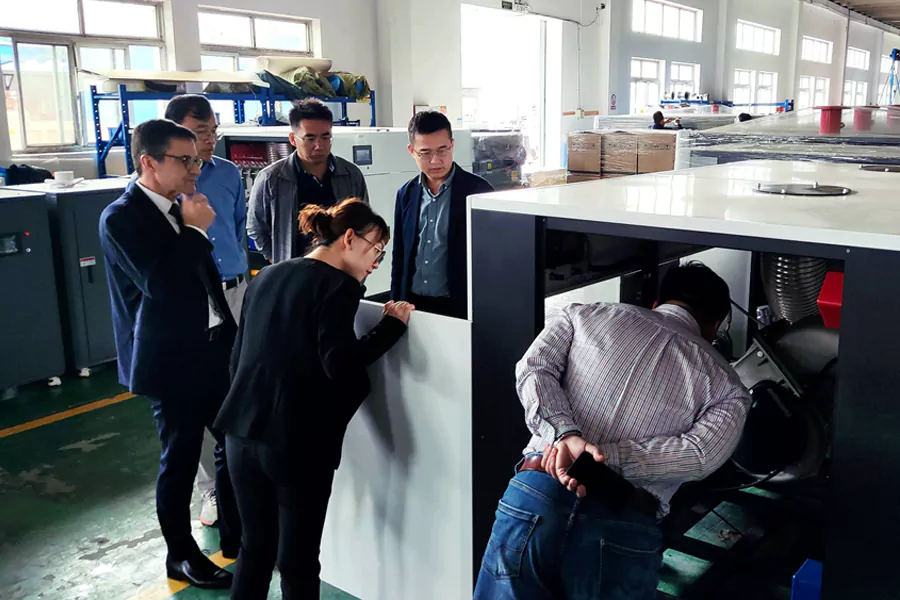
This article explains what a China corporate delegation tour is, what it typically contains, and why more international business teams are choosing PandaStudyTour to build theirs.
A China corporate delegation tour is a structured, professionally hosted visit programme in which a group of executives, managers, technical specialists or investors from an overseas company travels to China to visit enterprises, industrial parks, research institutions and relevant ecosystems - combined with cultural and leisure elements that make the trip sustainable rather than exhausting.
The defining feature is access. A normal tour operator can book a flight, a hotel and a ticket to the Forbidden City. A delegation tour operator must be able to arrange a meeting room inside a manufacturing plant, secure a technical briefing from an R&D lead, and translate a discussion about tolerances, compliance standards and lead times into something both sides can act on.
In practice, we see five recurring profiles:
A credible programme usually layers four components:
China's relevance to international business teams has broadened considerably. It is no longer only a low-cost manufacturing base. It is a source of electric vehicle and battery technology, industrial automation, consumer electronics supply chain depth, digital platform infrastructure, advanced materials, new energy systems and rapidly maturing biomedical capability. For a European or Southeast Asian company, a well-designed delegation tour is often the fastest way to convert second-hand market intelligence into first-hand operational understanding.
PandaStudyTour operates across inbound educational travel, school twinning and corporate delegation programmes. That matters more than it might appear at first glance. The skills required - bilingual coordination, institutional relationship management, group logistics across multiple cities, and the patience to arrange access that is not commercially available off-the-shelf - are the same skills required to run student exchange programmes. Many corporate delegation operators come from a general tour operating background and treat enterprise visits as an upsell. We treat the visit as the core product and build everything else around it.
Access is the hardest part of this work. Factories do not publish a booking calendar. Industrial parks do not have a public reservation desk. Approval for a foreign delegation to enter a production facility typically passes through commercial, technical, compliance and sometimes security stakeholders.
PandaStudyTour maintains working relationships across the cities where this access matters most:
Because these relationships are already in place, we are not starting each enquiry from a cold outreach email. That shortens lead times, raises the probability of confirmed access, and gives us the ability to propose realistic alternatives when a particular company cannot host on the requested dates.
One of the most common frustrations we hear about delegation trips arranged elsewhere is that the visits "didn't match what we actually do." A precision engineering team taken to a consumer brand showroom learns very little.
Our process begins with your sector, your objective and your technical questions — not with a list of famous companies. If you are evaluating battery supply chain capability, we design around cell production, testing standards, thermal management and certification. If you are studying industrial automation upgrade paths, we build around control systems, digital twin deployment and workforce transition. If your interest is biomedical devices, we build around R&D process, clinical validation and regulatory pathways. The itinerary is a response to your question, not a template that your question is fitted into.
Delegations fail in two directions. Some collapse under a schedule so dense that participants disengage by day three. Others are so light on substance that participants question why they travelled.
We design deliberately for rhythm: concentrated technical blocks in the morning when attention is highest, lighter or cultural content where jet lag typically bites, sightseeing and local food experiences placed at points where the group genuinely needs decompression, and structured reflection time so that observations become notes and notes become usable takeaways. A delegation that returns with a coherent set of conclusions is worth more than one that returns with thirty business cards and no synthesis.
Interpreting a hotel check-in is straightforward. Interpreting a discussion about process tolerances, certification requirements, capacity constraints and lead-time structures is a different discipline entirely. Our coordination model places a bilingual host with the group throughout the programme, briefs interpreters in advance on the technical subject matter, and collects delegates' questions before the visit so that hosts can prepare substantive answers instead of polite generalities.
A multi-city delegation tour is a logistics problem disguised as an itinerary. High-speed rail bookings for a group, hotel allocations with suitable meeting space, ground transport that can hold a delegation and its luggage, restaurant capacity, meeting room bookings inside industrial parks, and contingency plans for the inevitable scheduling change - all of this is handled by our local team. Delegates arrive and follow a programme. They do not spend their evenings reconciling transport confirmations.
We do not sell fixed departures. A two-day executive benchmarking visit, a four-day technical deep dive, a seven-day two-city programme and a nine-day three-city grand tour are all standard shapes for us. Programmes can be extended with additional enterprise visits, compressed by removing cultural blocks for purely commercial groups, or rebalanced toward workshops and maker sessions for groups that include senior engineering students or early-career technical staff.
For delegations whose objective is commercial rather than observational, we can pre-identify and pre-confirm local companies for one-to-one meetings, arrange private meeting rooms for separate negotiation streams, and coordinate introductions in advance so that the scheduled time is used for discussion rather than initial introductions. This is particularly effective in Chengdu and the Greater Bay Area, where cluster density makes multi-party matching practical within a single trip.
Corporate travel carries organisational liability. Our programmes include licensed bilingual guides, insured ground transport, vetted accommodation, clear safety briefings before industrial site entry, adherence to each host facility's visitor protocols, and on-ground support throughout the trip. For groups travelling with mixed seniority levels or with participants who have limited China experience, this matters as much as the itinerary quality.
We tell clients plainly what is achievable and what is not. Some enterprises do not accept external delegations. Some industrial parks require approval windows measured in weeks. Some requested combinations of city and sector simply do not exist at the scale a client assumes. We would rather adjust a programme during planning than deliver an itinerary that collapses on the ground. Delegations that return satisfied tend to be those whose expectations were calibrated honestly at the start.
The process is deliberately simple, because complexity belongs on our side rather than the client's.
Step 1 - Objective briefing. We establish group profile, sector, seniority mix, group size, preferred dates, cities of interest, and the specific questions the delegation wants answered. This conversation usually reshapes the brief in useful ways.
Step 2 - Programme design. We propose a shaped itinerary with named visit targets, realistic access assessments, and a schedule that accounts for travel time rather than pretending it does not exist.
Step 3 - Access confirmation. Enterprise invitations, industrial park coordination, meeting room bookings, interpreter assignment and technical briefing preparation.
Step 4 - Logistics lock-in. Rail, hotels, ground transport, dining and contingency planning.
Step 5 - Pre-trip preparation. Delegate briefing materials, background reading on each host organisation, and collection of technical questions in advance.
Step 6 - On-ground delivery. A bilingual host with the group, daily coordination, and real-time adjustment when circumstances change.
Step 7 - Post-trip follow-up. Consolidation of contacts, notes and agreed next steps, so the value of the trip continues after the flight home.
Shenzhen - Hardware and New Energy. Four days. New energy vehicle and battery manufacturing, robotics and drone innovation, electronics supply chain immersion in Huaqiangbei, executive roundtable, Qianhai smart city briefing, with waterfront leisure and Cantonese dining built in.
Beijing - AI and Advanced Technology. Five days. University microelectronics laboratories, national research institutes, AI enterprise visits, hands-on workshops, with Great Wall sightseeing and Peking duck as deliberate decompression points.
Shanghai and Hangzhou - Digital Economy. Six days. Cloud and enterprise digital services, smart logistics, startup incubators, platform ecosystem visits, cross-model comparative workshops, and a West Lake interlude that gives the group room to think.
Chengdu - Advanced Manufacturing and Biomedical. Five days. Precision manufacturing, medical devices, integrated circuit clusters, policy briefings from park authorities, pre-matched B2B meetings, and Jinli Ancient Street in the evening.
Beijing and Xi'an - Technology and Ancient Engineering. Seven days. A comparison programme that places modern aerospace and advanced materials alongside Qin Dynasty standardised manufacturing and Silk Road technology exchange — unusually effective for groups that want strategic context rather than only plant tours.
Beijing, Xi'an and Shanghai - Three-City Grand Tour. Nine days. Research-driven north, advanced-manufacturing west, digital-commercial east, with a running comparative project that turns three city visits into one coherent analytical output.
Every shape is a starting point. Durations, cities, sectors and the business-to-leisure ratio are all adjustable.
What group sizes do you handle? From small executive teams of five or six to larger delegations. Format, meeting structure and site selection are adjusted accordingly.
How far in advance should we book? Six to eight weeks is a sensible minimum for a straightforward single-city programme. Multi-city programmes with specific named enterprises, or travel during major trade fair periods, benefit from longer lead times.
Can we specify which companies we want to visit? You can, and we will assess feasibility honestly. Where a requested enterprise cannot host, we propose comparable alternatives within the same sector so the learning objective is preserved.
Is this suitable for companies with no prior China experience? Yes, and these groups often gain the most. We add orientation content and calibrate the pace accordingly.
Can we reduce the sightseeing and focus purely on business? Yes. Cultural blocks are modular. Many commercial delegations keep one leisure half-day and dedicate the rest to enterprise visits and exchanges.
Do you support visa documentation? We provide invitation documentation and coordination support for group visa applications once the programme and participant list are confirmed.
A China corporate delegation tour succeeds or fails on three things: whether the visits are genuinely relevant to the delegation's questions, whether the access actually materialises on the day, and whether the group returns with usable insight rather than a blurred impression of airports and meeting rooms.
PandaStudyTour is chosen because we work in the space between industrial access and travel delivery - with an established network across China's key innovation cities, an industry-matching approach rather than a template catalogue, bilingual coordination built for technical content, honest feasibility planning, and programmes designed to keep a delegation sharp from the first morning to the closing session.
If your team is planning a visit to China and wants the week to produce conclusions rather than photographs, we would be glad to shape a programme around your objectives.
Explore our China Tech Tours and China Tech Company Visit programmes, or contact PandaStudyTour to start a customised corporate delegation plan.
