Ask a hundred people in Europe or North America what they know about China and you will get a narrow, vivid, mostly wrong picture: a handful of megacity skylines, a handful of iconic photographs, and a general impression of a place that is difficult, distant and probably not for them.
Then ask the people who have actually been. The answers change shape entirely. They talk about walking a section of wall that has been standing since before their own country existed, about a bowl of noodles in a city where nobody speaks English and everybody is patient, about a train that covers 1,300 kilometres in four and a half hours while the landscape turns from river delta to karst towers to rice terraces. Almost none of them describe it as a difficult trip. Most describe it as the trip that reset their sense of scale.
China is the largest, oldest continuous civilisation on earth and one of the least understood by the travellers who would most enjoy it. The gap between perception and reality is unusually large - and that gap is precisely why it is worth going.
This article sets out ten concrete reasons to travel to China, then the friction you should genuinely plan for. Both halves matter. A destination sold only in superlatives is not being described honestly.
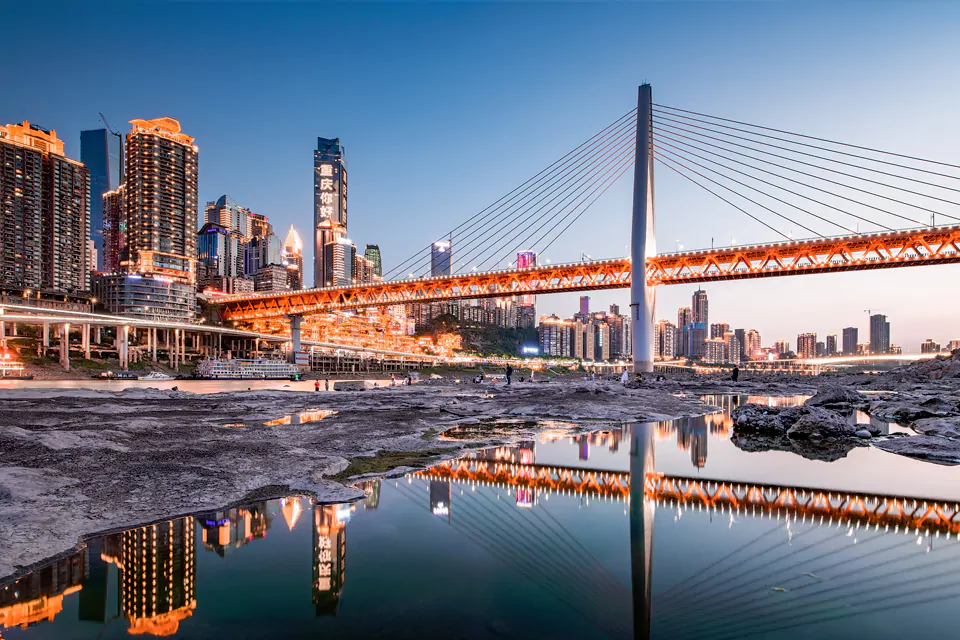
Most countries with long histories present them behind glass. China's history is still in use.
You can walk a rebuilt section of the Great Wall and understand, physically, why it was built where it was - the ridges, the passes, the impossibility of crossing the mountains any other way. More than twenty thousand kilometres of wall were constructed across successive dynasties, and the sections near Beijing are a small, well-known fraction of a much larger system that runs across deserts and grasslands to the west.
In Xi'an you can stand above a subterranean army of several thousand individually modelled figures, buried for over two thousand years, and then eat in a night market four hundred metres from a medieval city wall you can cycle along its entire perimeter.
In Suzhou, classical gardens designed five hundred years ago as philosophical statements about how to live are still gardens - still planted, still maintained, still used by people who go there in the morning to read.
The distinction matters for travellers: this is not heritage as exhibit. It is heritage as ongoing infrastructure, and it changes how the whole country reads.
China is 9.6 million square kilometres. That number is meaningless until you translate it: it is roughly the size of the entire United States, or about thirty times the United Kingdom, with a population of 1.4 billion spread across geographies that have almost nothing in common.
The practical consequence for travel is that a single trip can contain several entirely different destinations without any border formalities. Beijing is imperial and political, grand and austere. Shanghai is commercial and cosmopolitan, a river city with a European-era waterfront and Chinese hinterland behind it. Chengdu is slow, green, argumentative, dedicated to tea houses and food. Xi'an is northwest, dry, archaeological. Hangzhou is gardens and water and a technology economy that appears overnight. Shenzhen went from fishing villages to a metropolis of over seventeen million in about forty years. Kunming sits on a plateau at nearly two thousand metres, in a province that shares borders with three countries and contains a dozen distinct minority cultures.
Travellers who have "done China" after Beijing and Shanghai and Xi'an have seen perhaps three percent of the country's variety. There is a real argument that China is not one destination but a dozen, and that the correct question is not "should I go to China" but "which China".
Chinese food outside China is a compressed, adapted approximation of perhaps four or five regional cuisines out of many.
Inside China, food is the most reliable way to understand where you are. The "eight great cuisines" is a conventional framing, but it understates the reality: nearly every province, and often every city, has a defensible claim to its own culinary tradition, and the differences are structural rather than decorative.
Sichuan cooking is built on chillies and peppercorn that produce a numbing, not merely hot, sensation. Guangdong cooking prioritises the freshness of the ingredient and steams or stir-fries it barely. Northern cooking is wheat-based: noodles, dumplings, flatbreads, vinegared and robust. Jiangnan cooking is sweet, delicate, built around river fish and seasonal vegetables. Yunnan cooking uses herbs, mushrooms and ingredients that appear nowhere else in the country.
Noodles change form every few hundred kilometres. So does the vinegar. So does the way a chicken is cut.
For a traveller, this means eating is not a break between sights; it is the sight. And it is available at every price point, from a two-dollar bowl at a street stall to a formal multi-course dinner. The best meal of most visitors' trips is usually not the expensive one.
The single most common misconception is that travelling in China is logistically hard. Parts of it require adaptation. Movement is not one of them.
The rail network. China operates the largest high-speed rail network in the world, with well over forty thousand kilometres of line. Beijing to Shanghai is about 1,300 kilometres and takes roughly four and a half hours. Xi'an to Chengdu is fast enough to make a same-day transfer reasonable. Stations are large and signage is bilingual in the main ones. Booking is straightforward through apps and ticket offices.
Cities without a car. Metropolitan areas have extensive metro systems, and the major ones are cheap, clean, frequent and signed in English. Ride-hailing works, is inexpensive by Western standards, and removes the language barrier because the destination is entered in the app rather than spoken to a driver.
Payments that just work. Mobile payment is near-universal. Foreign cards can be linked to the two dominant payment apps, which converts almost every transaction — a market stall, a temple ticket, a taxi — into a QR scan. This is genuinely one of the great friction reductions of the last decade, and it has made independent travel much simpler than it was.
Safety. Violent crime against foreigners is rare. Walking home at night in a Chinese city is, for most visitors, unremarkable. Lost property is often returned. This is not a political statement; it is a practical fact that changes how freely you can move, and how late you can stay out, and it is worth a great deal on a trip.
Cost is a legitimate reason, not a shallow one, because cost determines how much of a country you can see.
China offers a range that most destinations do not: clean, well-located hotels at prices that in Europe would buy a modest room above a shop; intercity transport that is fast and cheap enough to make multi-city itineraries normal rather than luxury; meals of excellent quality for the price of a coffee in a Western capital.
The result is that a mid-range budget in China buys what a comfortable budget buys elsewhere. Three cities instead of two. Four weeks instead of two. A guide for the day when you need one, rather than struggling through alone to save the fee.
Value is not the same as cheap, and the point is not that China is a bargain destination. It is that the amount of country you can experience per unit of money is unusually high - which for a destination this large is the single most useful economic fact about it.
There is a kind of travel that is about the past, and a kind that is about watching the present happen at speed. China is the best place in the world for the second.
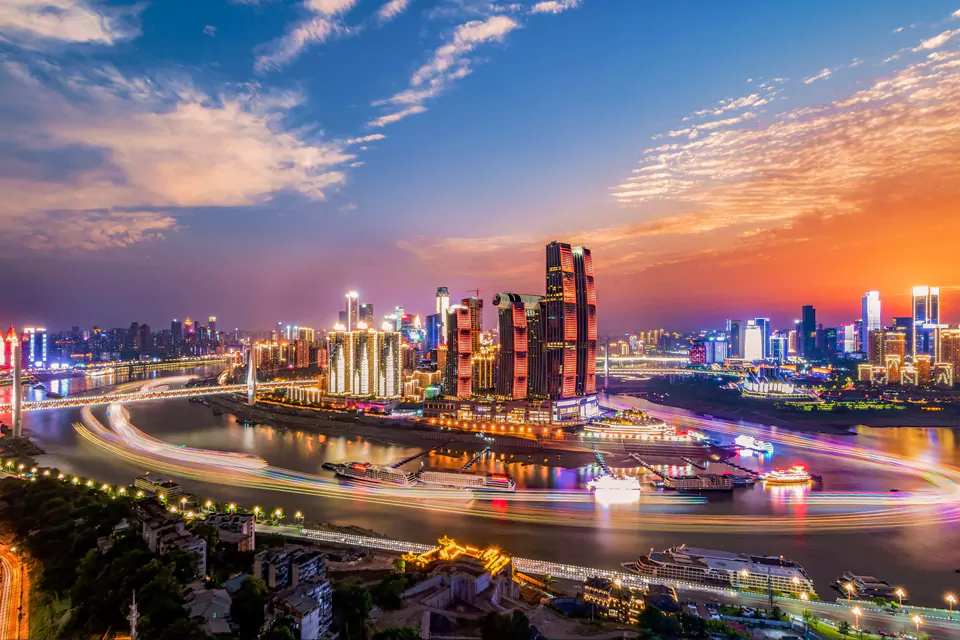
Shenzhen is the clearest case: a collection of fishing villages and farmland in 1980, now a city of over seventeen million with a skyline of towers, an entire hardware and electronics ecosystem, and a population that is overwhelmingly not native to the place. It is a city built within living memory, and residents will tell you about it.
Shanghai's Pudong district was mostly low-rise in 1990. The skyline you have seen in photographs did not exist when many of today's travellers were children.
But the more interesting change is not height. It is how daily life is organised: mobile payment, app-based delivery, shared bicycles, digital queuing, cashless vending, high-speed rail as ordinary commuting. Watching a society re-engineer its own daily logistics in real time is not a spectacle you can see many places, and it produces the kind of observation that stays with travellers longer than any monument.
The variety of terrain inside one set of borders is difficult to convey.
Guilin and the Li River: limestone karst towers rising out of flat farmland, the landscape that appears on the back of the twenty-yuan note.
Zhangjiajie: sandstone pillars and forested ravines, hundreds of metres high, that read as geological impossibility.
The Tibetan plateau and western Sichuan: high-altitude grasslands, glacial valleys, and roads that climb past four thousand metres, with Tibetan monasteries and nomad tents along the way.
Yunnan: tropical river valleys in the south, alpine meadows in the northwest, and terraced rice fields in the intervening hills.
The Gobi and the Taklamakan: desert, dunes, and the Silk Road oasis towns that survive because of water.
The Yellow Mountain and the karst of the south: the landscapes that shaped an entire tradition of ink painting, which is a different kind of interest — going to see the place that a civilisation spent a thousand years painting.
A two-week trip can combine two of these. A four-week trip can combine four. Very few countries offer this range with this little internal friction.
Craft in China is not a demonstration for tourists. It is a working economy with a long memory.
You can visit kilns in Jingdezhen, which has produced porcelain for over a thousand years and still fires contemporary work. You can watch silk being reeled and woven in Hangzhou. You can buy paper cut by hand, tea processed by hand in the same way for centuries, bamboo woven into objects that solve specific household problems. You can sit in a calligraphy studio and be handed a brush by someone who has used one daily for forty years.
For travellers who care about making things, this is an unusually accessible country: the practitioners are findable, the prices are not prohibitive, and many of them are genuinely delighted to explain their work. This is the opposite of the "authentic experience" that is staged for visitors; it is an economy you can walk into.
If you have any intention of studying Mandarin - or if you have a child who might - there is no substitute for being in the country.
Language study at home produces knowledge. Language study in China produces use. The difference shows up in listening first: learners who have spent four weeks in a Chinese city develop tolerance for ordinary-speed speech that classroom recordings never build, because real speech is faster, messier, and full of the hesitation and repair that no textbook includes.
This is the reason travellers mention most and guidebooks mention least.
The hospitality is real. A stranger will walk you to a street you cannot find rather than point. A vendor will refuse to let you leave without the correct change, even though you offered to forget it. A family in a small town will invite a foreign visitor to eat with them because it seems like the obvious thing to do.
It is also a country of intense social curiosity. People will ask direct questions - how much you earn, why you are not married, what you think of their city - that would be rude in the traveller's own culture and are not intended that way. Once you understand the register, it is one of the most engaging places to be a stranger in.
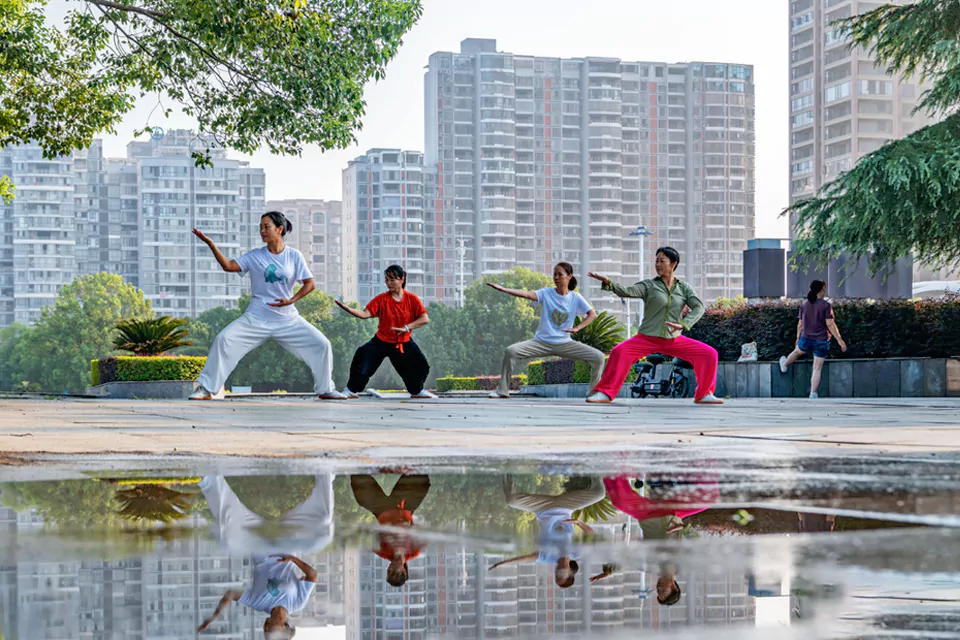
And there is scale in the sociability: parks at seven in the morning full of people dancing, singing, practising tai chi, playing cards, arguing about chess. Public life happens outdoors in a way that is increasingly rare elsewhere. A visitor wandering into a city park at dawn sees more of how the society actually works than any museum will show.
Any account that omits this is marketing rather than advice.
Visas. Entry rules change frequently and vary sharply by nationality. Visa-free entry and visa-free transit arrangements have expanded considerably in recent years, and the specific terms - permitted area, duration, eligibility - are revised often. Check your own nationality's current status on an official source shortly before booking, not a year ahead and not on a travel forum.
Language. English is widely studied but not widely used outside major hotels and international businesses. Outside the main cities, restaurant menus and taxi drivers are often Mandarin-only. This is not a problem to be solved but a condition to be planned for: translation apps, saved screenshots of addresses, a phrase set, and the willingness to point and smile. Most travellers report this as the best part of the trip rather than the worst.
Payments and internet. Mobile payment dominates, and some apps and services behave differently than visitors expect. Set up payment before arrival, arrange connectivity before arrival, and accept that you will occasionally need a workaround. This is a half-hour of preparation, not a structural obstacle.
Crowds and scale. Major sites in high season are genuinely crowded, and distances inside them are large. The Forbidden City is not a building; it is a walled complex of nearly a square kilometre. Pacing matters more here than anywhere.
Summer heat and winter cold. Beijing in July is hot and humid. Harbin in January is well below freezing, deliberately, and is worth visiting precisely for that. Season choice determines the trip more than any other single decision.
Three shapes work well.
The classic first trip, ten to fourteen days. Beijing, Xi'an, Shanghai, with a high-speed rail transfer between each. Imperial history, archaeological depth, contemporary city. It covers the three places every first-time visitor should see and does so without exhausting anyone.
The depth trip, two weeks in one region. Either Sichuan and Yunnan, or Jiangnan, or the northwest. Fewer cities, longer stays, actual understanding of a place instead of a photograph of it.
The specialised trip. A language programme, a business and industry itinerary, a hiking route, a food itinerary. China rewards specialisation, because the country is too large for a general tour to be more than a sampler. Travellers coming for industry and technology, for example, have a well-defined set of destinations and access arrangements, which our China Tech Tours programme is built around.
Whichever shape you choose, the operational rule is the same: fewer cities, longer stays, one rest day per week, and a willingness to abandon the plan for something better that appears.
Why should I travel to China rather than somewhere easier?
Because the return is disproportionate to the effort. The friction is concentrated in the first two days — payments, connectivity, language — and after that the country is easier to move around than most of Europe or North America. What you get for that is a depth of history, food and landscape variety that few destinations can match.
Is China safe for tourists?
Violent crime against visitors is rare, and independent travel, including at night, is broadly unremarkable. Petty theft exists in busy tourist areas as it does anywhere. The practical safety issues are traffic, heat in summer, and altitude on the plateau.
Do I need to speak Chinese?
No, but a small phrase set transforms the experience. Translation apps cover the rest. In major cities and hotels, English is workable; outside them, patience and a translation app do the job.
How many days do I need for a first trip?
Ten to fourteen days for the classic Beijing–Xi'an–Shanghai route. Below eight days, internal transport consumes too much of the trip. Four weeks allows a genuinely different, deeper itinerary.
When is the best time to go? Spring (April to May) and autumn (September to October) are the most comfortable across most of the country. Summer is hot in the lowlands but ideal for high-altitude regions. Winter is excellent for the northeast and for avoiding crowds elsewhere.
Is it expensive?
Mid-range costs are generally lower than in Western Europe or North America, particularly for hotels, intercity transport, and food. International flights are the main cost. The value ratio - how much country you can cover per unit of spend - is unusually good.
Can I combine travel with studying or business?
Yes, and it is one of the better reasons to go. Study programmes combine classroom work with city application; business and industry itineraries combine site access with regional travel. Both are more rewarding than tourism alone.
Why travel to China? Because it is the largest and oldest continuous civilisation on earth, and it is still being built, cooked, woven, argued about and lived in - and because the difficulty people imagine is mostly a two-day onboarding problem, after which the country is easier to navigate than most of the developed world.
Go for the history, which is not behind glass. Go for the food, which is a geography lesson three times a day. Go for the landscapes, which include several that look like errors in the map. Go because the trains are fast, the cities are safe, and the value ratio means you can afford to see three regions instead of one.
Plan for the friction honestly: check your visa status close to departure, set up payments before you fly, arrange connectivity in advance, and learn fifteen phrases. Then accept that the trip will be bigger than the plan, and give it room.
If you are working out where to start, our PandaStudyTour programmes group the country by purpose - language study for students and families, technology and industry for professional delegations, and specialist routes for travellers who want depth rather than a sampler. Tell us what you want from the trip and we will build the itinerary around that, rather than around a list of sights.
