Destinations: Natural science popularization lectures and engineering case analysis
Core Highlights
Who It Fits
Suitable for international students aged 12–18 who are interested in natural science, geographical geology, engineering technology and ecological environment. Ideal for STEM students who need to enrich field scientific investigation experience.
Package Includes
Natural science and engineering themed courses and Mandarin teaching fees, Dujiangyan scenic area visit tickets and professional scientific research guidance fees, field investigation material costs, full local transportation, accommodation and daily meals, 24-hour safety supervision, official natural science practice certificate. Excludes international airfare, visa fees and personal insurance costs.
Day 1: Arrival, Camp Orientation & Safety Training Students arrive at the designated camp accommodation in Dujiangyan. Our camp coaches, science tutors and Mandarin instructors welcome the group. After check‑in and room allocation, participants join a full camp orientation session covering daily schedules, campus rules, 24‑hour safety protocols, field‑trip safety requirements and emergency contact information. Students receive camp kits including investigation notebooks, pens, site maps and study handouts. In the afternoon, students start introductory scenario‑based Mandarin basic courses focused on vocabulary related to water conservancy, geography and nature. Evening welcome dinner, followed by a short group ice‑breaking activity. Overnight at Dujiangyan camp accommodation.
Day 2: Pre‑study: Dujiangyan History, Science Background & Themed Mandarin Training Morning classroom popular‑science lecture led by professional science tutors. Content covers the historical background of Dujiangyan, the construction story of Li Bing’s water‑conservancy system, and its core scientific value for flood diversion, sediment discharge and farmland irrigation. Group discussion session encourages international students to raise questions about ancient engineering challenges. Afternoon continues geology‑and‑engineering‑themed scenario Mandarin training; students practice reading site signs, recording field observations and describing natural‑science phenomena in Mandarin. Tutors walk through the field‑investigation template and explain how to fill in observation notebooks ahead of site visits. Evening self‑study and group preparation for the upcoming on‑site field research. Overnight at Dujiangyan camp accommodation.
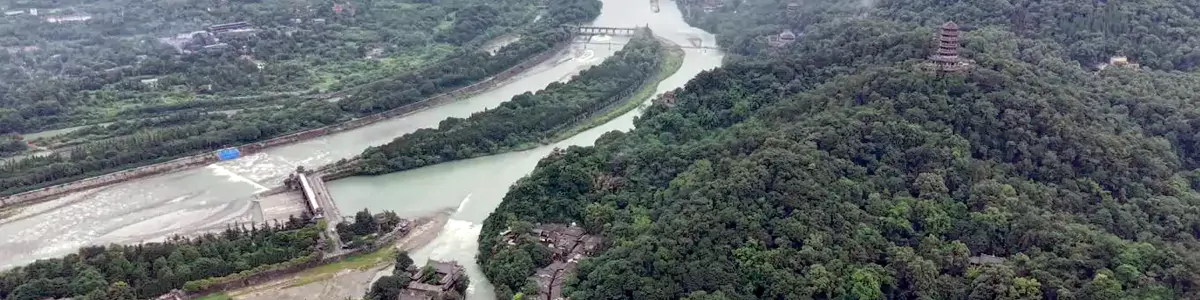
Day 3: On‑Site Field Investigation of Dujiangyan Water Conservancy Project (Part 1) After breakfast, the whole group transfers by private camp vehicle to Dujiangyan Scenic Area accompanied by science tutors and Mandarin instructors. Starting from Qinyan Tower, students gain a full panoramic overlook of the whole Min‑River water‑diversion layout. Professional tutors conduct on‑site teaching, explaining the structural design and working logic of Fish‑Mouth Diversion Dike. Students walk across the historic Anlan Suspension Bridge and observe river flow conditions firsthand, taking photos and writing down initial notes in their investigation notebooks. Group lunch inside or nearby the scenic zone. In the afternoon, visit Erwang Temple to learn about folk memory and historical records of Li Bing’s achievements. Guided observation of Feisha Weir (sand‑discharge weir). Tutors demonstrate how sediment flushing works without modern machinery. Return to camp in late afternoon. Evening debrief session: students sort out day‑time field records under tutor guidance. Overnight at Dujiangyan camp accommodation.
Day 4: On‑Site Field Investigation of Dujiangyan Water Conservancy Project (Part 2) & Engineering Case Analysis Morning continues in Dujiangyan Scenic Area. Focus study on Baopingkou (the man‑made water‑diversion channel), analysing how this artificially chiselled mountain gap controls inflow for the Chengdu Plain irrigation network. Tutors lead case‑study comparisons: contrast Dujiangyan with other ancient and modern water‑conservancy projects around the world. Students complete structured group observation tasks and record data about water flow, terrain and engineering structures in their research notebooks. Lunch at a local restaurant. Afternoon hands‑on auxiliary activity: introduction to ancient Dujiangyan construction techniques including the traditional macha and bamboo‑cage engineering methods used for river regulation. Students watch demonstration and complete simple simulation exercises. Return to camp. Evening group seminar, students share preliminary field findings within small teams. Overnight at Dujiangyan camp accommodation.
Day 5: Regional Geological‑Ecological Observation, Case Discussion & Completion of Investigation Notes Morning field trip for regional geological and natural‑ecology observation outside the core Dujiangyan scenic spot. Tutors guide students to observe local landforms, river‑valley geology, vegetation distribution and the ecological relationship between Min River water system and surrounding mountain areas. Students practice basic field‑investigation skills including landscape sketching and environmental note‑taking. Back to camp for lunch and short rest. Afternoon in‑camp workshop: natural‑science case discussion. Teams analyse collected field materials, discuss ecological‑governance philosophy reflected by Dujiangyan, and connect ancient hydraulic wisdom with modern‑day ecological‑protection topics. With tutor support, each student organises field records and finishes their simple scientific‑investigation notes or short research draft. Evening free time for personal arrangement and final preparation for achievement‑sharing session. Overnight at Dujiangyan camp accommodation.
Day 6: Research‑Achievement Summary, Sharing Session, Certificate Awarding & Departure Morning group‑based research‑achievement summary and exchange sharing. Each small group gives a short presentation based on their field‑investigation notes, sharing discoveries about Dujiangyan's engineering principles, geology observations and what they learned about ancient Chinese ecological wisdom. Tutors provide targeted feedback and comments for each group's output. After the sharing forum, hold an official certificate‑awarding ceremony; every participating student receives the official natural‑science practice certificate. Group closing photo session. Lunch at camp. Afterwards, students check out from accommodation. Camp staff transfer students to airport / railway station for their onward departure.