City: Guangzhou
Shiqiao Village in Danzhai, Guizhou, has made paper for centuries using a technique recognized as China's national intangible cultural heritage. Craftsmen beat the bark of the paper mulberry tree into pulp, stir it into a vat of water, and pull a bamboo screen through to catch a thin sheet. In the "flower paper" version, petals, leaves and grass are laid onto the wet sheet, becoming part of the paper itself.
Guests at a PandaStudyTour session go through every step with a master: beating and blending pulp, dipping and shaking the screen to form the sheet, arranging botanical elements into your own design, and pressing and drying it. In about 1.5 hours you produce several sheets of flower paper that can be framed, made into bookmarks, or used as gift paper.
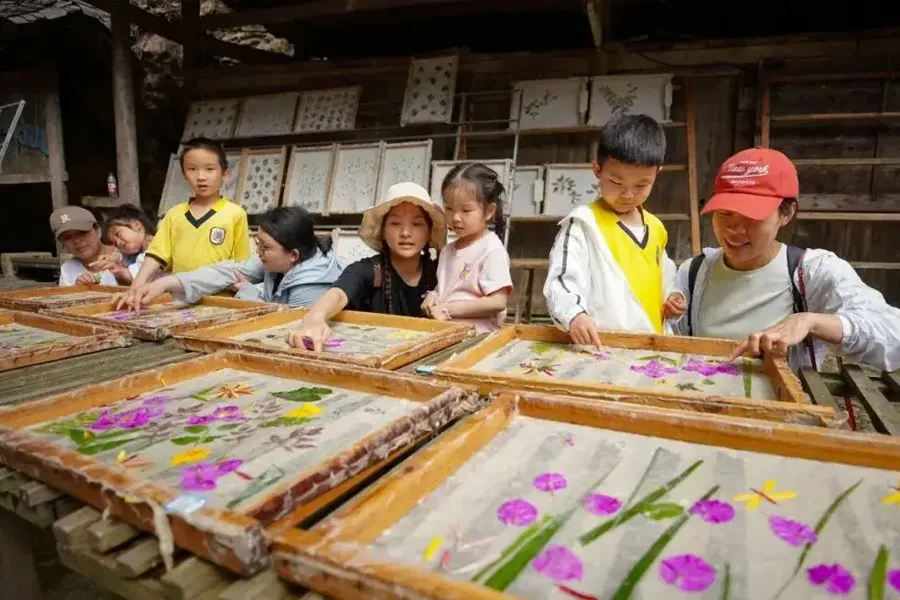
The experience connects deeply to Chinese history - papermaking is one of China's four great inventions - and to sustainability, since the craft uses renewable bark and recycled water. For school groups, it is an unforgettable hands-on lesson in materials science, history and art.
How PandaStudyTour delivers it: We book certified papermaking studios in Shiqiao Village and Danzhai Wanda Town, provide bilingual storytelling about the craft's history, manage transfers and timing around your itinerary, and adapt the session length for younger travelers.
Q&A
Q: Where is the papermaking workshop located?
A: Shiqiao Village and Danzhai Wanda Town, about 1.5–2 hours from Kaili by car.
Q: Is flower paper edible or safe for children?
A: It is paper, not food - but all materials are natural bark, leaves and petals, and children can handle them safely with guidance.
Q: How many sheets do we make?
A: Usually 3–5 sheets per person, plus bookmarks; output varies with session time.
Q: Can the paper be shipped home?
A: Yes - it is thin, light and easy to pack; we can include it in your luggage guidance.
Q: Do artisans speak English?
A: Our bilingual guides translate throughout; many studios are also used to international visitors.
