Destinations: Xi’an & Luoyang
This 8-day cross-city study tour connects two most influential ancient capitals on the eastern Silk Road: Xi'an (Chang'an) and Luoyang. Starting from Xi'an, students explore the Terracotta Army, City Wall and Tang history, then take high-speed rail east to Luoyang. They learn how the Silk Road stretched from Chang'an to Luoyang, bringing Buddhism, art and goods into central China. Students compare Qin and Tang imperial architecture, study Buddhist sculpture evolution and discuss cultural exchange along ancient trade routes.
Day 1: Arrival in Xi'an|Silk Road Capital Orientation & City Adaptation
Upon arrival at Xi'an Xianyang International Airport, students will be greeted by our professional English-speaking guide and private group vehicle. Enjoy exclusive airport pickup service and transfer to a centrally located, student-friendly hotel with complete heating and cooling systems. After check-in and luggage arrangement, students will have sufficient time to rest and recover from international flight fatigue.
In the evening, join a systematic tour orientation briefing. The instructor will introduce the core learning theme of this trip - the "Silk Road Civilization Dialogue between Chang'an and Luoyang", clarify daily study tasks, outdoor safety guidelines, and group division rules. A welcome dinner featuring classic Shaanxi local dishes will be arranged to help students adapt to local catering culture. Overnight in Xi’an.
Day 2: Xi'an Terracotta Army & Qin Mausoleum|Archaeology & Ancient Military Study
Start the day with a nutritious breakfast, then take a private air-conditioned coach to the UNESCO World Heritage Site - Terracotta Army Museum, located in the eastern suburb of Xi'an.
In the morning, conduct in-depth field study at Pit 1, Pit 2, and Pit 3 of the Terracotta Army. Under professional English academic guidance, students will observe the unique facial features, armor styles, and formation layouts of different terracotta warriors, record the standardized production system of Qin Dynasty imperial crafts, and understand the ancient Chinese military hierarchy, weapon configuration, and large-scale army organization system. Students need to complete on-site observation worksheets and record key differences between ancient Chinese military civilization and Western ancient military culture.
After a local characteristic lunch, visit the Emperor Qinshihuang's Mausoleum Site Park. Learn about the ancient Chinese imperial burial system, Fengshui layout philosophy, and large-scale national engineering organization capabilities of the Qin Dynasty. The guide will explain the historical background of the unification of China and the far-reaching influence of Qin civilization on Chinese feudal dynasties.
Return to downtown Xi'an in the evening. Arrange group discussion time for students to sort out today's archaeological knowledge and preview tomorrow's Silk Road relic learning content. Overnight in Xi'an.
Day 3: Shaanxi History Museum & Big Wild Goose Pagoda|Tang Silk Road Prosperity Study
In the morning, visit Shaanxi History Museum, known as "the pearl of Silk Road relics". With themed English explanation, students will focus on appreciating Han and Tang Dynasty Silk Road cultural relics, including exotic gold and silverware, glassware, foreign merchant figurines, and ethnic musical instrument relics. Students will learn how Chang'an, as the world's largest international metropolis in the Tang Dynasty, absorbed Central Asian, West Asian and European cultures through the Silk Road, forming a diverse and inclusive urban civilization.
After lunch, head to Big Wild Goose Pagoda and Ci'en Temple. Students will study the architectural characteristics of Tang Dynasty Buddhist towers, learn the historical story of Xuanzang’s westward journey to fetch Buddhist scriptures, and understand the important role of monks in cultural and knowledge dissemination along the ancient Silk Road. Walk through the Tang-style cultural square to feel the grand atmosphere of Chang'an's Silk Road international exchanges.
In the evening, students can stroll around the nearby commercial and cultural block to experience the integration of modern Xi’an urban style and ancient Tang heritage. Complete daily study journal records. Overnight in Xi’an.
Day 4: Xi’an Ancient City Wall & High-Speed Train to Luoyang|Two Capitals Civilization Transition
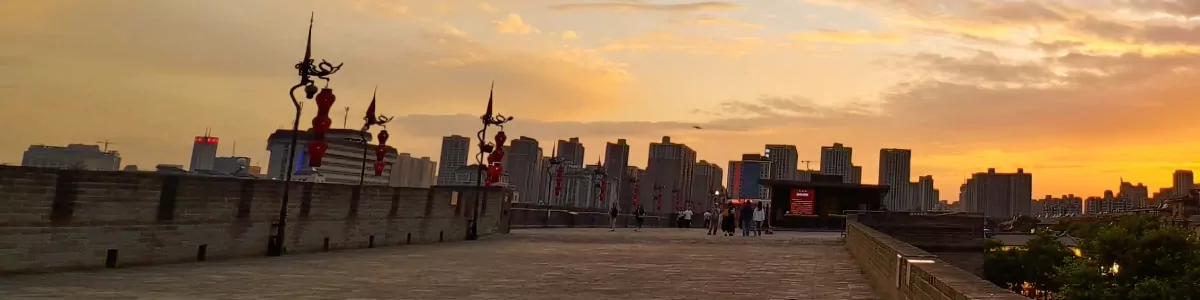
After breakfast, start with the Xi'an Ancient City Wall study activity. Walk on the well-preserved Ming Dynasty city wall, observe the tower structure, rampart design and urban defense system, and compare the urban planning models of ancient Chinese capitals and European medieval cities. The guide will explain the evolution of Chang’an urban layout from Sui and Tang to Ming and Qing dynasties, and its connection with Silk Road trade security.
At noon, enjoy authentic Shaanxi characteristic lunch. After lunch, check out the hotel and transfer to Xi'an North Railway Station, take the high-speed train eastward to Luoyang. During the 2-hour train journey, the instructor will lead an on-board interactive sharing session, sorting out the cultural differences and inheritance relationship between Chang'an and Luoyang, the two core capitals of the eastern Silk Road.
Upon arrival in Luoyang, private vehicle transfer to the hotel for check-in and rest. In the evening, take a casual walk near Luoyang's old town to feel the quiet and profound ancient capital atmosphere of Heluo Civilization. Overnight in Luoyang.
Day 5: Longmen Grottoes Full-Day Field Study|Silk Road Buddhist Art Evolution
Today focuses on in-depth field academic research at Longmen Grottoes, a UNESCO World Heritage Site and the peak representative of Chinese grotto art. After breakfast, depart for Longmen Grottoes on the bank of the Yi River.
In the morning, visit the northern bank scenic area, including Qianxi Temple, Binyang Cave and Fengxian Temple. Students will closely observe the grand Lushena Buddha statue, learn about the sponsorship background of Empress Wu Zetian, and analyze the artistic characteristics of Tang Dynasty Buddhist sculpture—gentle lines, grand posture and humanized aesthetic style. Compare the differences between Central Plains grotto art and Western Asian Buddhist art spread along the Silk Road.
After a local Luoyang-style lunch, continue to explore the southern bank scenic area and hidden niche groups. Students will conduct landscape sketching and art observation tasks, record the integration of Buddhist art and Chinese traditional landscape aesthetics. The professional guide will explain the entire evolution path of Buddhism from foreign introduction to localized innovation in China.
In the evening, organize a special theme discussion: “How Silk Road trade promoted religious and artistic integration”. Students share observation gains and complete professional study reports. Overnight in Luoyang.
Day 6: Erlitou Site Museum & Luoyang Museum|Origin of Heluo Civilization
In the morning, visit Erlitou Site Museum, the birthplace of China's earliest imperial capital and national civilization. As the core origin of Heluo Civilization, this site witnesses the formation of early Chinese state institutions, ritual systems and bronze civilization. Under English professional explanation, students will understand the origin of the concept of "China", observe the earliest palace ruins, bronze ritual vessels and jade artifacts, and learn the historical foundation of Central Plains civilization supporting the later Silk Road cultural export.
After lunch, visit Luoyang Museum, a comprehensive treasure house of Central Plains cultural relics. The museum collects fine relics from Xia, Shang, Northern Wei, Sui and Tang dynasties. Students will systematically sort out the 3,000-year historical context of Luoyang as an ancient capital, and compare the cultural inheritance and innovation differences between Luoyang and Xi'an in the development of the Silk Road.
Free leisure time in the evening, sort out study materials and prepare for tomorrow's religious culture and hands-on courses. Overnight in Luoyang.
Day 7: White Horse Temple & Tang Sancai Handicraft Workshop|Silk Road Religion & Art Inheritance
In the morning, visit White Horse Temple, China’s first official Buddhist temple and the starting point of formal Buddhist localization in China. The guide tells the historical story of “white horse carrying scriptures” along the Silk Road, explains the layout characteristics of early Chinese Buddhist temples, and analyzes how foreign religious culture took root and developed in the Central Plains through ancient trade routes.
After lunch, join a professional Tang Sancai pottery hands-on workshop. Under the guidance of intangible cultural heritage masters, students will learn the production process of Tang tri-color glazed pottery, including blank making, carving and glazing. Students can create exclusive small cultural and creative works with Silk Road and Luoyang landscape elements, integrating artistic creation and cultural learning.
In the evening, launch group project preparation. Each team sorts out the full-process research data of the Xi’an-Luoyang Silk Road study tour and polishes the final presentation content. Overnight in Luoyang.
Day 8: Final Presentation & Departure|Silk Road Civilization Achievement Summary
In the morning, hold a closed study tour achievement sharing session. Each student group delivers a themed presentation centered on “Silk Road Cultural Exchange Between Chang’an and Luoyang”, demonstrating daily observation records, archaeological analysis, artistic comparison and cultural thinking. Professional instructors give targeted comments and summarize the core knowledge and cross-cultural gains of the entire trip.
After a closing breakfast, check out the hotel and take a private coach transfer to Zhengzhou Xinzheng International Airport. Students finish this in-depth 8-day Silk Road ancient civilization study tour and depart for return flight.