Herbal Tea & Medicinal Cuisine: Eat Your Way to Balance
In Traditional Chinese Medicine, food is medicine. This is not a modern wellness slogan - it is a philosophy that has shaped Chinese cooking for millennia. From the goji berries floating in your chicken soup to the chrysanthemum tea served at the end of a meal, every ingredient is chosen not just for flavor, but for its effect on the body. For travelers visiting China, experiencing herbal tea and medicinal cuisine is a delicious, accessible, and deeply cultural way to engage with TCM.
Medicinal cuisine (药膳) is the art of cooking with TCM herbs and foods to nourish specific bodily needs. It is not strange or bitter - on the contrary, it is some of the most flavorful food you will eat in China. A bowl of silkie chicken soup with goji berries and red dates warms the body and nourishes the blood. Lotus seed and lily bulb porridge calms the mind and improves sleep. Yam and pork rib soup strengthens digestion and energy. Chrysanthemum and goji tea cools the liver and soothes tired eyes after long hours of screentime and travel. Each dish is a balance of flavors and properties - hot or cold, warming or cooling, moistening or drying - tailored to different constitutions and seasons.
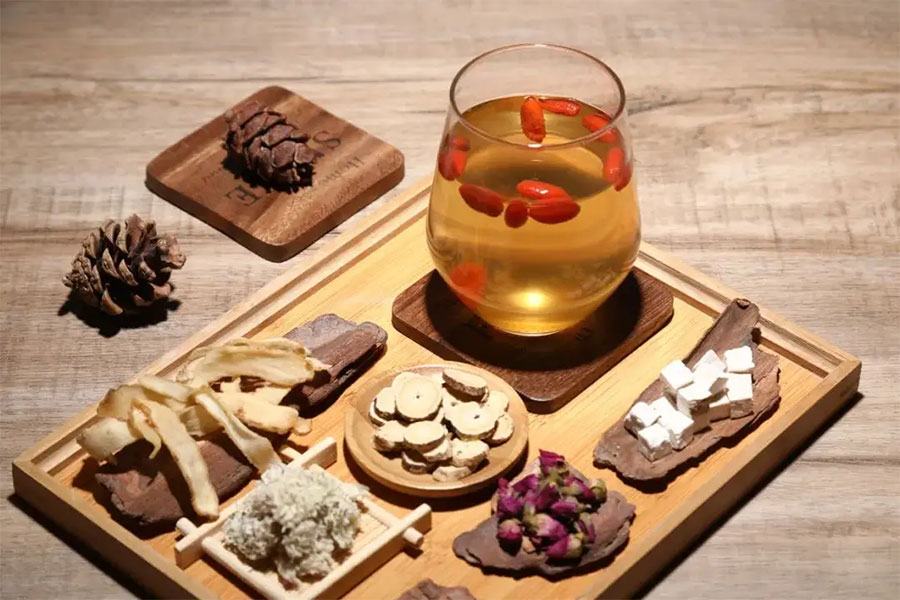
A PandaStudyTour medicinal cuisine experience often begins at a traditional Chinese herbal pharmacy (中药房), where you can see hundreds of drawers filled with dried roots, barks, flowers, seeds, and fungi. An herbalist will explain the properties of common herbs - how astragalus (黄芪) boosts immunity, how angelica root (当归) nourishes blood, how licorice (甘草) harmonizes formulas. You may even watch an herbalist weigh and wrap a custom formula, the scales and paper wrappers unchanged for centuries.
Then comes the meal: a carefully designed set menu at a restaurant specializing in medicinal cuisine, where each dish is explained for its properties and benefits. You might try steamed fish with gastrodia tuber (said to calm the liver and improve circulation), braised beef with radish and tangerine peel (to aid digestion), or black sesame and walnut dessert (to nourish the kidneys and hair). Paired with a custom herbal tea (中药茶饮) blended for your constitution - perhaps rose and hawthorn for digestion, or ginger and red dates for warmth—the meal becomes both a feast and a gentle wellness treatment.
The beauty of herbal tea and medicinal cuisine is that it requires no commitment, no needles, no downtime. It is simply eating and drinking the way the Chinese have for thousands of years - mindfully, seasonally, and with an understanding that what you put in your body shapes how you feel.
PandaStudyTour partners with licensed TCM nutritionists and renowned medicinal cuisine restaurants across China. We can arrange a single herbal tea tasting, a full medicinal cuisine dinner, or even a hands-on cooking class where you learn to prepare simple TCM-inspired dishes to take home.
Food is the most universal language. Let China's ancient culinary wisdom nourish you - one delicious, healing bite at a time.
