Anhui is the China that surprises people who think they already know China. In the south of the province, the Yellow Mountain rises out of a sea of cloud, and at its foot lie the white-walled, horse-head-gabled villages of old Huizhou - Shexian, Tangyue, Chengkan, Hongcun and Xidi - where the Hui merchants built their fortunes, their archways and their libraries between the Ming dynasty and the early twentieth century. Our Anhui tours are built for students and educators, not for coach-window sightseeing: you walk the flagstone lanes with the people who live there, read the ledgers and the carvings, taste the tea and the ink that paid for it all, and leave with a working understanding of how trade, family and scholarship shaped a region that sent its sons out to every town in China. Below you will find our signature Huizhou Merchant Culture Route, our Yellow Mountain and village extensions, and the questions we are asked most often when a school or a faculty group first writes to us.
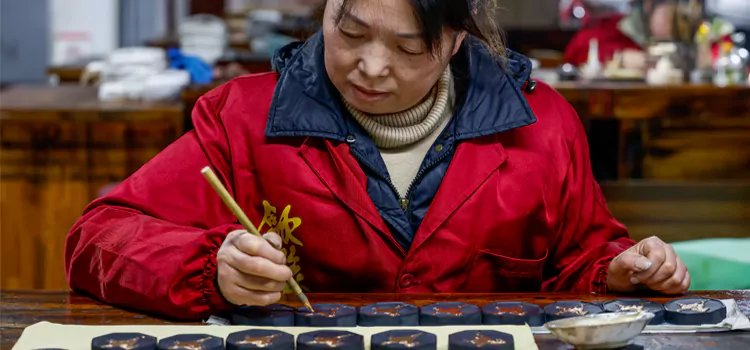
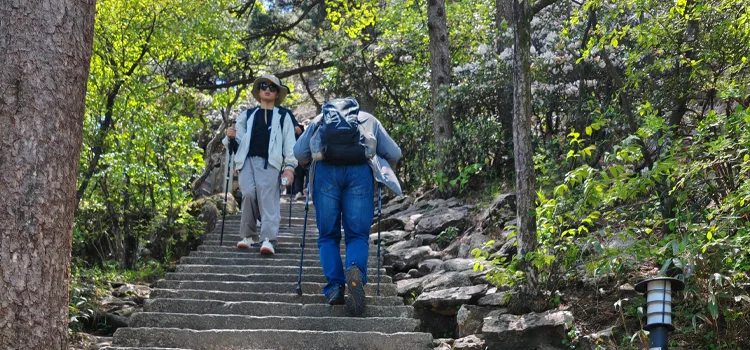
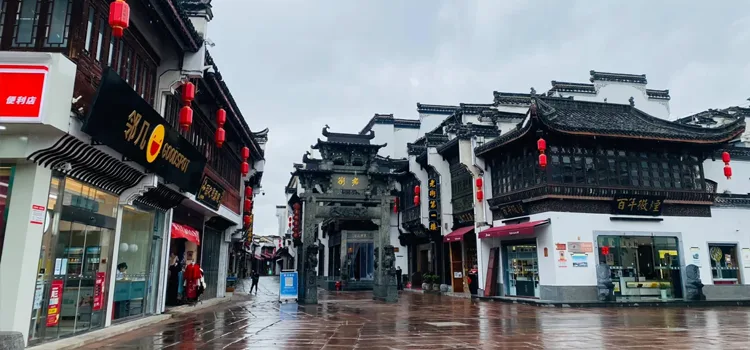

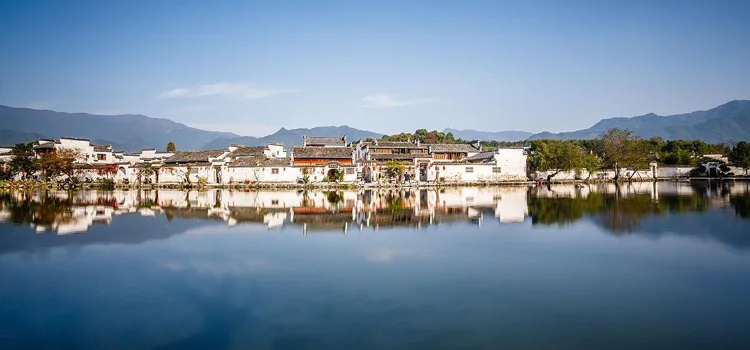
Anhui compresses several normally separate subjects into one small geography. Within roughly an hour's drive you can stand in front of a Ming dynasty archway, walk a merchant's house built with salt money, read a family ledger, visit an ink workshop still mixing soot and glue by hand, and climb the granite trail that carried goods to Hangzhou. That density makes it ideal for field-based learning: students can compare evidence across sites on the same afternoon instead of piecing it together weeks later in a classroom. Two days gives you Huangshan or a village or two. Four to seven days lets the themes - merchant networks, clan rules, scholarship, craft, trade routes - actually settle.
Sightseeing is the floor, not the ceiling. In Shexian we read the Xuguo Archway as a piece of political messaging, not decoration, and walk the Yuliang Dam to see how a river was engineered into a shipping asset. In Tangyue students count seven archways and work out which virtue bought which stone. In Chengkan, a village laid out on the eight trigrams, we run a workshop on the Dragon-Gate ledger - the double-entry method Hui accountants used centuries before it appeared in European textbooks - and have students keep their own books for a day. In Hongcun and Xidi the subject becomes architecture and craft: moon ponds, salt merchants' halls, and the three carvings in wood, brick and stone. Every day closes with a short learning objective and a debrief, so teachers can tie the day to a syllabus.
A. Our flagship Huizhou Merchant Culture Route runs 7 days and 6 nights with about 7 hours 25 minutes of total coach time, which keeps the itinerary comfortable for school groups. Shorter versions of 4 to 5 days work if a group drops the Hui-Hang Road hike or one village. Longer versions of 9 to 11 days add Yellow Mountain (+2 days), Wuyuan in Jiangxi (+2 days) or a Hangzhou leg along the ancient trade road (+2 days), and business schools often bolt on a case-study session. Anhui sits well inside a national itinerary: Shanghai is about three hours by high-speed rail, Hangzhou about 1.5 hours, and Huangshan has its own airport with direct flights from major Chinese cities, so Anhui can follow Beijing or precede Shanghai without a wasted travel day.
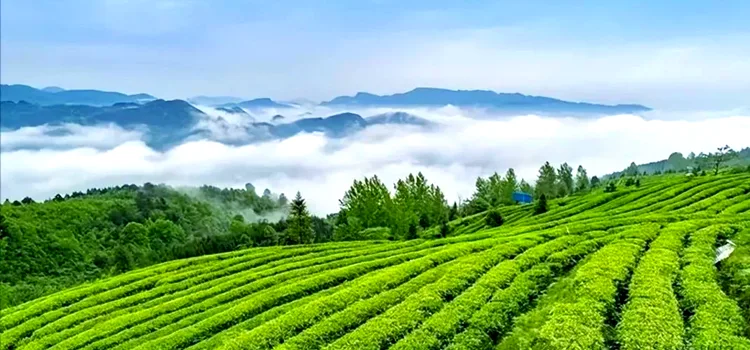
Both, with different framing. For ages 12 to 17 the villages work because everything is walkable, safe and visually legible: archways, carvings, water systems and tea terraces are easy to look at and easy to talk about, and the ledger workshop becomes a game about honesty and records. For university groups - history, architecture, anthropology, business - we go deeper into lineage rules, merchant credit networks, the Jia er hao ru ideal of the merchant who reads, and the nineteenth-century decline of the Huizhou trade. Adult and professional groups usually take the luxury version: private courtyards, tea with a Huizhou family, slow dinners. Group sizes from 8 to 40 are workable; we adjust walking distance, workshop depth and free time accordingly.
April to June and September to November are the sweet spots: mild weather, working tea terraces, clear mountain views. July and August are hot and busy but fine if the itinerary leans on early mornings; December to February is quiet and atmospheric, with occasional snow on Huangshan, and suits photography or architecture groups. Transport is by private coach with a fixed driver for the whole tour — not public buses — because village roads and parking are the main logistical risk in Huizhou. Transfers are short: Tunxi to Shexian is 45 minutes, Chengkan to Hongcun 55 minutes, Xidi back to Tunxi 75 minutes. We keep one vehicle and one driver throughout so luggage stays on board and timing stays predictable, and every route includes a bilingual guide who lives in the region.
