Most China itineraries sold to companies are built for volume, not for the people signing the cheques. A coach leaves at 8:30, twelve people visit three showrooms, somebody takes photos in front of a logo wall, and everyone flies home with a folder of brochures and no new relationship. For a board director or a regional CEO, that is a week of their life spent on logistics they did not need and conversations they did not want.
A bespoke China corporate delegation tour for executives starts from the opposite end. It begins with the decisions your leadership team is trying to make, then works backwards into a short list of rooms worth sitting in. The itinerary is not a menu of attractions; it is a schedule of conversations, each with a stated purpose, a named counterpart and an expected output.
This article explains how a properly bespoke delegation is built, what separates it from a premium group tour with a nicer hotel, and how to brief an operator so the first proposal you receive is already close to right.
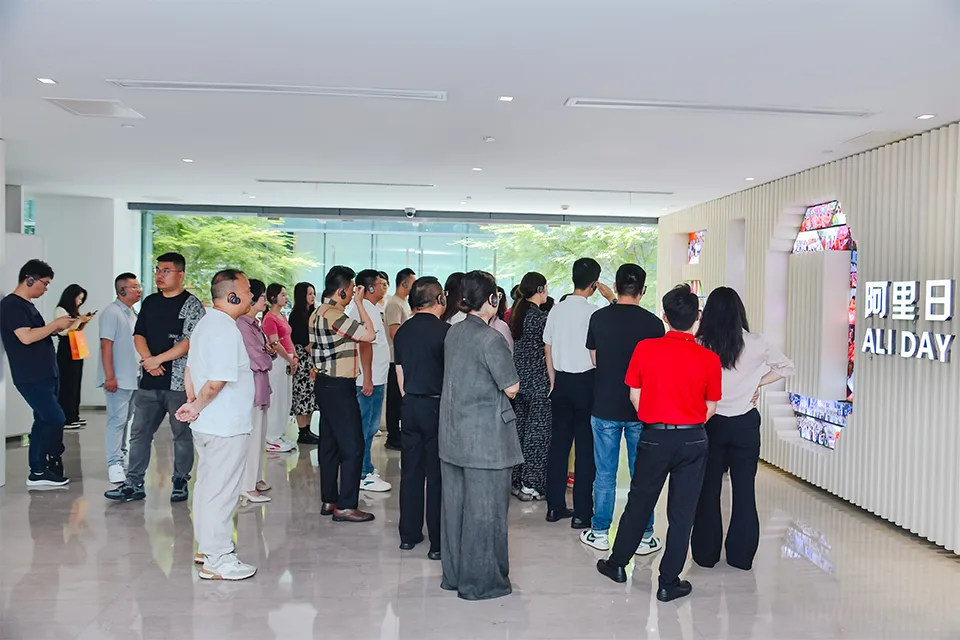
Executives do not fail to learn on group tours because they are uninterested. They fail because three structural things are wrong.
The first is access level. Standard corporate visits put a marketing manager or a visitor-centre guide in front of the group. That person is usually excellent at explaining what the company makes. They are rarely authorised to discuss cost structures, sourcing decisions, hedging strategy or the internal debate behind a product pivot. A chief procurement officer gains almost nothing from that conversation.
The second is agenda mismatch. A delegation of supply chain leaders and a delegation of brand marketers can be sent to the same five companies and come away with entirely different value. Unless the discussion agenda is pre-written to the delegates' actual questions, the visit collapses into a general company introduction that everyone could have read online.
The third is pace. Senior groups need fewer stops, longer sessions and protected recovery time. Two site visits and one substantive dinner in a day is a full day. Four visits plus a cultural programme plus a city transfer is a performance, not a study tour.
Bespoke design fixes all three by treating the week as a portfolio of meetings rather than a checklist of sites.
The word is over-used in travel marketing, so it is worth being concrete. A genuinely bespoke executive delegation differs from a customised group tour along seven dimensions, and all seven have to be addressed before the itinerary is finalised.
1. Delegate composition. How many principals, how many staff, will spouses or board observers join, and who has decision authority in the room. A delegation of four senior people behaves completely differently from a delegation of eighteen, even with the same budget.
2. Learning objective. Is the trip for market entry assessment, supplier qualification, investment diligence, technology scouting, partnership origination, or board education. Each objective produces a different company shortlist and a different meeting format.
3. Access tier. Showroom and factory floor, or showroom, factory floor and a closed-door session with a functional vice president. The second tier requires lead time, a formal request, often a delegation letter, sometimes an NDA, and always a credible reason for the meeting.
4. Agenda authorship. Who writes the discussion questions. On a bespoke programme, we draft a one-page agenda per meeting, circulate it to the client for amendment, and send it to the host company in advance so the right functional owner attends.
5. Geographic logic. Three cities in five days is a logistics decision, not a strategic one. The right question is which two or three cities contain the specific companies and ecosystems on the shortlist, and whether internal flights or high-speed rail produce less friction.
6. Time architecture. How much of the day is meeting, how much is travel, how much is unstructured. Senior delegations typically need one protected half-day per three days of programme, either for private follow-up calls or simply to recover.
7. Output design. What the delegation takes home. Notes, contact list, an agreed next-step log, a written synthesis. Without a designed output, the value of a good week decays within a month.
If a proposal does not answer all seven, it is a customised tour, not a bespoke delegation.
Across the delegations we have arranged in China, five buyer profiles recur.
Board and C-suite of mid-market multinationals who need to understand how a competitor or supplier ecosystem actually operates before committing capital.
Private equity and venture investors doing thematic diligence on a sector, where the value is in seeing three factories and two founder conversations in the same week.
Trade associations and chambers assembling a member delegation, where the operator's job is to convert a group of otherwise independent companies into a coherent schedule with individual meeting requests layered on top.
Family offices and holding companies evaluating cross-border expansion, usually with a shorter list of questions but a much higher tolerance for premium service.
Corporate academies and executive education programmes that need a live case environment rather than a lecture theatre.
Each profile needs a different contract structure, different confidentiality handling and a different ratio of scheduled to unscheduled time. A family office of three people and a chamber delegation of thirty can share a methodology but not an itinerary.
A bespoke delegation is usually built in five stages, and the first two happen before any hotel is booked.
Stage one: the brief. We ask for the objective, the delegate list with titles, the sector focus, the dates, the budget band and any companies already ruled in or out. A thirty-minute call usually produces enough to draft a skeleton. Where the client has an internal strategy document they are willing to share, the brief improves dramatically.
Stage two: the shortlist. We propose twelve to twenty candidate hosts, grouped by theme, each with a note on why it fits the objective and what level of access is realistic. The client cuts it to six to ten. This stage prevents the most common failure in the whole process, which is discovering on day three that half the group did not need to be at that company.
Stage three: the request cycle. Formal meeting requests go out four to eight weeks ahead for senior access, with a delegation profile, proposed agenda and requested attendee functions. Some companies respond in three days; some take three weeks; a few decline and require a substitute. Building in two alternates per anchor visit is standard practice.
Stage four: the operating plan. Confirmed meetings are sequenced against travel time, meals, interpretation needs and recovery. Room formats are decided, materials prepared, NDAs signed if required, and a minute-by-minute run sheet issued to the client and to each host.
Stage five: delivery and synthesis. On the ground, a bilingual coordinator travels with the delegation. After the programme, we deliver meeting notes, a consolidated contact sheet and a short written synthesis against the original objectives.
A well-built executive programme usually includes the following components, whether it runs for five days or twelve.
That last point deserves emphasis. Culture is not filler and it is not a concession to accompanying partners. Two hours on the Bund or a walk through a well-interpreted heritage site is genuinely useful for a first-time visitor's understanding of a city's commercial psychology. But it belongs in the schedule as recovery and context, not as the reason for the trip.
The five-day two-city format. Beijing for two days of policy, platform and technology conversations, Shanghai for two days of finance, multinational headquarters and brand or consumer discussions, with the fifth day reserved for a synthesis session and departure. This suits delegations whose objective is orientation and relationship origination rather than deep sector work. Travel is one high-speed rail leg, which is efficient and civilised.
The eight-day three-city format. Beijing, Hangzhou and Shanghai, or Shanghai, Ningde and Shenzhen for an industrial delegation. Three cities allow two sector clusters plus one capital or coordination hub, and give enough runway for eight to ten substantive meetings with real depth. This is the format most commonly chosen by investors and by C-suite groups who want a defensible market read rather than a sample.
Custom lengths are normal. We routinely build four-day compressed programmes for chairmen with limited availability, and twelve-day programmes for associations that want to add a trade fair or a second industrial cluster.
Two practical realities shape every bespoke delegation.
Lead time matters more than budget. A request placed eight weeks ahead opens doors that the same request placed ten days ahead cannot. Chinese corporate hosts plan quarterly, and senior executives' calendars fill. Clients who can commit dates early get materially better access at the same spend.
Budget determines access tier and comfort, not itinerary length. Interpreter quality, hotel standard, transport and the number of cities all consume budget. Within a fixed number, adding a city almost always reduces depth. Our advice to most clients is to cut one city and add one meeting.
We also tell clients plainly when something is not realistic. Some companies do not host external delegations. Some will host but not at executive level. Some will host only under NDA, or only for a group above a certain size. A good operator says so at the shortlist stage rather than after the itinerary is published.
Send us six things and the first proposal will usually be usable:
With that, we return a shortlist within a few business days, a draft operating plan after the shortlist is agreed, and a confirmed programme once hosts reply.
Is a bespoke delegation different from a premium group tour? Yes, structurally. A premium group tour improves hotels, meals and guides within a fixed itinerary. A bespoke delegation rebuilds the itinerary around your objective, negotiates access level per meeting, writes the discussion agenda and designs the output. The hotel is a detail, not the product.
How far in advance should we book? Six to eight weeks is comfortable for executive-level access. Ten to twelve weeks is better for very large companies or for delegations of more than twenty. Requests inside three weeks are possible but usually land at manager or director level rather than vice president level.
Can you guarantee a specific company? No operator can guarantee access to a named company, because hosting is a discretionary decision by the host. What we do is build a shortlist with alternates, submit credible requests early, and be transparent at the shortlist stage about which hosts are realistic and which are a stretch.
How large can a delegation be? From three principals upward. Above twenty-five, we typically recommend splitting into parallel tracks for parts of the day, because a single room cannot sustain a closed-door discussion at that size.
Do you handle visas and invitation letters? We provide the programme documentation and formal invitation letter that most Chinese visa applications require, and we advise on the correct visa category. The application itself remains with the delegate and their travel agent.
Can the programme include a trade fair? Yes. Canton Fair and the China International Import Expo are both commonly integrated. Fair days need to be planned around meeting days, because the two consume energy in different ways.
If your leadership team is flying to China this quarter, the question is not how many cities you can cover. It is which six conversations would change your mind about something that matters. Everything else in the itinerary, the hotels, the trains, the restaurant bookings, is infrastructure around those six conversations.
PandaStudyTour designs and operates bespoke China corporate delegation tours for executives, investors, associations and family offices, with bilateral coordination, executive-level meeting requests, technical interpretation and written synthesis. Tell us the decision you are facing and the people who need to make it, and we will send back a shortlist of rooms worth sitting in.
