There is a particular kind of disappointment that follows a bad factory visit. The delegation walks through a polished visitor corridor, watches a video on a large screen, passes a display of finished products, and is escorted back to the coach. Ninety minutes have passed. Nobody can say what the line cycle time is, how many suppliers the plant depends on, what the defect rate looks like, or why the company chose that automation vendor over another.
Site visits are the single most valuable component of any China business delegation tour, and also the easiest to get wrong. The difference between a visit that changes a client's sourcing strategy and a visit that produces a group photo is almost entirely a matter of preparation: who agreed to meet, what was asked in advance, how long the session ran, and whether anyone wrote down what was said.
This article is about building a delegation programme where site visits actually produce insight.
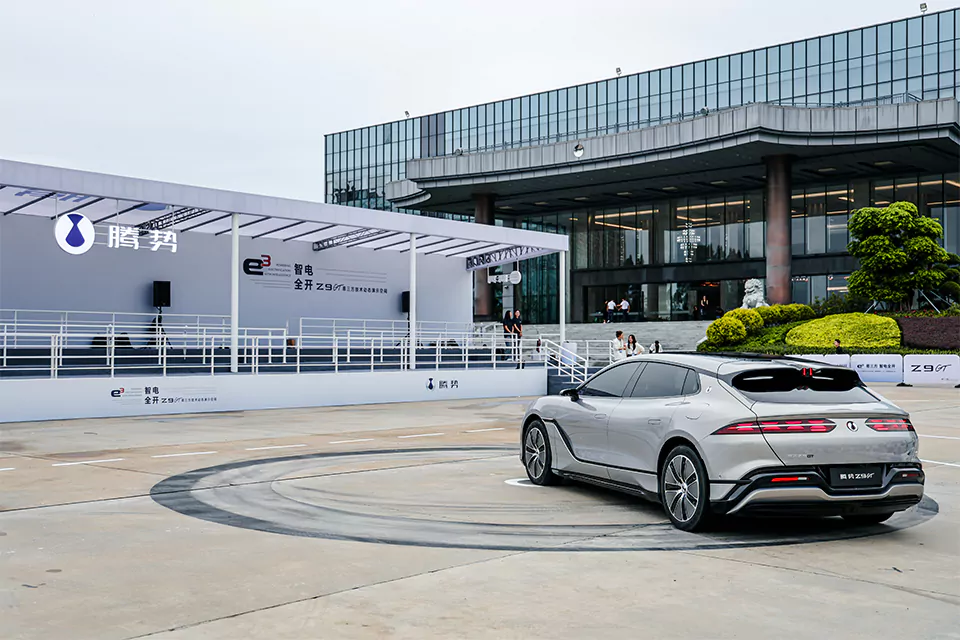
A briefing tells you what a company wants you to believe about itself. A site visit, done properly, tells you what the operation actually is.
Three things are visible on a floor that are not visible in a deck. The first is physical scale, which calibrates everything else: how much floor space per unit of output, how many people per line, how much buffer inventory sits between stations. Delegates who have run plants read this in about two minutes and immediately know whether the numbers they were quoted are plausible.
The second is automation architecture, and specifically where the company chose to spend. Almost every Chinese plant has robots in the welding shop, because that is the part visitors see. What is more informative is what happens in the less photographed zones: incoming inspection, changeover, packaging, internal logistics. The distribution of capital across those zones tells you the real maturity level.
The third is the human system. How many people are on the line, how they are trained, whether supervisors carry tablets, whether there is an andon system, whether quality data is visible on a board at the end of the aisle. These are the things that determine whether a supplier can scale a new customer's volume without breaking.
None of that survives a PowerPoint.
A well-constructed corporate visit has five components, and if any one is missing the session degrades noticeably.
Pre-brief, two to three pages. Sent to delegates forty-eight hours ahead: what the company does, its position in the value chain, recent developments, and the three or four questions the delegation intends to raise. Without this, the first fifteen minutes of the meeting are spent on introductions and basic orientation, which is a quarter of a ninety-minute session gone.
Host briefing and company presentation, fifteen to twenty minutes maximum. Enough to frame, not enough to dominate.
Guided walk, forty to sixty minutes. Not a corridor. The route should pass through the zones that answer the delegation's questions, which means the route has to be negotiated in advance, not improvised on the day.
Closed-door discussion, forty-five to sixty minutes. Seated, with the functional owner of the topic in the room, and with the pre-submitted agenda on the table.
Debrief immediately afterwards, fifteen minutes. Conducted in the coach or in a nearby meeting room, before the impressions blur. One note-taker records what was learned, what was contradicted, and what remains unknown. This is the single most commonly skipped step and the one that most determines whether the week produces anything.
Where a host offers only the first three components, we still take the meeting, but we classify it as an orientation visit rather than an insight visit, and we tell the client which is which on the schedule.
Hosting decisions in China are made by the host, and access level is negotiated, not purchased. In practice there are four tiers.
Tier one: visitor centre. A standard public programme, often available on two to three weeks' notice, usually delivered by a trained guide. Useful for orientation, inadequate for diligence.
Tier two: guided technical walk. A plant or laboratory walk with a technical manager accompanying. Usually available on three to four weeks' notice, and materially better than tier one because the accompanying manager can answer substantive questions during the walk.
Tier three: closed-door functional session. A seated discussion with a director or vice president level owner of the relevant function, plus a walk. Requires four to eight weeks' notice, a delegation profile, a proposed agenda, and usually a formal letter. This is the tier that produces insight.
Tier four: principal-level meeting. Chairman, CEO or founder joining for part of the session. Requires long lead time, a credible strategic rationale, and often an existing relationship or an introduction through a chamber, association or investor. Rare, and worth pursuing only when the objective justifies it.
Programmes that mix tiers deliberately are stronger than programmes that chase tier four everywhere. A pattern we use frequently is one tier four or three anchor per day, supported by two tier two visits that fill in the operational picture. Chasing maximum access at every stop produces fewer confirmed meetings and a schedule that collapses when one host postpones.
The following are companies we regularly place on delegation programmes, grouped by theme. Availability varies by quarter and by delegation profile; this is a working menu rather than a guarantee.
Artificial intelligence and autonomous systems. Baidu for foundation models and the Apollo autonomous driving programme, with access to the intelligent driving division and the AI exhibition hall. iFlytek for speech and multimodal models and industry deployment. SenseTime and Megvii for computer vision. Alibaba Cloud and Tencent Cloud for platform and model-as-a-service layers.
Robotics and embodied AI. Unitree Robotics in Hangzhou for quadruped and humanoid hardware, with a live demonstration and engineering-level discussion. UBTECH in Shanghai for humanoid commercialisation and education and industrial robots. Estun and Siasun for industrial arms, and the robot innovation parks in Shanghai and Shenzhen for the startup layer.
Electric vehicles and batteries. BYD in Shenzhen for vertical integration, blade battery production and export strategy. CATL in Ningde for cell technology, energy storage and recycling. NIO in Shanghai and Hefei for battery swap, user operations and manufacturing. Bosch and other tier-one suppliers in Shanghai for component and domain controller supply. Local battery recyclers for the circular economy layer.
Consumer platforms and retail. Alibaba Group in Hangzhou for platform operations, merchant ecosystem and cross-border trade. Cainiao for smart logistics and fulfilment. Shein in Shanghai for ultra-fast fashion supply chain. Anta, Li-Ning and other brand groups for domestic consumer operations. Regional retail groups for local market nuance.
Manufacturing and industrial equipment. Sany Heavy Industry, FOTILE, Shenglong Electric, HGTECH, TONGWEI Group and LYNK & CO are among the hosts on our existing enterprise visit programme, with others added per delegation profile.
New energy and materials. Solar and storage manufacturers in Jiangsu and Anhui, battery material suppliers in Jiangxi and Sichuan, and chemical groups for process industry benchmarking.
Healthcare and medical technology. Device manufacturers in Suzhou and Shenzhen, hospital groups in Shanghai and Beijing, and traditional medicine institutions where that is the delegation's interest.
Finance and capital markets. Shanghai Stock Exchange, securities institutions, and multinational regional headquarters in Lujiazui for investment structure, compliance and capital flows.
A delegation focused on packaging will not be served by a robotics menu, and a delegation of brand marketers should not spend three days in battery plants. The shortlist should be constructed against the objective, then checked against realistic availability.
A handful of operational details determine whether a host remembers the delegation fondly or files it under "never again".
Punctuality. Arriving late to a Chinese corporate host is read as a statement about the delegation's seriousness. We build twenty-minute buffers into every transfer for this reason, not because we like waiting.
Business cards. Still exchanged, still two-handed, still read before being put away. This remains the cheapest available signal of respect and it is routinely skipped by Western delegations.
Gifts. Modest, presentable and preferably consumable or symbolic. Expensive gifts create awkwardness and, in some corporate contexts, compliance problems.
Photography. Always ask. Many plants prohibit photography in specific zones for reasons that include unannounced process changes and customer confidentiality. A delegation that photographs freely after being told not to will not be invited back.
Questions. Chinese corporate meetings are more structured than Western ones and less tolerant of open-ended challenge in a group setting. Direct technical questions are well received. Confrontational framing of a commercial dispute in front of a large group is not. We coach delegations on this during the orientation session, and we brief the host on the delegation's likely question pattern.
Confidentiality. Where a host shares cost structure, customer names or roadmap information, we handle it under an NDA or a written confidentiality undertaking. Delegates should expect to sign, and should expect not to publish what they heard. This is also a competitive courtesy: the access you receive depends on the reputation of the delegations that came before you.
Follow-up. A short thank-you message from the delegation leader within forty-eight hours materially improves the odds of a second conversation. We prepare the draft; the client sends it.
Site visits consume more time than clients expect, because the travel between them is real. A plant in an industrial park on the edge of Suzhou is ninety minutes from central Shanghai in traffic, and the delegation will spend three hours of the day on the road for a two-hour visit.
Three practical rules we apply:
Cluster geographically. Group visits by district or industrial zone rather than by theme, and let the theme emerge across the day.
One anchor per day. One visit that requires full attention, supported by one or two lighter visits. Two anchors in a single day reliably produces a delegation that remembers neither.
Protect the transfer time. Use the coach for the fifteen-minute debrief, and use it for the reading pack. Long transfers are not dead time if something is designed to happen in them.
Interpretation should be arranged with people who know the sector. A generalist interpreter working consecutive mode across a discussion of cell chemistry or domain controllers will slow the room down and lose the technical register. We assign sector-familiar interpreters and, for highly technical sessions, arrange simultaneous equipment with a prepared glossary.
Ask four questions of any company proposing a China business delegation tour with site visits.
Which specific companies, and at what access tier, have you confirmed in the last six months? A real operator can name them and describe what happened. A reseller describes an aspiration.
Who writes the discussion agenda? If the answer is "the host decides", the visits will be generic. If the answer is "we draft it with you and send it to the host in advance", that is a working method.
What happens if a host cancels? Good operators carry alternates and tell you what they are at the proposal stage.
What do we receive afterwards? A note set, a contact sheet and a synthesis is a deliverable. A photo folder is not.
How many company visits can we realistically fit into five days?
Six to eight if the programme stays in two cities, four to six if it spans three. Beyond that, travel time and meeting fatigue degrade the quality of each visit.
Can we visit a company without an introduction?
Yes. Many large Chinese companies have formal external relations teams that accept delegation requests. The constraint is lead time and the specificity of the request, not the absence of a personal contact.
Do we need an NDA for every visit?
Not for orientation visits. For sessions where financial or roadmap information is shared, yes, and hosts will often raise it themselves.
Are English-language visits available?
Most large companies have English-capable staff for external meetings, but the technical depth of the discussion drops. We recommend bilingual facilitation as standard: a professional interpreter plus our coordinator, who manages the agenda and the follow-up.
Can we combine site visits with a trade fair?
Yes. Canton Fair in Guangzhou and CIIE in Shanghai are both commonly integrated into delegation programmes, with fair days separated from plant days.
Is it possible to visit a company's R&D centre rather than a plant?
Sometimes. R&D access is usually tighter than manufacturing access because of intellectual property concerns, and requests need a clear rationale. It is more realistic for laboratories attached to universities and research institutes than for corporate core R&D.
A China business delegation tour with company site visits is only as good as the rooms it opens and the questions it asks inside them. Cities, hotels and cultural stops are the frame. The visits are the picture.
PandaStudyTour arranges enterprise visits, executive sessions and full delegation logistics across Beijing, Shanghai, Shenzhen, Hangzhou, Ningde, Xi'an and other industrial centres, with a working shortlist, pre-agreed agendas, technical interpretation and a written output at the end. Send us the sector you want to benchmark and the access level you need, and we will tell you honestly what is achievable in your timeframe.
