China has become the world's most active large-scale laboratory for industrial innovation. Electric vehicles, batteries, solar, robotics, drones, AI applications, digital payments, smart manufacturing and consumer electronics - the country does not just produce these categories, it iterates them faster than almost anywhere else. That speed is precisely why technology delegations, investors, engineering faculties and corporate innovation teams want to see it firsthand rather than read about it in a report.
But there is a large distance between "we would like to visit some Chinese technology companies" and "our delegation spent a week inside real factories, met the people who actually build these products, and came home with usable insight." That distance is not closed by a tour bus, a translator with no technical background, or a visit to a showroom that was designed for marketing rather than explanation.
That is the problem PandaStudyTour was built to solve. We organise China tech tours for international groups - not as sightseeing with a factory squeezed in, but as structured industry programmes with an explicit learning or sourcing objective.
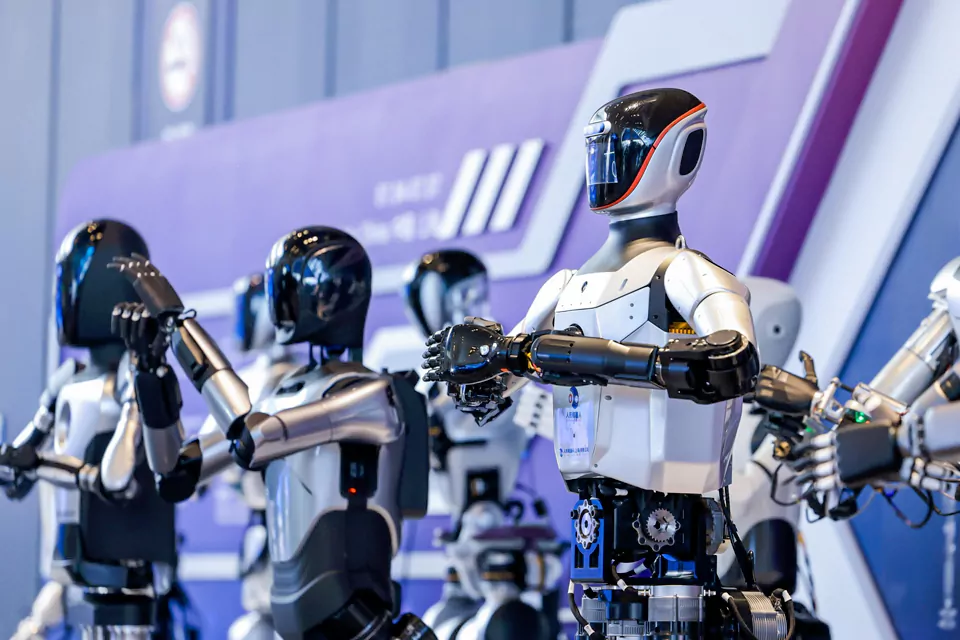
This article explains what a China tech tour involves, why the country deserves this place on your calendar, and why we believe PandaStudyTour should be on your shortlist.
A China tech tour is a professionally organised programme that gives an international group structured access to China's technology and manufacturing ecosystem. It usually combines four elements:
1. Factory and production access - seeing assembly lines, cell manufacturing, precision machining, injection moulding, automation cells, quality control stations and packaging operations, with engineers on hand to answer real questions.
2. Enterprise and R&D exchange - meetings with company leadership, product teams, engineers or market specialists, either at headquarters or in an innovation centre, covering roadmaps, supply chains, cost structures and go-to-market models.
3. Cluster and ecosystem context - visiting the geographic belts where whole industries concentrate, so participants understand how suppliers, logistics, testing labs, design houses and talent pools sit next to each other.
4. Applied reflection - structured debriefs, comparison sessions and reporting, so the group converts observation into decisions rather than memories.
The strongest programmes treat all four as necessary. Access without context produces anecdotes. Context without access produces the same slide deck the delegation already saw at home.
Manufacturing depth that is hard to replicate. A single industrial belt can host hundreds of suppliers working on one product category. Understanding that density is impossible from a distance.
Fast product cycles. Companies in consumer electronics, EVs and smart hardware iterate on timelines that feel aggressive to visitors from slower markets. Seeing a line changeover, a design revision process or a rapid tooling cycle changes how people think about their own development speed.
Cost-structure transparency. Delegations leave with a grounded sense of what things actually cost to make, where margin sits, and which components are commoditised versus defensible — enormously valuable for sourcing, pricing and competitive strategy.
Policy and platform literacy. Free trade zones, bonded logistics, industrial parks, incentive schemes and cross-border e-commerce infrastructure are genuinely difficult to grasp without walking through them.
A broad menu of sectors. New energy, robotics, semiconductors and packaging, medical devices, aerospace components, agricultural machinery, textiles, food processing, logistics automation — the range means a programme can be matched to almost any industry.
Our default assumptions are a delegation's assumptions: people who need to be somewhere at 9 a.m., who want a technical conversation rather than a photo stop, who care about who exactly they are meeting and what that company actually does. Schedules are built around access windows, not around opening hours of scenic spots.
We also plan for the realities of group business travel in China: badge and registration formalities at industrial parks, visitor authorisation lead times at factories, security screening, and the buffer required when a plant suddenly has an audit day.
Anyone can book a visitor centre. Getting a group onto a live line, in front of a process engineer, with permission to ask about yield rates and cycle times, is a different activity entirely and depends on relationships and credibility.
Our China factory tour programmes are built on long-standing local contacts across manufacturing belts, and we are explicit with clients about what is and is not feasible at each site — including which companies will not host foreign groups, and what a realistic substitute looks like.
We ask what the trip is for before we suggest a single company. Sourcing evaluation. Supplier qualification. Competitive benchmarking. Technology roadmapping. Curriculum development for a university programme. Investment thesis validation. Talent and recruitment insight. Each of these produces a materially different itinerary.
A sourcing-focused delegation should spend time in component clusters and quality labs; a strategy-focused leadership group should spend time with product leadership and market teams; an academic group needs laboratories, teaching models and faculty dialogue. We build accordingly, then pressure-test the plan against travel time and fatigue.
This is the single most common failure point in China industry visits. A general interpreter can translate greetings and menus, but will lose precision the moment someone asks about tolerance, cycle time, mould flow, BOM structure or warranty terms.
We staff programmes with interpreters who have technical or commercial backgrounds, prepare terminology glossaries in advance, and send pre-reads so participants arrive able to ask better questions. We can also support simultaneous interpretation for larger sessions, and written translation of meeting materials.
Our China enterprise visit programmes are arranged as structured exchanges: agenda agreed in advance, participant profiles shared both ways, topics prioritised, and a written summary afterwards. We push for the right counterpart rather than the most available one, because a meeting with a marketing manager when the group wants an engineering discussion wastes everyone's day.
Where relevant we arrange supplier matchmaking, one-to-one sessions and follow-up introductions after the trip.
Factory access involves real obligations: safety induction, protective equipment, restricted photography zones, NDA requirements, IP sensitivity, and rules about which areas foreign visitors may enter.
We brief every participant before arrival on what not to photograph, how to behave on a production floor, and how to handle questions a host declines to answer. We manage NDA paperwork where required, and we treat host confidentiality as non-negotiable — a reputation for discretion is what keeps access open for the next delegation.
China's technology geography is specialised. Electronics and hardware concentrate in the south, new energy and battery chains in several distinct belts, precision manufacturing and biotech around the eastern delta, heavy industry and aerospace in the interior west, and robotics integration in a number of mid-tier industrial cities.
We routinely connect Shenzhen, Guangzhou, Dongguan, Shanghai, Suzhou, Ningbo, Changzhou, Hefei, Wuhan, Chengdu, Chongqing and Xi'an into coherent routes, and we are honest when a request would involve three flights and two wasted days. Where a client's wish list is too dispersed, we say so and propose the sharper alternative.
Industry programmes fail when they are all site visits. Nine factory gates in five days produces fatigue, not insight. We deliberately build in cultural and social content - a heritage evening, a city walk, a hosted dinner, a team activity — because retention and relationship-building matter as much as content, particularly for programmes that double as recognition or recruitment tools.
This is also where our background helps: we run study tours and incentive programmes as well as industry visits, so we know how to pace a mixed group that includes technical staff, executives and non-specialists.
Industrial sites carry genuine hazards, and overseas travel requires documentation. We supply risk assessments, safety briefings, insurance guidance, emergency protocols, a 24-hour escalation channel, vetted vehicles and drivers, and trained accompanying staff. Plant-specific PPE and safety induction are confirmed with each host in advance.
For institutions, we provide the paperwork format that procurement and risk offices actually need, rather than a marketing PDF.
The trip should not end at the airport. We provide a programme report covering sites visited, key discussion points, comparative observations, photographs cleared for internal use, and recommendations for follow-up. Where clients want it, we support later supplier introductions, information requests and repeat visits for a smaller team.
Delegations that come home with a documented summary get budget approval for the next cycle far more easily than those that come home with only stories.
Discovery. Objectives, sector focus, group composition, technical level, budget, dates, and what decisions the trip must inform.
Feasibility check. Which companies and clusters can realistically host a group of your size in your window, and what the alternatives are if a key host is unavailable.
Programme design. A costed day-by-day plan with access confirmed, meetings agreed, interpretation staffed, and travel time honestly accounted for.
Preparation. Participant pre-reads, terminology glossaries, NDA and registration paperwork, safety briefing, cultural orientation.
Operation. A programme manager with you throughout, daily run-sheets, host liaison on the ground, and contingency handling when a plant changes its schedule.
Closure. Debrief session, feedback collection, written report, and follow-up introductions where requested.
Day one: arrival, orientation, and a framing session on China's industrial landscape. Day two: an electronics or hardware cluster with a factory visit and an enterprise exchange. Day three: supply-chain day covering component suppliers, a testing or certification lab, and logistics infrastructure. Day four: transfer and a second cluster focused on the client's core sector, plus a hosted dinner with industry contacts. Day five: new energy, robotics or automation theme matched to the group's interest. Day six: a policy or trade ecosystem session - industrial park, bonded zone or e-commerce platform - and a debrief workshop. Day seven: departure with follow-up actions agreed.
Every version we deliver is different, because the correct answer for a battery company is not the correct answer for a packaging company.
Can you arrange visits to specific named companies?
Sometimes. Access depends on the company's own visitor policy, timing and group size. We tell you honestly what is achievable and propose equivalents that serve the same learning objective.
Is photography allowed inside factories?
It varies by site, and often by zone within a site. We confirm rules in advance and brief participants, and we never send a group in unprepared.
Do you support academic and student groups?
Yes. We run faculty exchanges, laboratory visits, curriculum-linked industry days and student technology programmes with age-appropriate pacing.
How far in advance should we book?
For multi-city programmes with enterprise meetings, three to six months is realistic. Shorter lead times are possible for simpler cluster visits.
Can the programme include sourcing or supplier meetings?
Yes, and it is one of our most requested formats - a technical factory day followed by structured one-to-one discussions with potential suppliers.
A technology trip to China is only worth the flight time if it produces understanding you could not obtain from a desk. That requires genuine access, technical interpretation, honest feasibility advice, and an operator willing to tell you when an idea will not work.
If you are building a delegation, an academic programme or an innovation study trip, PandaStudyTour's China tech tours start with your objective rather than a fixed itinerary - and we will show you the access reality, the costed outline and the risk framework before you commit.
