Beijing, Shanghai and Shenzhen are the three cities most requested by senior delegations, and for good reason. Between them they contain the policy centre, the capital market and the manufacturing core of the world's second largest economy. But a private corporate delegation tour across all three is a logistics problem before it is a content problem, and the difference between a smooth week and an exhausting one sits almost entirely in how the movement between them is designed.
"Private" in this context does not simply mean a higher hotel grade. It means a programme with no shared coaches, no fixed departure times dictated by a group of strangers, no public tour groups in the meeting rooms, and no schedule that cannot move when a conversation turns out to be worth extending.
This article covers what each city is actually good for, how a three-city private programme is sequenced, and what private operation buys a senior delegation.
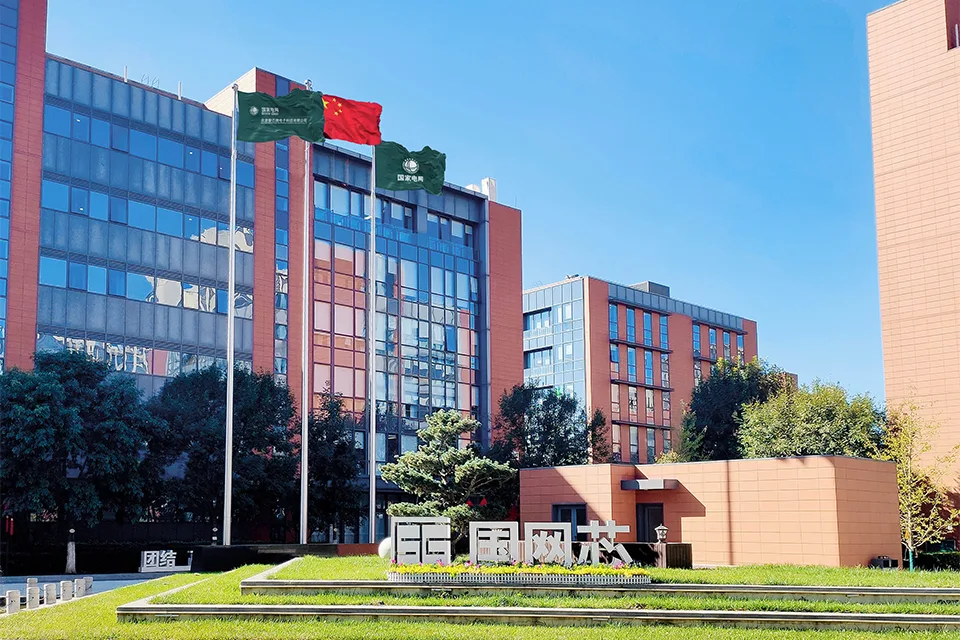
Beijing: policy, platforms and frontier capability. The capital holds the national research institutes, the standards and regulatory apparatus, the highest concentration of foundation-model capability and the major platform companies' government-facing operations. Baidu's Apollo autonomous driving programme, iFlytek's speech and multimodal models, the AI laboratories, the policy research community.
A delegation whose questions concern regulation, national strategy, frontier technology or the shape of industrial policy needs two full days in Beijing. A delegation whose questions concern cost structure or manufacturing execution needs less.
Shanghai: capital, multinational structure and industrial integration. Shanghai carries the financial infrastructure, the largest concentration of foreign corporate regional headquarters and a serious robotics, biotech and automotive base spread across Zhangjiang, Jiading and Lingang. Lujiazui for capital markets and cross-border investment structure. The Bund and the former French Concession for historical context that explains the city's commercial culture.
Shanghai is the right city for questions about how foreign firms operate inside China, how capital is structured, how compliance works, how a joint venture is actually governed. It is also the natural arrival and departure point for many delegations because of flight connectivity.
Shenzhen: hardware, consumer technology and manufacturing tempo. Shenzhen is where a hardware product moves from concept to volume faster than almost anywhere else. BYD's vertical integration, DJI's consumer drones, the electronics supply chain in Bao'an and Longhua, and a dense startup layer. The city's industrial culture is pragmatic and fast, and visits here tend to be operationally concrete.
Shenzhen suits questions about product cycle time, supply chain depth, component sourcing, export strategy and automation investment. It is also the easiest city in China in which to arrange a factory visit at short notice, because hosts there are accustomed to foreign business visitors.
The three cities form a natural arc: policy in the north, capital and multinational operating structure in the centre, manufacturing and hardware execution in the south. A delegation that sees all three in that order builds context before it examines operations, which produces better questions in Shenzhen.
The reverse order also has logic. A delegation that begins with factory floors and ends with policy and capital conversations often reports better synthesis, because the operational detail gives the policy discussion something to attach to. Which order is right depends on the composition: a supply chain group should start in Shenzhen; a board or investment committee should start in Beijing.
Practical constraints usually decide it. Most long-haul flights land in Beijing or Shanghai, and internal connections from either to Shenzhen are straightforward. A common pattern is Beijing first on arrival, Shanghai in the middle, Shenzhen last with departure from Shenzhen or a short repositioning flight back to Shanghai.
One planning note: Beijing to Shenzhen is a four-hour flight or an eight-hour high-speed rail journey. Rail is civilised and reliable but consumes a working day. We usually fly that leg and rail the Beijing to Shanghai or Shanghai to Hangzhou legs, where rail is genuinely faster door to door.
A workable structure for a delegation of six to twelve senior people, with roughly 70 per cent business content.
Day one, Beijing. Arrival, private transfer, orientation briefing with a sector advisor, evening welcome dinner. No visits, deliberately.
Day two, Beijing. Morning closed-door session at a technology company, with an agenda pre-agreed and a walk through the relevant facility. Afternoon expert seminar on policy and industrial direction. Evening peer exchange.
Day three, Beijing. Morning second corporate session in a complementary sector. Afternoon a short cultural block, two to three hours at a heritage site with a specialist guide rather than a general one, then an early dinner. This placement matters: the cultural content sits after the heaviest business day, not in competition with it.
Day four, Beijing to Shanghai. Morning high-speed rail, roughly four and a half hours city centre to city centre. Afternoon session with a financial institution or multinational regional headquarters in Lujiazui on investment structure and compliance. Evening free or private meetings.
Day five, Shanghai. Morning industrial or robotics visit in Jiading or Lingang, with a factory walk and a technical discussion. Afternoon session on brand, consumer or channel strategy depending on the delegation's composition. Evening networking dinner with local founders, investors or industry contacts, arranged for the delegation specifically rather than drawn from a general list.
Day six, Shanghai to Shenzhen. Morning flight. Afternoon visit to a hardware or EV manufacturer, factory floor and closed-door session. Evening informal dinner.
Day seven, Shenzhen. Morning second site visit, ideally a different tier of the supply chain, such as a component supplier rather than the assembler. Afternoon synthesis workshop, converting seven days of observation into a written shortlist of follow-ups with owners.
Day eight, departure from Shenzhen or Shanghai.
That schedule delivers nine or ten substantive sessions across three cities, two expert or peer exchanges, one synthesis block and about four hours of cultural content. It is deliberately lighter than a group tour of the same length, and that lightness is the point: senior delegates need room to think between meetings.
Time control. When a session is producing value, it can run long. When it is not, it can close early and the delegation can use the hour differently. On a shared coach programme, neither is possible.
Discretion. Senior delegations often discuss commercially sensitive material in transit. A private vehicle with a professional driver and a coordinator, rather than a bus shared with twenty other participants, changes what can be said.
Access sequencing. Private groups can open with a smaller, lower-stakes meeting that establishes rapport and use it to request a senior session later in the week. That is much harder to orchestrate inside a fixed group schedule.
Flexible composition. Some principals join for part of the programme. A private format allows a delegate to arrive on day three, leave on day six, and still have a coherent experience, which is common among chairmen and board members.
No venue compromise. Meeting rooms are booked to the delegation's requirement, not to a group's contract. That affects whether a session is a presentation to thirty people or a seated discussion among eight.
Confidentiality handling. NDAs, restricted photography, closed sessions and named attendees only. All standard in a private format and awkward in a group one.
Vehicles. A private car or van with a professional driver on standby for the day, not on call. Standby matters because meetings run over. For groups above eight, a small coach with the same standby arrangement.
Rail. Business class on high-speed rail is comfortable and productive, and worth the modest premium for senior delegates. Book early on trunk routes, where premium seats sell out. Porters and station assistance can be arranged and are worth it when the group is carrying luggage.
Flights. Domestic business class on the long legs. Beijing to Shenzhen and Shanghai to Shenzhen are the two legs where flying is the correct choice.
Security. Senior executives travelling with sensitive commercial intent sometimes require discreet security support, particularly in crowded transport hubs and at large events. We arrange it where requested, with advance notice.
Medical. A written protocol with the nearest international clinic for each city, an English-speaking contact, and a twenty-four-hour escalation path. Insurance for every delegate including evacuation cover.
Payments. Settle programme costs on a single invoice in one currency, and provide a cash float for on-the-ground incidentals, because not every vendor in every city accepts foreign corporate cards.
Private delegations usually expect five-star international-standard hotels in central locations, with meeting facilities available in-house for small sessions. In Beijing, the Chaoyang and Wangfujing areas are convenient for both corporate visits and evening dining. In Shanghai, Jing'an or the Bund area balances access to Lujiazui and to the older commercial districts. In Shenzhen, Futian and Nanshan are the practical choices.
Dining is part of the programme, not an afterthought. A hosted dinner in a well-chosen restaurant does more relationship work than another meeting, and Chinese host etiquette expects reciprocity: if a host has entertained the delegation, a return dinner is appropriate. We plan these deliberately, with a seating arrangement rather than an open table.
Private programmes have their own failure modes.
Over-scheduling disguised as flexibility. Private groups often fill every hour because they can. The result is the same fatigue as a group tour, without the excuse of a fixed schedule. We hold one protected half-day per three days.
Too few people in a room. Some Chinese hosts decline delegations below five or six, judging that executive time is not justified. Where the group is very small, we combine sessions or describe the delegation's seniority and purpose more carefully in the request.
Solo decision-making. In a small private group, one dominant personality can set the agenda for everyone. A facilitator maintains a question rotation so that quieter technical voices get heard.
Weak output. Private programmes can feel so bespoke that nobody writes anything down. We always assign a note-taker and produce a synthesis, because the value of a private week is not the privacy, it is the decision it enables.
How many days do we need for all three cities?
Seven nights is the practical minimum, and eight or nine is comfortable. Five nights across three cities means two half-days lost to intercity travel and only six or seven substantive sessions.
Can we start in Shenzhen and end in Beijing?
Yes. The order is set by the delegation's composition and by flight connections, not by a fixed template.
Is a private programme much more expensive than a group tour?
Per delegate, yes, because fixed costs, vehicle, driver, coordinator, interpretation, are carried by fewer people. Per useful meeting, often less, because there are no wasted half-days and no sessions the delegation did not need.
Can principals join for part of the trip?
Yes, and this is common. We build the programme so that each segment is coherent for a delegate joining or leaving mid-week.
Do you arrange security or a Chinese-speaking escort?
Yes, on request and with lead time. A bilingual coordinator travels with the group as standard.
Can the delegation include a cultural programme for accompanying partners?
Yes. We run separate partner programmes in each city, so that business sessions are not diluted while accompanying guests still have a meaningful visit.
A private corporate delegation tour in Shenzhen, Shanghai and Beijing is worth building only if the delegation arrives with questions that the three cities can answer differently. Policy in Beijing, capital and operating structure in Shanghai, execution and tempo in Shenzhen. The itinerary should follow the questions, not the map.
PandaStudyTour operates private delegation programmes across all three cities with dedicated vehicles, executive-level meeting requests, confidential session handling, sector-familiar interpretation, bilingual coordination and written synthesis. Send us your delegate list and the decision your organisation is facing, and we will design the week around it.
