A trade mission and a corporate delegation tour are cousins, not twins. Both bring a group of companies to China. Both involve meetings. But they produce different outputs, and confusing them is the reason many missions end with a stack of business cards that nobody follows up.
A trade mission exists to generate commercial transactions: qualified buyers, signed memoranda, distribution agreements, purchase orders. A corporate delegation tour or study tour exists to generate understanding: how an industry works, what a market wants, whether to enter. The first is measured in deals, the second in decisions.
The most effective programmes combine both, using the delegation structure to give the group credibility and depth, and the mission structure to force concrete commercial conversations. This article explains how that combination is built and when each element should dominate.
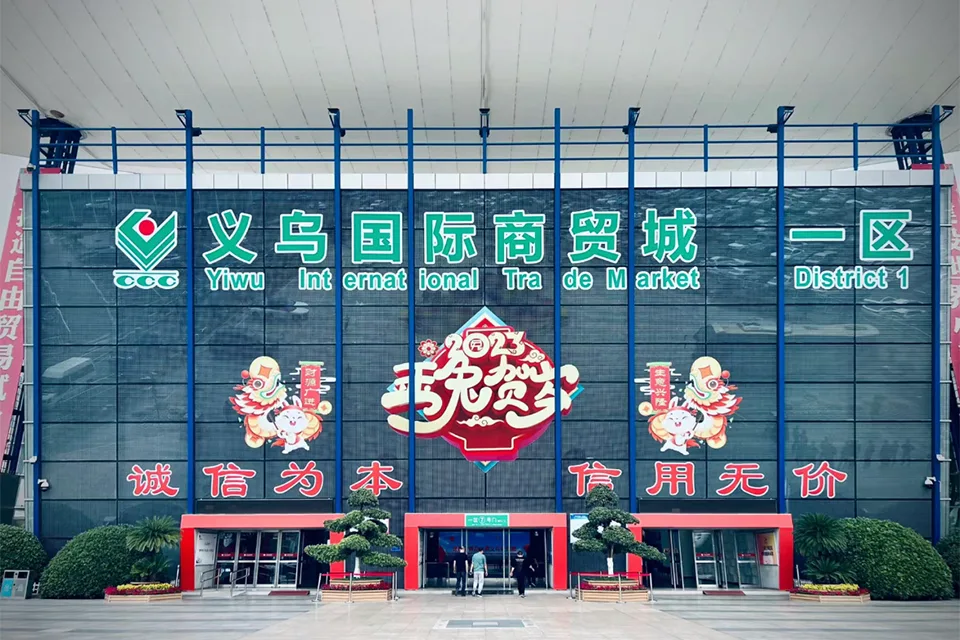
The trade mission. A group of companies from one country, usually from the same sector, travelling together under a chamber, association or government agency banner, with B2B matchmaking sessions, buyer meetings and often a trade fair. Success is measured in contacts converted to contracts.
The corporate delegation tour. A group of senior executives from one or several organisations travelling to meet Chinese counterpart companies at executive level. Success is measured in insight, relationship and strategic clarity.
The study tour. A structured learning programme with expert briefings and synthesised output. Success is measured in what the delegation decides afterwards.
In practice, a programme can run all three logics in sequence across a week: study content in the morning, matchmaking in the afternoon, trade fair on a designated day. The sequencing matters, because matchmaking works better after the group has context and worse when it happens cold on day one.
A trade mission is the correct choice when the group has a specific commercial intent and a clear offer. That means:
A trade mission is the wrong instrument when the group is exploratory. Sending twelve companies who do not yet know whether China is their market into a matchmaking hall produces polite meetings and no orders. Those groups need the delegation tour logic first, and a mission second.
The convening body shapes buyer response in a way that is easy to underestimate. Chinese buyers receive many inbound approaches, and a delegation introduced by a recognised chamber of commerce, an industry association with a counterpart in China, an investment promotion agency, or a government trade office is treated differently from an unaffiliated group of foreign companies.
Practical implications:
Find the counterpart organisation. Most sectors have a Chinese industry association or chamber that will formally receive a foreign delegation. A signed letter between two associations converts an informal visit into an institutional engagement, and buyer invitations follow the institution.
Use the investment promotion apparatus. Provincial and municipal investment promotion agencies run matchmaking programmes for inbound delegations, often at low or no cost, because they are funded to attract foreign investment. They are genuinely useful for regional missions, less so for highly specialised technical matches.
Layer in private matchmaking. Institutional matchmaking produces breadth. Private matchmaking, arranged by an operator who knows buyers in the sector, produces depth. The best programmes do both: a morning institutional session for the group, followed by individual company meetings arranged bilaterally.
Matchmaking is a craft. Three design decisions determine whether a session produces meetings or theatre.
Qualification before scheduling. Every buyer should be qualified against the seller's actual offer: product category, volume expectations, price band, certification requirements, decision authority. An unqualified room produces twelve conversations that all end with "send us your catalogue".
Short meetings, many of them, with structure. Fifteen to twenty minute bilateral slots in a single venue outperform long presentations. Each slot needs an agenda: what the buyer currently sources, from whom, at what price band, what would make them switch. Sellers who arrive with a capability deck and no pricing authority waste slots.
Documented outcomes per meeting. A one-line record for every slot: interested, not a fit, follow-up requested, quotation to be sent by a date. Programmes that do not record this cannot tell participants what they achieved.
A well-run matchmaking day for a delegation of ten companies typically yields forty to sixty bilateral meetings, of which ten to twenty are worth following up and three to six convert into a second substantive conversation within a quarter. Those ratios are realistic, and organisers who promise more are selling optimism.
China's trade fair calendar is dense. Four events are commonly relevant to inbound missions.
Canton Fair, Guangzhou. Held twice a year, in spring and autumn, covering consumer goods, electronics, machinery, building materials and textiles. Enormous, tiring, and still the single most efficient place in the world for a foreign buyer or exporter to see the breadth of Chinese manufacturing in one visit. For missions, a two-day presence is realistic; three days is the upper limit before fatigue sets in.
China International Import Expo, CIIE, Shanghai. An import-oriented fair with strong government backing, substantial country pavilions and a heavy presence of state-owned and large private buyers. Useful for exporters seeking institutional buyers and for missions seeking visibility with provincial governments.
Sector-specific fairs. Electronics and industrial automation in Shenzhen and Shanghai, medical devices, packaging, automotive components, textiles. These are more efficient than the general fairs for a focused mission, because the buyer density within the hall is higher.
Regional sourcing fairs. Provincial exhibitions in Zhejiang, Jiangsu and Guangdong, often smaller and more accessible, with manufacturers who do not exhibit at national fairs. Useful for missions seeking supplier relationships rather than brand exposure.
Integrating a fair requires care. Fair days and company visit days should not sit adjacent in the schedule without recovery, because both are physically demanding in different ways. And a fair visit needs a plan: a target exhibitor list, arranged appointments, and a route through the halls, or the group will wander.
A workable structure for a mixed mission, combining study, visits and matchmaking.
Day one, Shanghai. Arrival, orientation briefing on market structure and buyer behaviour, evening reception with local industry contacts.
Day two, Shanghai. Morning corporate visits suited to the sector, afternoon B2B matchmaking session with qualified buyers, evening free.
Day three, Shanghai and CIIE or sector fair. Full day at the fair with pre-arranged exhibitor appointments, or a second matchmaking session for groups not attending a fair.
Day four, Shanghai to Suzhou or Hangzhou. Supplier visits in the industrial belt, which is where actual manufacturing capability is visible and where price and lead time conversations can happen with the people who control them.
Day five, Hangzhou or Ningbo. Platform and logistics sessions, or port and distribution infrastructure, depending on whether the group sells goods or services.
Day six, transfer day and synthesis. Morning travel, afternoon working session in which each participating company presents its top three opportunities and the follow-up owner.
Day seven, individual bilateral meetings. Deliberately unstructured at group level: each company runs its own follow-ups with the contacts it made, supported by our coordinator for scheduling and interpretation.
Day eight, departure.
The structural point is that days one to five create breadth and context, day six forces consolidation, and day seven converts. Missions that end without a day seven usually lose the pipeline.
Chambers and trade agencies are under pressure to report activity, which encourages counting delegates and meetings rather than outcomes, a distortion that eventually disappoints members.
A more useful measurement set:
We report on the first three within two weeks of the programme ending, using the documented meeting records, and we offer a ninety-day follow-up check on request. That cadence keeps the mission accountable without overclaiming.
Too many delegates, too little qualification. A mission of thirty companies cannot be matched well. Ten to fifteen is workable, and it is better to run two missions a year than one oversized one.
Buyers invited by volume. A room of fifty unqualified buyers damages the group's confidence and wastes the trip. Ten qualified buyers outperform fifty curious ones.
No pricing authority in the room. Sellers who cannot discuss price ranges in a bilateral meeting cannot advance a conversation. Brief participants to come with banded pricing and lead time.
Presentations instead of meetings. Group presentations to a seated audience are comfortable for organisers and useless for sellers. Time should be allocated to bilaterals.
No local follow-up capacity. A mission that ends on the departure date and has no in-country contact for the next ninety days loses momentum. A local coordinator on retainer for follow-up is inexpensive relative to the mission cost.
Cultural framing errors. Chinese buyers value relationship continuity and formal courtesy more than Western sellers expect, and a hard-close in the first meeting reads as unserious. Brief the group on this explicitly.
Can a trade mission and a study tour be combined in one week? Yes, and it is the most effective format for mixed groups. Allocate mornings to learning and context, afternoons to matchmaking, one day to a fair, and reserve a synthesis block plus one day for individual follow-ups.
How many companies should participate? Ten to fifteen for effective matching. Above twenty, split into sector clusters with separate meeting schedules.
Do you organise buyer invitations? Yes. We build the qualified buyer list with the convening body, invite, confirm attendance and manage the bilateral schedule. For some sectors, buyer lists require the counterpart association's involvement, which we arrange at the outset.
Can you arrange interpretation for bilateral meetings? Yes. For matchmaking events we staff table interpreters or sequential support, and for technical product discussions we assign sector-familiar interpreters.
Is a Chinese government or provincial agency involved? Often, particularly for regional investment-oriented missions. Investment promotion agencies can host receptions, provide venue support and introduce local buyers. We coordinate with them where the group's objective fits their remit.
What is the realistic lead time? Four to six months for a mission involving a trade fair, institutional counterpart letters and qualified buyer invitations. Three months is possible for a lighter programme without a fair.
A trade mission and a corporate delegation tour are not competing formats. Used together, they give a group both the understanding to make good decisions and the meetings to act on them, and they produce measurable outcomes rather than a travel report.
PandaStudyTour arranges trade mission logistics, qualified buyer matchmaking, trade fair integration, company visits and post-programme follow-up across Shanghai, Guangzhou, Shenzhen, Hangzhou, Suzhou and other commercial centres, working alongside chambers, associations and trade agencies. Tell us your sector, your offer and your target buyer, and we will tell you what a realistic mission looks like.
