Technology delegations to China cluster around two verticals more than any other: artificial intelligence and electric vehicles. There are practical reasons for this. Both are sectors where China's domestic industry has moved from imitator to genuine competitor within a decade, both combine hardware and software in ways that North American and European firms find structurally unfamiliar, and both generate the kind of questions that cannot be answered from a distance.
A tech corporate delegation tour to China AI and EV enterprises is neither a trade show attendance nor a factory crawl. It is a sequence of engineering-level conversations in which a delegation tests its own assumptions about cost, cadence and integration against companies that have solved problems its own market has not yet faced.
This article covers the routes, the companies, the technical agendas worth bringing, and the handling issues that arise when engineering teams meet engineering teams.
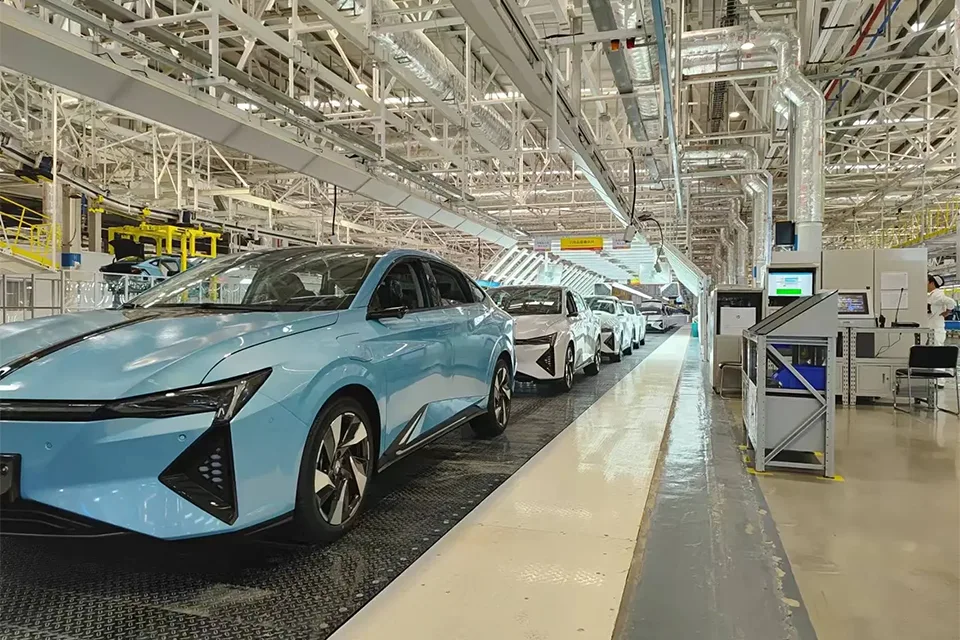
The two verticals share an industry economics: heavy capital intensity, fast model or platform iteration, aggressive vertical integration, and a supply chain that concentrates decision-making in fewer hands than Western equivalents. A delegation that studies both in one week learns something neither route teaches alone, namely how Chinese firms link software capability to physical manufacturing.
The combined logic is real but not automatic. A delegation of automotive procurement leaders gains little from two days of foundation model discussion, and a delegation of AI researchers gains little from a battery plant walk beyond general context. The combination works when the delegation is cross-functional, for instance a corporate strategy team, an investment committee, or a group of chief technology officers and chief operating officers travelling together.
Where the group is single-function, a focused route is stronger. One vertical, deeper, with three or four companies at genuine depth, produces more than two verticals sampled.
Three cities carry most of the AI capability worth visiting.
Beijing: foundation models, autonomous driving and speech. Baidu is the standard first stop, with the intelligent driving division and the Apollo programme, an AI exhibition hall and laboratory access. The conversation that matters here is not "what does your model do" but how a large organisation structures R&D so that a model reaches commercial deployment on a defined cycle. iFlytek adds speech and multimodal capability plus industry deployment in manufacturing, healthcare and education, which is where the AI discussion becomes concrete. Beijing also holds the research institutes and policy apparatus, and a morning with an academic or policy economist gives the delegation the structural frame it needs before it starts asking technical questions.
Hangzhou: embodied AI and cloud infrastructure. Unitree Robotics is the most requested embodied AI host in China right now, and for good reason: quadruped and humanoid hardware at a price point and iteration speed that surprises most Western visitors. An engineering-level conversation covers joint actuation, control stack, payload trade-offs, reliability under repeated duty cycles and the realities of overseas distribution and service. Alibaba's cloud and platform operations give the delegation the software and infrastructure side of the same city.
Shanghai: industrial robotics, humanoid commercialisation and platform AI. UBTECH for humanoid and education and industrial robots and their commercial deployment model. The robot innovation parks around Shanghai for the startup layer, which is where delegations see pre-scale companies and the capital environment that supports them. Tencent Cloud's AI division for model-as-a-service, industrial AI solutions and overseas cooperation frameworks.
A four-day AI segment in Beijing and Hangzhou, or three days in Beijing and Shanghai, gives a delegation six or seven sessions at usable depth. Adding a third city usually costs a session rather than adding one.
The electric vehicle value chain is more geographically distributed than the AI route and requires more deliberate sequencing.
Shenzhen: vertical integration and export. BYD is the anchor. A closed-door session with manufacturing or strategy leadership plus a walk through an automated assembly workshop and a blade battery production hall. The questions that matter: how vertical integration is governed internally, where cost is actually removed, how overseas factory layout is being sequenced, and what the export strategy looks like by region. Shenzhen also holds the automotive electronics and smart cockpit supply layer, which is where a delegation sees the component economics behind the vehicle.
Ningde: cell technology and the battery core. CATL is the anchor for any delegation whose question touches battery chemistry, energy storage, gigafactory layout, or recycling. Access requires lead time and a clear technical rationale, and the sessions that work best are those where the delegation arrives with specific questions about material innovation, cell format strategy and the economics of vertical integration in cells.
Shanghai and Hefei: vehicle brands, tier-one supply and manufacturing depth. NIO in Shanghai for battery swap economics, user operations and premium brand positioning, and in Hefei for the advanced manufacturing base. Bosch and other tier-one suppliers in Shanghai for the component and domain controller layer, and for a view of Sino-foreign supply relationships that delegations rarely see directly. Local battery recyclers complete the loop, and the circular economy conversation is frequently the one delegates find most surprising.
Suzhou, Changzhou and Ningbo: the component belt. Motor manufacturers, thermal management suppliers, die-cast and stamping specialists. Less glamorous and often more useful for a procurement or supply chain delegation, because these are the companies that determine whether a vehicle programme can actually be supplied.
A seven-day EV route typically runs Shanghai, Ningde, Shenzhen, or Shenzhen, Ningde, Shanghai, depending on flight connectivity. Attempting to add Hefei and Suzhou to that in the same week reduces each stop below the depth threshold.
The difference between a useful engineering conversation and a courtesy call is the specificity of the questions. Four agenda sets that work.
For AI and model companies:
For robotics companies:
For tier-one suppliers:
Agendas of this kind are written before the visit, sent to the host two weeks ahead, and mapped to named functions so the host can send the right engineer. Without them, the meeting defaults to a company overview.
Tech delegations work best when the room contains people who can interrogate the answers. A typical composition:
Delegations composed only of senior generalists tend to have pleasant conversations and weak takeaways, because nobody in the room can tell whether an answer was technically credible.
Technology visits raise issues that courtesy does not resolve.
Assume limited disclosure. Chinese hosts will share process, capability and general architecture, and will not share proprietary design detail. That is normal and not evasive. A delegation that pushes for design specifics will be met with polite deflection and the session will lose momentum.
Ask about constraints rather than formulas. The most productive questions are about trade-offs and failures, not about recipes. "What limits your changeover time" produces a real answer; "what is your exact process recipe" does not.
Expect photography restrictions. Specific zones will be off limits. This is usually about unannounced process changes and customer confidentiality rather than about the visitor. Comply without argument and the delegation retains goodwill.
Handle NDAs cleanly. Where financial or roadmap material is shared, an NDA or written undertaking applies. Delegates should expect to sign before arrival rather than in the lobby.
Do not benchmark by copying. A delegation that leaves with a list of things to replicate has usually learned less than one that leaves with a list of trade-offs it now understands. The value is in the reasoning, not the specification.
For a cross-functional delegation of chief technology, operations and strategy leaders.
Day 1, Beijing. Arrival, orientation briefing on China's technology policy and industrial structure, welcome dinner.
Day 2, Beijing. Baidu, closed-door session with the intelligent driving division plus a laboratory and exhibition walk. Afternoon seminar on AI policy and capital allocation with a research institute economist.
Day 3, Beijing. iFlytek for multimodal models and industry deployment. Afternoon peer exchange. Evening cultural block, two hours.
Day 4, Beijing to Hangzhou. Morning rail. Afternoon Unitree Robotics, engineering-level session and live demonstration.
Day 5, Hangzhou to Shanghai. Morning Alibaba Cloud or Cainiao logistics session depending on the delegation's function mix. Afternoon rail to Shanghai. Evening free.
Day 6, Shanghai. Morning UBTECH or an industrial robotics host. Afternoon Tencent Cloud AI, or a financial institution if the delegation includes investment functions. Evening networking dinner.
Day 7, Shanghai. Morning synthesis workshop, part one. Afternoon open for private follow-ups. Evening optional Bund walk.
Day 8, Shanghai. Synthesis completion, group presentations, departure.
That delivers nine substantive sessions, including four or five at genuine engineering depth, across three cities with two rail legs and no internal flights.
A technology delegation needs a technical record, not a travelogue.
Can we visit a company's core R&D centre rather than a plant?
Sometimes, and it is harder than manufacturing access because of intellectual property sensitivity. Requests need a clear rationale, and university or institute laboratories are usually more accessible than corporate core R&D.
Is it realistic to cover both AI and EV in one week?
Only for cross-functional delegations, and only in a seven or eight-day format. Single-function groups do better with one vertical at depth.
Do we need engineers in the delegation?
Strongly recommended. Without a technical attendee, the delegation cannot assess whether an answer was substantive.
How technical can the interpretation be?
As technical as the interpreter is prepared for. We assign sector-familiar interpreters and supply them with glossaries and pre-reading two weeks ahead, and for dense sessions we use simultaneous equipment.
Will companies discuss cost structures?
Frequently at the aggregate level, rarely at part-level detail. Questions framed as trade-offs and constraints get better answers than questions framed as cost extraction.
What lead time do these visits need?
Six to eight weeks for the major anchors, particularly CATL, BYD and Baidu's intelligent driving division. Four weeks for many others, and two weeks typically limits access to visitor-centre tier.
A tech corporate delegation tour to China AI and EV enterprises is worth the airfare when the delegation arrives with questions that only engineers and operators can answer, and leaves with a written position on what to change at home. Companies, cities and cultural stops are the means. The comparative understanding is the product.
PandaStudyTour designs and operates technology delegation programmes across Beijing, Shanghai, Shenzhen, Hangzhou, Ningde, Hefei and Suzhou, covering AI, robotics, electric vehicles, batteries and advanced manufacturing, with engineering-level agendas, sector-familiar interpretation and a technical synthesis at the end. Send us your discipline and your questions, and we will build the week around them.
