When a European or North American organisation decides to bring a delegation to China, the internal question is usually framed as travel: who books the hotels, who arranges the transfers, who stands at the airport with a sign. That framing is why so many programmes underperform. The hard part of an international corporate delegation service in China is not the travel. It is the meeting requests, the documentation, the language register in the room, the contingency when a host reschedules, and the written record that survives the return flight.
This article explains what a competent local delegation service actually delivers, how to tell the difference between service tiers, and what to check before signing.
A Chinese company receiving a foreign delegation deals with a set of internal processes: external relations approval, security clearance for visitors, meeting room allocation, function owner availability, interpretation if required, and often a confidentiality review. Those processes are internal, culturally specific and time-consuming, and they are the real bottleneck in arranging access.
A local service provider sits inside that workflow. It knows which channel reaches a company, how far ahead to submit, what a credible request looks like to a Chinese corporate affairs team, and whom to call when a reply does not arrive. That knowledge is not transferable from a foreign travel agency, however experienced, because it is not travel knowledge.
The secondary function is contingency. Programs in China change: a host postpones because a board meeting moved, a flight is delayed by weather, a delegate needs a doctor. A provider with local staff, local supplier relationships and a same-time-zone response capability resolves these within an hour. A provider operating from eight hours behind resolves them tomorrow.
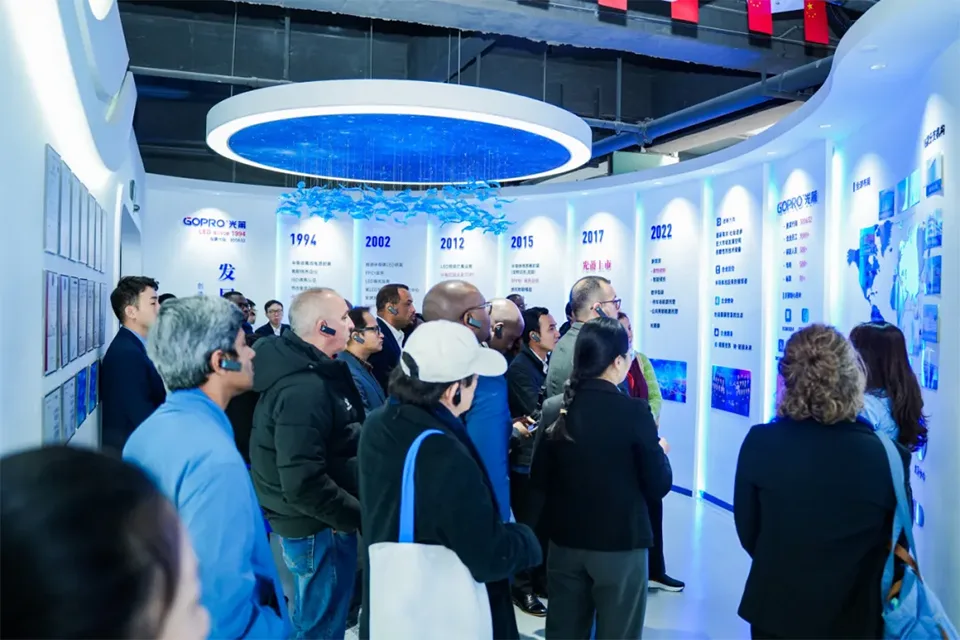
Proposals in this market generally fall into one of three tiers, and the price difference reflects genuine scope difference rather than margin.
Tier one: logistics only. Hotels, transfers, guides, restaurant bookings, rail and flight tickets. Useful for organisations that already have their own meeting relationships in China. Inexpensive and appropriate for delegations that genuinely do not need programme design.
Tier two: programme design plus logistics. The provider builds the shortlist, submits meeting requests, drafts agendas, sequences the schedule, books interpretation, and coordinates on the ground. This is where most first-time delegations should sit, and it is the tier that most changes outcomes.
Plus, where required: security support, medical protocol, cultural programming, partner programming, trade fair integration and post-programme follow-up.
Three areas where an amateur provider creates real risk.
Visa category and purpose consistency. Chinese business visas are category-specific, and the documentation must describe what the delegation will actually do. A programme of eight corporate meetings described as cultural exchange creates a discrepancy that can cause refusal or difficulty at entry. We prepare documentation that matches the programme, and we build a nationality matrix at the briefing stage because processing times differ by passport.
Invitation letters. Most business applications require an invitation from a Chinese host entity with specified details. Where the delegation visits multiple companies, one coordinating host typically issues the letter, supported by programme documentation. This must be arranged before applications are lodged, which is why visa work starts at eight to ten weeks rather than at four.
Payments and contracting. Contracts are normally denominated in a single currency with a deposit and a balance before arrival. Local vendors in China are increasingly card-friendly but not uniformly, and a provider that handles on-the-ground settlement and invoices once removes a recurring source of friction.
We do not provide immigration advice; delegates remain responsible for their own applications. What we owe the client is accurate documentation, delivered early enough to be useful.
Interpretation is the component most often under-specified and most often regretted.
Sector familiarity beats general fluency. A generalist interpreter is excellent for logistics and inadequate for a discussion of cell chemistry, domain controllers or model serving architecture. We assign interpreters by sector and send them pre-reading and a glossary two weeks ahead.
Consecutive versus simultaneous. Consecutive interpretation roughly doubles the duration of a discussion, which means a ninety-minute session yields about forty-five minutes of content. For dense technical sessions with more than six participants, simultaneous equipment pays for itself by recovering that time.
Written materials. Chinese hosts generally appreciate a bilingual one-page agenda. It signals seriousness and it lets the host's team prepare. We produce these as standard.
Facilitation language. The facilitator works in both languages and is responsible for ensuring that the quiet technical expert in the corner of the room actually gets asked a question. In sessions where the most senior host dominates, this role is the difference between a briefing and a discussion.
A serious provider has written answers to questions that nobody wants to think about.
Medical. Insurance with evacuation cover for every delegate, a protocol identifying the nearest international clinic in each city on the route, an English-speaking contact and a twenty-four-hour escalation path.
Security. Standard precautions plus, where requested, discreet close protection for principals in transport hubs and crowded venues. Arranged with lead time.
Site safety. Factory visits involve moving equipment. PPE is provided where required, and delegations are briefed on routes and restrictions. Photography rules are enforced because hosts take them seriously.
Data. Delegates should assume device risk exists on business travel anywhere. Standard hygiene applies, and where hosts share confidential material it is handled under NDA with clear guidance on what may not be transmitted.
Schedule risk. Alternates held for every anchor visit, buffers built into transfers, and a named escalation contact who can re-plan a day within an hour.
Six questions separate a delegation specialist from a travel agency with a corporate page.
Ask also for two client references from the last twelve months, and ask what went wrong on those programmes. Providers who cannot describe a failure are either new or not candid.
Three structural reasons.
Time zone. A rescheduled meeting at 08:00 Beijing time needs a decision at 08:15 Beijing time. A provider eight hours behind responds the next morning, by which point the day is lost.
Relationships. Access to a vice president usually runs through a specific person in external relations who has been helpful before. An operator with that relationship gets a reply in three days. A cold approach gets a reply in three weeks or none.
Regulatory and cultural fluency. Which channel to use for a given company, how formal the letter should be, whether a gift is appropriate, whether a plant will permit photography, how to phrase a question about cost so it is answered rather than deflected. These are local operational skills, and they are the reasons delegation programmes either run smoothly or produce a thin schedule.
PandaStudyTour is a China-based operator with an office in Shanghai and a European office in Belgium, which means clients get local execution and a counterpart in their own time zone and language for contracting and planning.
Our corporate delegation work covers:
We work with boards, C-suites, private equity and venture investors, trade associations and chambers, family offices and executive education programmes, from three delegates to delegations in the twenties with parallel tracks.
Do you work with delegations that already have their own China contacts?
Yes, frequently. In those cases we provide execution: scheduling, transport, interpretation, coordination, note-taking and synthesis, working around meetings the client has arranged itself.
What is the minimum delegation size?
Three principals. Some hosts prefer larger groups, so for very small delegations we either combine sessions or strengthen the delegation profile in the request.
Can you provide services in languages other than English?
Yes, including major European languages for coordination and interpretation. Availability for less common languages requires longer lead time.
How are fees structured?
A programme management fee plus itemised costs for hotels, transport, interpretation and venues. We quote in USD or EUR and invoice once, with a deposit and a balance before arrival.
Do you handle visas on our behalf?
We provide the documentation and invitation letters and advise on category and timeline. Applications are lodged by delegates or their travel providers, since consular processes require the applicant's own submission in most jurisdictions.
What happens if a company cancels after we have confirmed?
We activate the alternate for that slot and, where the theme is compromised, propose a substitute that preserves the learning objective. This is disclosed at the proposal stage so there are no surprises.
An international corporate delegation service in China is judged by three things: whether the right people were in the room, whether the delegation understood what was said, and whether a document existed afterwards. Everything else is comfort.
PandaStudyTour provides end-to-end delegation services with an office in Shanghai and a European base in Belgium, covering meeting requests, visa documentation, bilingual coordination, technical interpretation, risk management and written synthesis. Tell us the decision your delegation needs to make and the week you have available, and we will tell you honestly what can be delivered.
