Campus visits are among the most requested components in any China summer programme, and among the most frequently misrepresented. Marketing materials promise "campus immersion," "university exposure" and "admissions insight." In practice, many groups receive a walk through a pleasant campus, a photograph at a gate and a forty-minute presentation by a member of an international office.
That is not worthless, but it is not what families are paying for. Genuine campus access delivers four things: contact with the institution's actual intellectual work, interaction with students who study there, a realistic understanding of how admission works, and a clear sense of whether the environment suits the young person considering it. This article explains how to build a summer camp that provides those four things rather than a campus photograph.
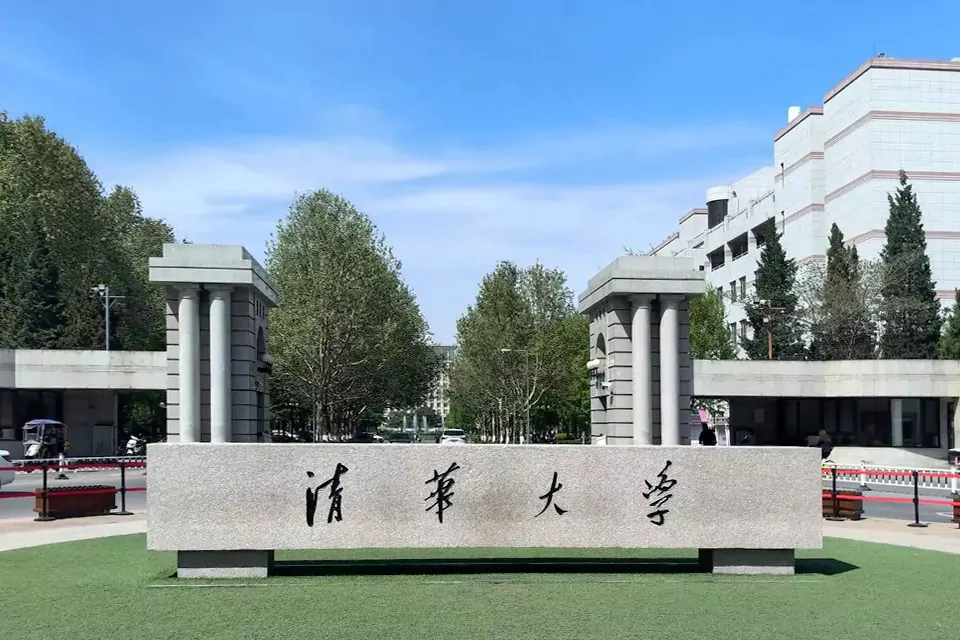
For a sixteen-year-old considering studying abroad, a campus visit does three things that no brochure can.
It converts an abstraction into a place. Students who have walked a library, eaten in a canteen, sat in a lecture theatre and crossed a campus at dusk can imagine themselves there. That imagination is the difference between an application written from obligation and one written from intent.
It calibrates ambition realistically. Chinese universities vary enormously in character: research-intensive and theoretical, professionally oriented, artistically specialised, internationally focused. A student who visits two or three develops a sense of fit rather than a ranking.
It creates a human reference point. Conversations with current students - particularly international students studying in China, and Chinese students considering overseas study - provide information that no information session supplies.
Level one - the guided campus walk. Access to public areas, a library exterior, a canteen, a museum if one exists. Suitable for younger groups. Time required: two hours. Question to ask: is the tour led by a student or by a member of staff?
Level two - the lecture and seminar. A faculty member delivers a session for the group on a topic within their field, with time for questions. This requires an actual academic relationship, not a marketing arrangement. Time: three hours including discussion.
Level three - laboratory, studio or facility access. Supervised entry into a teaching laboratory, engineering workshop, design studio, hospital simulation unit or art facility. Requires prior permission, safety briefing, and typically a signed institutional agreement. This is the level that separates serious programmes from brochures. Time: half day.
Level four - sustained collaboration. The group works with a student society, a research group or a class on a joint task across two or three days. Rare, expensive to arrange and by far the most valuable.
Most school programmes should aim for level two in one university and level three in another, rather than level one at four institutions.
The right institution depends on the students. A brief calibration:
Research-intensive universities suit students interested in fundamental science, engineering theory, medicine and academic careers. Expect substantial laboratory infrastructure and a serious research culture.
Comprehensive universities with strong professional schools suit students oriented toward applied fields: business, law, public policy, journalism.
Specialist institutions - in art, design, music, architecture, sport, or foreign languages - suit students with an identified passion. A design student gains more from a studio visit than from a general campus tour.
Internationalised campuses suit students who want to understand how Chinese higher education engages globally, and often have the most developed infrastructure for hosting visiting groups.
Schools should also consider geography. A campus visit should be combined with something else in the same district - a museum, a research institute, an innovation park — so that a half-day of travel yields a full day of content.
Admissions briefings for international students are frequently overpromised. Programmes imply that participation improves admission prospects, which is generally untrue, and underplay the actual requirements: language proficiency, standardised testing, documentation, and the application calendar.
An honest briefing covers: the difference between undergraduate and postgraduate entry routes; language requirements including Chinese-medium and English-medium programmes; the role of standardised tests; the significance of the scholarship landscape; the practical timeline for applications; and the reality that most international students at Chinese universities study in a limited number of fields where English-medium provision exists.
Students should leave knowing that a campus visit is exploration, not a competitive advantage. That honesty is more valuable than encouragement.
A campus visit programme becomes a genuine cultural experience when the surrounding city is used well.
In Beijing, a campus visit can be paired with research institutes, the science museum and the imperial core, producing a coherent picture of a knowledge capital.
In Shanghai, campuses pair with museums, the Bund, and the urban design of a globalised metropolis.
In Hangzhou, campuses pair with West Lake, tea culture and craft heritage - a combination that produces the most relaxed register of any major itinerary.
In Xi'an, campuses pair with the Terracotta Army, the city wall and Silk Road heritage, producing a study of civilisational continuity.
In Chengdu, campuses pair with conservation work, Sichuan cuisine and a genuinely different urban tempo.
Campus visits require specific planning. Academic terms run from September to June, so summer visits occur during holidays when campuses are quiet: pleasant, but less lively. Ask whether any summer programme, laboratory activity or student group will be present.
Access to buildings, laboratories and libraries typically requires advance permission and a list of participants. Groups should carry identification. Dress codes may apply in laboratories — closed shoes, long trousers, tied hair.
Group size matters: sessions for thirty students are common; sessions for sixty usually become auditoriums. Splitting larger groups into two rotating cohorts improves quality significantly.
Timing: mornings are best for academic content, with campus walks in late afternoon when light and temperature improve.
Campus visits should generate output, not only impressions. A simple structure works: each student selects one institution visited and prepares a two-page note covering what the institution appears to prioritise, what evidence supports that judgment, how the environment felt, and whether it suits them. These notes are then shared in a group session - a modest exercise that turns a set of walks into comparative analysis.
Can any group access university laboratories?
No. Laboratory access depends on institutional permission, safety compliance and the presence of qualified supervision. It is arranged case by case and should never be promised casually.
Is a campus visit useful for students not planning to study in China?
Yes. University systems reveal a society's priorities. A student learns about research culture, academic hierarchy and national investment by seeing them.
How long should a campus visit take?
A meaningful visit - lecture plus facility plus student conversation - needs most of a day. A walk requires two hours and delivers much less.
Do visits include interaction with current students?
We arrange student-hosted conversations wherever possible, including with international students studying in China.
A campus visit is worth including in a summer camp only if it goes beyond the gate. Lectures with real faculty, facilities with real permission, students with real experience and admissions information that is accurate rather than promotional - those are the components that produce insight.
PandaStudyTour arranges campus engagement across China's major university cities at each of these levels, and designs the surrounding itinerary so that a campus visit anchors a day rather than floating alone in it. Browse related structures in the China Summer Camp Insights hub, or describe your students' academic profile and we will propose institutions that fit.
