The giant panda is the most recognisable conservation story in the world, and the most easily reduced to a photograph. Every year, thousands of student groups visit Chengdu, take a picture of a panda eating bamboo, buy a plush toy, and return home with no understanding of why the species recovered, what the recovery cost, or what remains unresolved. That is animal tourism. Conservation education is a different product, and China is one of the few places in the world where it can be taught at this depth.
This article explains what a serious panda conservation camp contains, how to distinguish it from a zoo visit, what students can realistically learn in one to two weeks, and how to build a programme that pairs wildlife science with the extraordinary cultural and archaeological wealth of the Chengdu region.
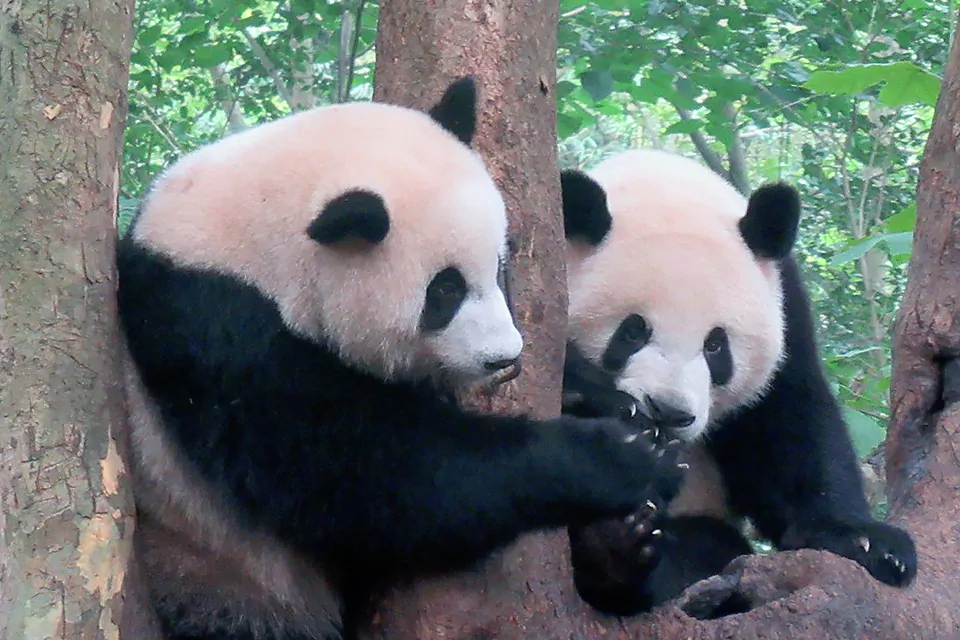
Chengdu is the centre of panda research and captive breeding, and the surrounding landscape contains the wild habitat. Three advantages follow.
Proximity to the research base. The Chengdu Research Base of Giant Panda Breeding combines public display with genuine research on reproduction, nutrition, behaviour and genetics. Access to researchers, keepers and veterinary staff is possible in a way that is not at most zoos.
Access to the wild context. The panda's habitat - the bamboo forests of the Qionglai and Minshan mountains - lies within reach of the city. Nearby reserves and nature areas allow students to understand that conservation happens in a landscape, not only in an enclosure.
An unusually rich regional culture. Chengdu offers Sichuan cuisine, teahouse culture, Sanxingdui's ancient Shu civilisation, the Leshan Giant Buddha, and craft traditions. A wildlife programme that ignores this would be a wasted journey.
A one-week panda programme can cover six substantive topics. Each should be taught with data and with a person who works on it.
Population biology and genetics. Why a small population is fragile; the role of genetic diversity; how captive breeding programmes make decisions about pairing; what a studbook is.
Nutrition and digestive physiology. Why a carnivore's digestive system processes bamboo inefficiently; how much an adult panda must eat; why feeding strategy determines habitat range.
Habitat fragmentation. The central problem in wild panda conservation: roads, settlements, bamboo flowering cycles, and the design of corridors and reserves. Students should see a map and understand connectivity.
Veterinary and husbandry practice. How captive animals are monitored; what the veterinary team does daily; why enrichment matters; how hand-rearing decisions are made.
Reintroduction and the wild. The difficulty of releasing captive-bred animals; radio collaring; survival rates; the politics of reserve management and community engagement.
Conservation economics and policy. Who pays for conservation, how reserve systems are funded, what the tension is between protection and local livelihoods, and how tourism revenue fits in.
That list is a term's worth of biology compressed. Taught well, in a week with site visits and practitioners, it produces durable understanding.
Ethical standards should be explicit and enforced.
No handling of animals by students unless under direct supervision by facility staff, and only where the facility's own protocols permit it. Photograph-and-hold opportunities at commercial venues are generally incompatible with conservation education and should be excluded.
Quiet observation, correct hours. Pandas are most active in the morning during feeding. Programmes should arrive at opening, observe at a distance, and avoid noise and flash photography.
Behind-the-scenes access that respects the animals. Keeper-led sessions, veterinary facility tours and research briefings are appropriate. Anything that disrupts feeding, breeding or rest is not.
Honest framing of captivity. Students should discuss what a breeding centre is for, what it does and does not achieve, and how it relates to wild conservation. Presenting a captive facility as a zoo, or as a substitute for habitat protection, misleads students.
Biodiversity matters more than one charismatic species. A strong programme extends into:
Companion species. The centre also houses and studies other endangered species. Learning why umbrella species are used in conservation strategy is a genuinely useful concept.
Mountain ecology. A day in the foothills - bamboo forest structure, altitudinal zonation, water systems - makes habitat concrete rather than diagrammatic.
Botany. Bamboo flowering cycles occur on multi-decade timescales and drive panda habitat crises. This is one of the clearest examples in biology of a life-cycle problem.
Citizen science. Students can conduct simple structured observations - behaviour sampling, activity budgets - and analyse their own data. This is the cheapest way to convert watching into science.
Days 1–2: Arrival and foundations. Orientation, conservation overview lecture, group formation, research question selection, first base visit at opening hours.
Day 3: Research and husbandry. Researcher briefing on genetics and breeding decisions, keeper-led session, veterinary facility tour, structured behavioural observation with data collection.
Days 4–5: Habitat and landscape. Two days in the mountain foothills: forest walk with an ecologist, corridor and fragmentation discussion, community and reserve management conversation with local staff.
Day 6: Culture and decompression. Jinli Ancient Street, teahouse afternoon, Sichuan cooking session, and free time. Necessary for retention.
Day 7: Ancient Shu civilisation. Sanxingdui Museum - an archaeological counterpoint that makes the regional story multi-dimensional.
Day 8: Data analysis and synthesis. Students analyse their observation data, prepare presentations, and receive feedback from a researcher or educator.
Days 9–10: Presentations and departure. Final presentations, certificate ceremony, optional Leshan Giant Buddha extension, transfer.
Primary and middle school students respond best to structured observation, keeper sessions and craft activities; abstract population genetics should be simplified to concepts and stories. High school students can handle data collection, analysis and ethical debate. University groups can pursue genuine research questions with supervision.
Physical demands are moderate. The mountain day involves several hours of walking on uneven trails in humid conditions. Heat and humidity in July and August are significant and require schedule adjustment.
Named practitioners. A programme taught by a researcher, a keeper and a field ecologist is credible. One taught by a guide reading a script is not.
Real data. Students should collect something - behaviour records, visitor impact observations, vegetation transects — and analyse it.
Access that has been confirmed. Researcher meetings, veterinary facility visits and keeper sessions require advance arrangement. Ask what has been agreed in writing.
Ethical clarity in writing. A stated policy on animal handling and photography distinguishes serious providers immediately.
What is the best season for a panda programme?
Spring and autumn are most comfortable. Summer is hot and humid but workable with adjusted schedules. Cubs are typically born in late summer, which can be a highlight.
Can students volunteer at the base?
Formal volunteer programmes are limited and competitive. Educational access with researcher and keeper sessions is the realistic route.
Is the programme suitable for younger children?
From around age ten with adjusted content. The observation and keeper components work well for younger students.
Can this be combined with other cities?
Yes. Chengdu combines naturally with Xi'an by high-speed rail, and with Shanghai or Beijing by short flight.
A panda camp should leave students able to explain, in their own words, why the species declined, what actually reversed the decline, and what remains difficult. If they can do that, the programme worked. If they can only show photographs, it did not.
PandaStudyTour builds conservation programmes in Chengdu with practitioner-led teaching, structured data collection and an explicit ethical framework, and pairs them with the cultural depth the region deserves. See related programme designs in the China Summer Camp Insights hub, or contact us to shape a wildlife programme for your group.
