Teenagers are enthusiastic about technology and frequently miscalibrated about it. They consume enormous quantities of content about artificial intelligence, robotics and electric vehicles, and possess very little experience of building anything. A well-designed technology camp closes that gap by converting interest into capability: a working prototype, a functioning model, a documented experiment, a technical explanation delivered to an audience.
China is an unusually good place to do this, because the country's technology sector is not confined to research parks. It is visible in the street: automated logistics, mobile payment infrastructure, electric buses, drone delivery trials, sensor-rich public spaces. Students can observe systems at national scale and then attempt to build small versions of them.
This article sets out how a serious technology innovation camp for teenagers is structured, what it should produce, and how to avoid the common failure of a camp that looks impressive but teaches little.
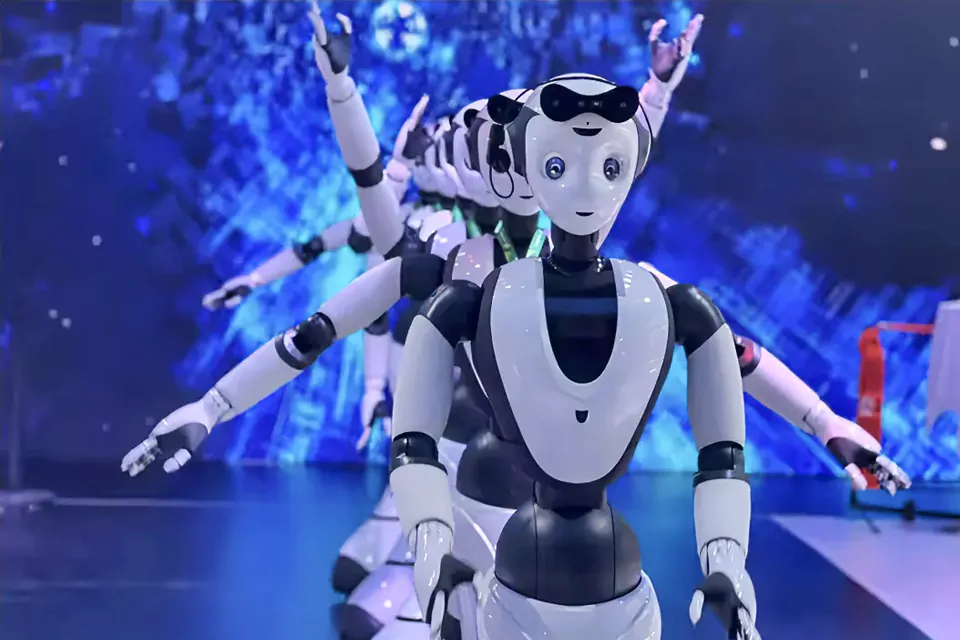
Setting expectations honestly is the foundation of a good programme. In two weeks, a motivated fifteen-year-old can:
What they cannot realistically do in two weeks: become proficient in a programming language, master electronics, or produce original research. Programmes claiming otherwise are selling an illusion.
Part one - a foundation block. Two to three days of concentrated teaching in a single domain chosen by the cohort: AI and data, robotics and control, or design and fabrication. Depth beats breadth. A student who genuinely understands one classifier learns more than one who has watched demonstrations of six technologies.
Part two - a build block. The middle of the programme should be dominated by making. Teams work on a defined challenge with constraints: build a device that sorts objects by colour; design a system that monitors air quality and reports it; create a robot that navigates a marked course. Constraints force engineering thinking. Open-ended "innovate something" briefs produce paralysis.
Part three - exposure to real industry. A visit to a working company or factory changes how students see their own project. Seeing a production line, a testing laboratory or an engineering team at work supplies context that no classroom can. Our China Tech Tours infrastructure is used to arrange these visits, with a technical host rather than a marketing presenter wherever possible.
Part four - presentation and critique. Every team presents. Feedback should come from someone technically credible - an engineer, a researcher, a working developer. Public critique is uncomfortable and formative; it is also the moment students discover whether they actually understood what they built.
Shenzhen is the strongest single city for hardware, robotics and consumer electronics. The ecosystem's density - component markets, fabrication services, prototyping support — means a student project can move from idea to physical object within days.
Shanghai suits AI, data, digital platforms and software-driven innovation, with a strong startup and incubator layer.
Beijing suits foundational research, university laboratories and AI at institutional scale.
Hangzhou suits e-commerce technology, digital platforms and new retail.
A two-city programme - typically Shenzhen plus Shanghai, or Shenzhen plus Hangzhou - gives students both a hardware and a software perspective and works well within twelve to fourteen days.
Technology programmes with minors carry specific obligations.
Supervision during fabrication must be continuous, with trained staff present whenever powered tools, soldering irons, batteries or moving machinery are in use. Personal protective equipment must be provided and enforced. Battery handling and charging require written protocols. Drones must be flown only in permitted areas under supervision.
Digital safety matters equally: data privacy in any project involving collection, appropriate use of generative tools, and clear rules on what students may publish. Programmes that teach AI without discussing bias, verification and responsible use are teaching half a subject.
A technology camp that runs ten hours of coding daily produces burnout by day five. The rhythm that works: a morning teaching block, an afternoon build block, and an evening that is deliberately non-technical on alternate days. Cultural and physical activity - a hike, a museum, a cooking session, a city exploration task - protects both mood and retention.
In Shenzhen and Guangzhou, a Cantonese food evening and waterfront walk serve this function well. In Beijing, a Great Wall day reset is standard and genuinely restorative. In Hangzhou, a West Lake afternoon does the same.
Who teaches, and what have they built? A working engineer or a computer science graduate with project experience is preferable to a generalist instructor with a curriculum pack.
What is the student-to-instructor ratio during build sessions? Below 1:10 becomes unsafe in a fabrication environment.
What equipment is actually available? Ask for specifics: how many robotics kits, how many 3D printers, what compute, what software licences. Vague answers indicate a programme that borrows equipment on the day.
What does the student take home? A project report, code or design files, photographs and video of the build and presentation. Ideally, a physical artefact or at least its files.
Is there an assessment? A written evaluation from the instructor is more useful to a school than a certificate alone.
Do students need prior coding experience?
No, though students with experience will progress further. Cohorts should ideally be grouped by prior exposure rather than mixed.
What is the right age range?
Thirteen to eighteen. Younger students do better with robotics and fabrication; older students handle AI and data topics with more abstraction.
Can the camp be combined with a cultural programme?
Yes, and it should be. A pure technology programme in a country students have never visited wastes the opportunity.
Is there a risk of visiting companies refusing groups?
Some enterprises do not host student groups. We confirm access during planning and substitute comparable hosts where necessary.
A technology innovation camp is worth running only if students leave with something they can demonstrate: a device that works, a model that classifies correctly, a system that responds, a presentation that survives questioning. Everything else is decoration.
PandaStudyTour builds teen technology camps across Shenzhen, Shanghai, Beijing and Hangzhou, with industry access arranged through our China Tech Tours network and a project deliverable required from every team. Explore programme variations in the China Summer Camp Insights hub, or tell us your discipline focus and we will draft a structure.
