Beijing is the easiest city in China to build an academic camp around, and the easiest to build a superficial one around as well. The city contains an extraordinary concentration of universities, national research institutes, museums, archives and laboratories. It also contains a great number of programmes that use the word "academic" while delivering a campus walk, a group photograph at a famous gate and a lecture of forty minutes.
The distinction matters because students and parents choosing an academic camp are buying something specific: exposure to serious intellectual work, contact with people who do that work, and a demonstrable output. This article explains how a Beijing academic camp can be designed to deliver those three things, what a realistic schedule looks like, and what to check before committing.
Four characteristics make Beijing unusually suitable.
Institutional density. Dozens of major universities and national research institutes sit within a manageable radius. A well-planned day can include a laboratory visit and a museum archive session without long transfers.
Disciplinary breadth. Engineering, basic sciences, medicine, economics, history, archaeology, art and international relations are all represented at elite level. Few cities worldwide offer this range within one metro system.
The city as a teaching object. Urban planning, water management, ritual architecture, museum practice and public space all have visible, walkable examples. A seminar on imperial city layout can end with students standing in the place that demonstrates it.
Access to research culture. Students can meet doctoral researchers, postdocs and laboratory technicians — people close enough in age to be relatable, and serious enough to be credible.
University lectures with preparation and follow-up. A single lecture is entertainment. A lecture becomes education when students receive background reading beforehand, must submit two written questions in advance, and analyse the content afterwards in a small-group seminar. This triples the workload for the organiser and quadruples the learning.
Laboratory and facility observation. Supervised visits to teaching laboratories, cleanrooms, fabrication spaces or research greenhouses give students a physical sense of how knowledge is produced. These require advance permission, safety briefing, appropriate clothing and, often, a signed institutional agreement. Programmes that promise laboratory access casually should be questioned.
Research institute exposure. National institutes present science at a different scale: national projects, large infrastructure, long time horizons. A visit combined with a briefing from a working researcher gives students a view of science as an institution rather than a school subject.
A student research project. The single most important component. Each student, or a small team, selects a question at the start of the camp, collects evidence through the visits and lectures, and presents findings at the end. Projects do not need to be original research; they need to be genuinely investigated. A well-scoped project - how does Beijing manage water for twenty million people, or what design logic governs the city's ring roads, or how is archival material preserved — produces more intellectual growth than five passive lectures.
Days 1–2: Orientation and framing. Arrival, safety and academic briefing, group formation, project topic selection, and an introductory walk that establishes the city's historical and geographic logic.
Days 3–5: Foundations. Two university lectures with associated seminars, one laboratory or fabrication facility visit, one museum session with a curator or specialist guide, and project research time.
Days 6–7: Fieldwork block. Two days applying concepts on site - urban planning and water systems, or heritage conservation and museum practice, or industrial and innovation geography, depending on the theme chosen.
Day 8: Rest and cultural immersion. A lighter day with a hutong walk, craft workshop, or free supervised exploration. Necessary, not optional.
Days 9–10: Advanced exposure. A research institute visit, one specialist seminar, a second laboratory session, and a peer exchange with Chinese students working on related topics.
Day 11: Synthesis. Project presentations, feedback from instructors, written reflection, certificate ceremony.
Day 12: Departure. Optional morning extension and transfer.
Ratio and instruction quality. Academic sessions with one instructor per twenty-five students become lectures by necessity. Sessions with one instructor per eight allow questioning. Ask who teaches and what their position is.
Whether the schedule protects thinking time. A camp that moves students between six venues daily leaves no space for reflection, and reflection is where learning consolidates. Two protected blocks of project work per week is a minimum.
Whether the cohort is intellectually homogeneous enough. Students who are all equally motivated work well. Programmes that fill seats indiscriminately produce classrooms where the engaged half carries the rest.
Whether the institution is actually involved. A programme with genuine university cooperation has a named faculty contact, a signed arrangement, access to facilities and, usually, a fee paid to the institution. A programme that merely walks through a campus has none of these.
Beijing's scale makes logistics decisive. Accommodation should be chosen for travel efficiency rather than prestige: a mid-range hotel near a metro interchange in the university district often serves an academic camp better than a luxury property an hour away.
July and August in Beijing are hot and humid, with occasional heavy rain. Sessions should be scheduled so that the hottest hours are indoors. Winter programmes are feasible and quieter, but require serious cold-weather planning.
Transport should be a mix of licensed coaches for group moves and public metro for smaller sub-groups, with students taught to navigate. Meal arrangements must accommodate dietary requirements and should not consume the academic day; a fixed lunch slot of forty-five minutes is sufficient.
Cultural content should be selected to reinforce the academic thread rather than to fill the brochure.
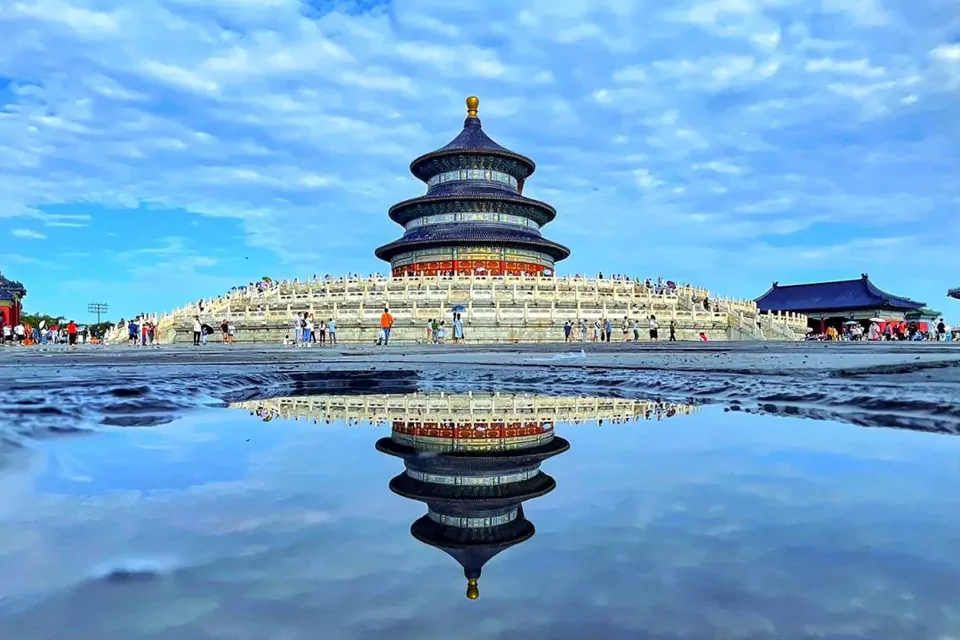
For a humanities cohort: the Forbidden City as a study of ritual space, the Temple of Heaven as a study of cosmology and public ritual, the hutong districts as a study of vernacular urbanism, and a museum archive session on preservation practice.
For a science and engineering cohort: the water systems and reservoirs, infrastructure and transport planning, an industrial or innovation district, and a science museum visited with a specific technical question rather than as entertainment.
For a social science cohort: markets, neighbourhood governance, transport behaviour, and the visible economics of a megacity.
The Great Wall belongs on every programme, but as a structured study of defence logistics and construction organisation rather than only a hike and a photograph.
What age group is suitable for a Beijing academic camp? The strongest fit is students aged fifteen to eighteen, and university undergraduates on short programmes. Content can be simplified for younger groups but the academic character diminishes.
Is English used throughout? Yes. Instruction, materials and project supervision are in English, with bilingual support for logistics and site visits.
Will students receive any formal recognition? They receive a certificate naming instructors, a written project assessment, and a project report. Formal academic credit requires a separate institutional agreement and should not be assumed.
How competitive is entry? Operator-run camps vary. Selective programmes usually require a short application and a teacher reference.
An academic summer camp in Beijing is worth doing only if it is genuinely academic: lectures that require preparation, laboratories that can be entered, researchers who can be questioned, and a project that must be completed. Everything else — the landmarks, the food, the photographs - is supporting material.
PandaStudyTour designs Beijing academic programmes on that basis, with institutional access arranged in advance and an intellectual output required from every participant. Browse related designs in the China Summer Camp Insights hub, or contact us to build a programme around a specific discipline.
