Almost every Chinese language programme advertises culture. Often this means a calligraphy session on a Thursday afternoon and a museum trip on Saturday, arranged around a conventional classroom course. That is culture as decoration - pleasant, memorable, and educationally inert.
There is a more interesting version. Culture can be the carrier of language: the reason a student needs specific vocabulary, the situation in which the vocabulary is used, and the memory that holds it in place afterwards. A student who learns "墨、笔、纸、砚" while actually grinding ink and writing with a brush will retain those four words for years. A student who learns them from a vocabulary list will not.
This article explains how a cultural Mandarin summer camp in China should integrate culture into language teaching, what modules genuinely work, and how to tell an integrated programme from a decorated one.
Model A - parallel tracks. Language lessons in the morning; cultural activities arranged separately, usually with an English-speaking coordinator. The two do not reference each other.
Model B - integrated. The morning language block prepares the vocabulary and structures required by the afternoon cultural module, and the module generates the material for the next day's class.
Model B sounds like more work, and it is. It is also the difference between a student learning 200 words they can use and a student learning 200 words they have used.
The test is simple: can the teacher tell you which afternoon activity tomorrow's class prepares for? If the answer is vague, the programme is Model A with better branding.
Language payload: writing verbs, tool names, descriptive adjectives for stroke quality, historical narrative of script styles, evaluative language ("this stroke is too heavy," "that character is well balanced").
Why it works: it is slow. Calligraphy forces repetition of a small set of characters, which is exactly what literacy needs, and it produces a physical artefact. A student who has written twenty versions of one character will recognise it forever.
Design note: two hours is the right length. Forty-five minutes is a photo opportunity.
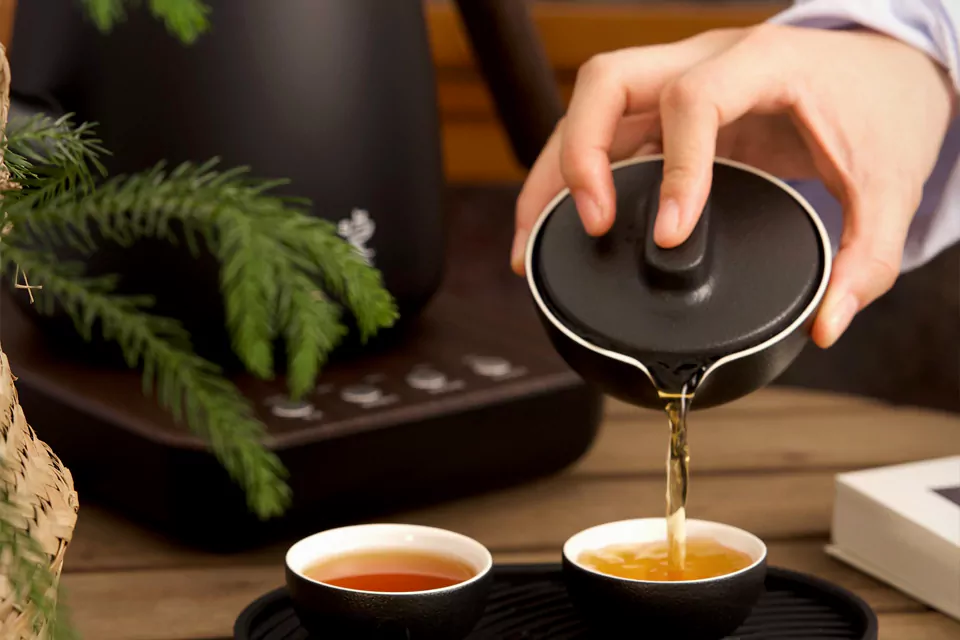
Language payload: names of tea types, brewing verbs, taste and aroma adjectives, ritual sequence language, politeness formulas for offering and accepting.
Why it works: tea sessions are conversational by nature. There is waiting time, and waiting time filled with language is the most natural teaching situation available.
Design note: a tea master who talks about tea is better than a tea master who performs silently. Ask whether the session is participatory.
Language payload: ingredients, quantities, imperatives, sequencing, safety instructions, taste description, regional culinary vocabulary.
Why it works: imperatives are one of the most useful structures in a beginner's repertoire, and a kitchen produces them constantly and naturally. The output is edible, which for younger learners is a powerful motivator.
Design note: the instructions must be in Mandarin, delivered slowly with demonstration. A bilingual cooking class where the teacher narrates in English while students chop vegetables teaches cooking.
Language payload: colour and facial feature vocabulary, character-type descriptions, emotion words, narrative of famous stories, performance verbs.
Why it works: the visual coding is explicit and memorable - red for loyalty, black for integrity, white for cunning. Students remember the mapping, and the mapping carries vocabulary.
Design note: a mask-painting workshop plus a short aria with subtitles beats a two-hour full opera for most age groups.
Language payload: body parts, directions, commands, counting, sequence language, tempo and quality adverbs.
Why it works: physical instruction is comprehensible without translation. A teacher saying "左手,慢一点,再来一次" while demonstrating is delivering comprehensible input at exactly the right level.
Design note: short daily sessions outperform a single long workshop. Fifteen minutes every morning produces more language and better regulation than three hours once.
Language payload: materials, shapes, colours, spatial prepositions, procedural language, cultural symbolism.
Why it works: spatial language is difficult to teach abstractly and easy to teach with your hands in front of you.
Design note: give the finished object a purpose - decorate the room, give it to a homestay family, sell it at a mock market. Purpose converts activity into language.
Language payload: the full transactional repertoire - asking prices, quantities, measure words, bargaining formulas, expressing preference and refusal.
Why it works: markets are the single richest language environment in any Chinese city, and they are forgiving. A vendor will repeat, will write the number down, will laugh.
Design note: send students with a budget, a list, and a requirement to buy three things and report what they cost. The task is the lesson.
A concrete example, one day:
Morning class (90 minutes). Theme: describing process and sequence. Target structures: ordinal markers, imperative forms. Vocabulary: verbs for preparing, cutting, boiling, folding.
Late morning (30 minutes). Character work on the verbs from the class.
Afternoon (2 hours). Dumpling-making with a local cook. Instructions delivered in Mandarin with demonstration. Students are required to explain their own process back to the group at the end, using the morning's structures.
Evening (45 minutes). Short written task: five sentences describing what you did, in order.
Every element is connected. The afternoon is not a reward; it is the examination. The evening task converts the experience into literacy.
This is the structure to look for. A programme where the afternoon could be swapped for a different activity without changing the morning class is not integrated, however attractive the activity.
Excursions are where cultural programmes most often revert to tourism. The fix is to give each excursion a language deliverable.
Weak: visit a museum, look at objects, leave.
Strong: pre-teach ten object-related terms, give a worksheet with five questions requiring observation, require a two-minute spoken report the following morning.
Weak: walk through a hutong and admire the architecture.
Strong: interview two long-term residents about how the neighbourhood has changed, record the answers, present comparisons in class.
Weak: visit a temple and take photographs.
Strong: observe and describe what worshippers are doing, using present continuous structures, then compare with a place of worship at home.
For younger children the deliverable is simpler - count, name, colour, one question asked of one adult - but the principle holds. An excursion without a language task is a day off.
There is a version of cultural programming that treats Chinese culture as spectacle: costumes, performances, staged ceremonies, and photographs of foreigners looking delighted. It photographs well and teaches little.
Signs of performative culture:
Signs of genuine cultural programming:
The second list is what a parent is paying for. The first is what a brochure is selling.
Week one - everyday culture
Week two - expressive culture
Character work daily. Every afternoon requires the morning's language. Every module has a deliverable.
Beyond the language, an integrated cultural programme produces specific durable outcomes:
The measurable language gain of an integrated programme is roughly comparable to a conventional one on paper. The retention, three months later, is not.
Is this suitable for complete beginners?
Yes, with adjustment. Beginner modules focus on naming, counting, and highly patterned interaction. The craft and cooking modules work well for beginners because the task carries the meaning even when the language is limited.
Do students need to be interested in Chinese culture to benefit?
Not necessarily. The culture is a vehicle for language, and students who are indifferent to opera still learn the vocabulary of colour, character and emotion.
How much of the day is cultural activity versus class?
A workable split is 50 to 60 percent structured language work and 40 to 50 percent applied cultural activity, with the two explicitly linked. Programmes offering 20 percent culture are language courses with outings; programmes offering 70 percent are activity camps with some Chinese.
Are the artisans qualified teachers?
No, and they should not be. They are practitioners. The language teacher's job is to prepare and consolidate; the artisan's job is to provide authentic input and a real reason to speak.
Will my child make things they can keep?
In most craft modules, yes. Ask whether the artefact comes home, because the object is a memory anchor for vocabulary.
Is cultural content age-appropriate?
It should be. Opera masks and paper cutting work across ages; tea ritual suits older students; cooking suits everyone. Ask how the modules differ by age band.
Can this be combined with an intensive language track?
It can, and the strongest programmes offer both: an integrated cultural track and a more academic intensive track, allowing families to choose by objective.
A cultural Mandarin summer camp in China is worth choosing when culture is doing linguistic work - preparing vocabulary, generating situations, producing deliverables - rather than filling afternoons.
The tell is easy to check: ask the programme to name, for any given afternoon module, the language structures it teaches. A programme that can answer is integrated. A programme that pauses is decorated.
If you want a programme where calligraphy, tea, cooking, craft and fieldwork are the curriculum rather than the entertainment, our Chinese Mandarin Summer Camp sets out the module map, the daily integration and the age-banded versions - and we will send you the lesson-to-module mapping for any week you are considering.
