The difference between a summer camp and a study tour is not marketing vocabulary. It is where the learning happens.
A camp is anchored: a campus, a timetable, a cohort, a routine. Learning concentrates in one place and deepens through repetition. A study tour moves: the classroom travels, and each city supplies a different vocabulary, a different accent, a different set of situations.
Both models are effective. They produce different kinds of learners. The camp produces someone who can hold a conversation about ordinary life. The study tour produces someone with broader listening tolerance, greater situational flexibility, and a mental map of the country - plus, typically, a bit less raw classroom time.
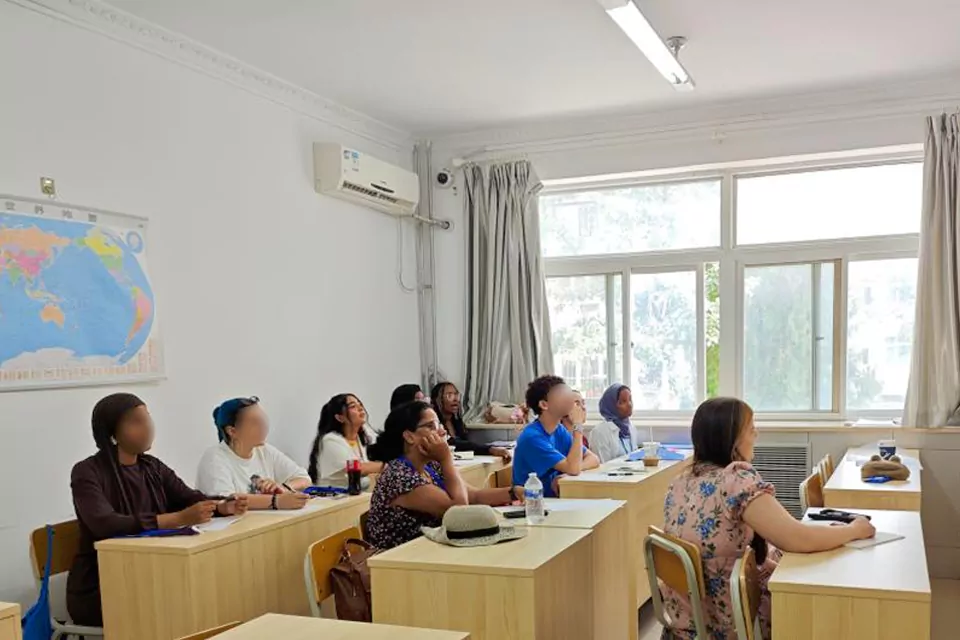
This article explains how a Mandarin study tour summer camp in China should be structured, how much study belongs in a study tour, and what questions group leaders and parents should ask.
| Camp model | Study tour model | |
| Base | Fixed | 2–4 cities |
| Daily rhythm | Stable | Varies by location |
| Language input | Concentrated, repetitive | Broader, more varied |
| Peer group | Constant | Constant |
| Best for | Depth, habit formation, literacy | Breadth, listening flexibility, cultural range |
| Weakness | Narrow exposure | Fragmented routine, more time in transit |
The trade-off is real and should be chosen deliberately. A study tour that tries to deliver camp-style intensity while moving every second day produces a tired group who learned less than either model alone.
A workable design principle: travel days are not study days. Build the itinerary so that movement happens on days with lighter academic content, and never schedule a demanding class immediately after a long transfer.
Group leaders often over-schedule. The temptation is to justify the trip academically by adding class hours on top of a full sightseeing programme.
A defensible ratio for a two-week study tour:
Total structured language time: roughly 25 to 35 hours over two weeks, which is comparable to a two-week camp but distributed differently.
The failure mode is the "academic tour" that schedules four hours of class in the morning and a full excursion in the afternoon, every day, for fourteen days. It looks rigorous and produces exhaustion by day eight.
The strongest study tour justification is that different cities teach different language.
A well-designed tour uses this deliberately: each city contributes a themed module, and the vocabulary is taught before arrival and used on site.
Two cities in two weeks is right. Three is possible with tight logistics and a disciplined group. Four produces a tour measured in transfers.
Some groups - university cohorts, school delegations, credit-bearing programmes — need the tour to be academically defensible.
Four things make a study tour academically substantive:
1. A pre-departure component. Readings, language preparation, research tasks. This is what separates a study tour from a holiday, and it is the part groups most often skip.If a group wants credit, the assessment design must exist before the itinerary. Building assessment retrospectively from photographs is what gives study tours a poor academic reputation.
Beijing and Xi'an, 14 days, secondary or early university group, level A2 to B1.
Days 1–2 - Beijing, orientation and foundation
Days 3–4 - Beijing, heritage and formal register
Day 5 - Beijing, contemporary city
Day 6 - Travel day
Days 7–8 - Xi'an, Silk Road and archaeology
Day 9 - Xi'an, food and market
Day 10 - Xi'an, city wall and urban form
Days 11–12 - Consolidation
Day 13 - Presentations
Day 14 - Departure
Note the shape: two cities, one travel day, one rest day, roughly 30 hours of structured language work, four field deliverables, one assessed output.
Study tours fail operationally far more often than pedagogically.
Group size. Above thirty, movement becomes logistics. Above forty, every site visit and restaurant becomes an event. Smaller groups of twelve to twenty-five are materially better.
Rail versus air. High-speed rail is the study tour's best tool: city-centre to city-centre, reliable, and the journey itself is a language task. Flights consume half a day at each end.
Accommodation clustering. A single hotel far from the day's sites costs an hour a day. Two smaller hotels in better locations often outperform one large one.
Meal logistics. Group meals in tourist restaurants waste the language opportunity. Pre-arranged set menus in local restaurants with a named dish vocabulary task are better and cheaper.
Contingency. At least one flexible half-day per week. Weather, illness, a closed site, a slow group — something will absorb it.
Staffing. A teacher, a coordinator and a local guide are three different jobs. Groups that use one person for all three get a tired person doing all three badly.
Choose a study tour when:
Choose a camp when:
A useful hybrid: a one-city camp for the first week, establishing routine and language, followed by a shorter study tour in the second week. This captures both and is the model we most often recommend for mixed groups.
How much language do students actually learn on a study tour?
Comparable to a camp of the same length on structured hours, but distributed differently: stronger listening flexibility and broader vocabulary, slightly weaker in literacy accumulation unless protected deliberately.
Is a study tour suitable for beginners?
Yes. Beginners benefit most from the concrete, situational language that travel provides, provided they have a stable daily class block and prepared phrases for each situation.
Can the tour be credit-bearing?
It can, if there is pre-departure work, a defined objective per location, field deliverables and a summative assessment. Without these, credit is not defensible.
How many cities is right for two weeks?
Two. Three at most, with disciplined logistics. Four produces an itinerary that is mostly transport.
Do we need a teacher travelling with the group?
If the tour is academic, yes - someone who owns the assessment. A local coordinator handles logistics; a teacher handles learning. Conflating the two is a common and expensive mistake.
Is this better than a camp for a school group?
For a school group with an educational justification and older students, usually yes. For a group whose goal is measurable language improvement, a camp is usually more effective.
Can parents join?
They can, on some formats. Family study tours work well for younger participants, where a parent provides evening supervision and the group programme covers the day.
A Mandarin study tour summer camp in China earns its name when the travel is the curriculum rather than a reward for sitting through class. That means a defined objective per city, taught vocabulary used on site, field deliverables, and a summative output that makes the learning visible.
Two cities, a real class block each day, one rest day a week, and a teacher who owns the assessment. Anything more ambitious usually produces a group that saw a lot and learned less than they could have.
If you are designing a study tour for a school or university group, our Chinese Mandarin Summer Camp page sets out the study tour formats, the study-to-travel ratios and the assessment design — and we are glad to build an itinerary against a specific academic objective rather than a list of sights.
