The Spring Festival, also widely known as Chinese New Year, is the most important, joyful, and culturally profound traditional festival in China. Celebrated across the entire country and among global Chinese communities, it marks the turning point of the lunar new year, symbolizing farewell to the old, welcoming new beginnings, and praying for health, prosperity, and family harmony. Unlike modern Western holidays centered on single celebrations, the Chinese Spring Festival unfolds as a long, warm, step-by-step cultural ritual that lasts nearly a month. Rich in ancient customs, poetic traditions, and heartfelt human emotions, it offers international travelers an unrivaled opportunity to dive deep into authentic Chinese culture, local lifestyle, and centuries-old folk heritage. If you want to truly understand China, there is no better time to visit than during the Spring Festival season.
Spring Festival celebrations begin long before New Year's Eve. Starting from the twelfth lunar month, every household gradually enters the festive atmosphere, following traditional customs passed down for thousands of years. One of the earliest and most meaningful traditions is making Laba Porridge on Laba Festival. This warm, nourishing porridge is cooked with over eight kinds of ingredients, including glutinous rice, red beans, lotus seeds, jujubes, millet, and longan. It symbolizes harvest, abundance, and people's sincere wishes for a prosperous new year. After Laba Festival, families start thorough year-end cleaning, known as “sweeping away dust and bad luck”. Every corner of the house is cleaned carefully to bid farewell to negative energy and welcome good fortune and new blessings.
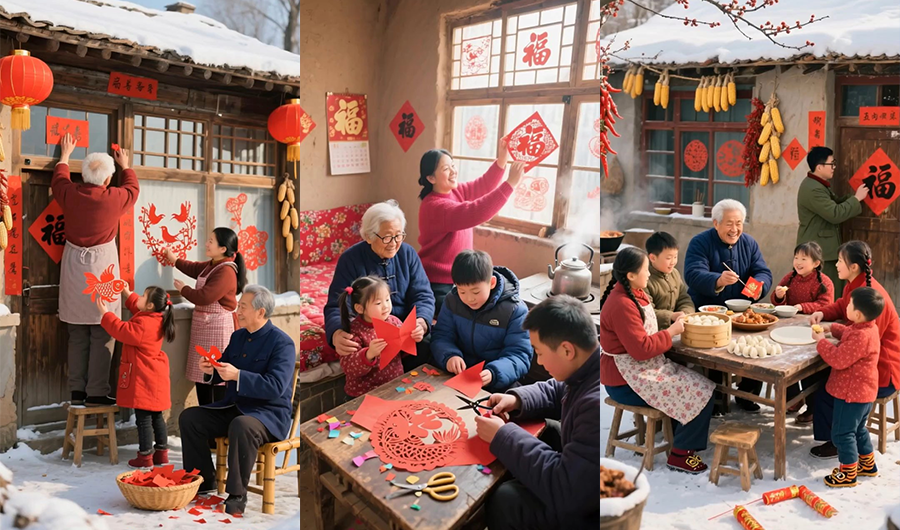
As the New Year draws closer, more lively Spring Festival customs begin to unfold. Families prepare abundant New Year goods, including seasonal fruits, candies, nuts, dried delicacies, and specially cured meat and fish. People also buy brand-new clothes, especially for children, representing a fresh start and hopes for a splendid new year. One of the most iconic visual traditions is pasting red Spring Festival couplets, festive paper cuttings, and the Chinese character “Fu” on doors and windows. Written with auspicious poems and blessings for happiness, health, and success, red couplets turn every street and courtyard into a vibrant red scenery, creating the most authentic and heart-warming festive atmosphere unique to China.
New Year’s Eve is the climax of the entire Spring Festival celebration. On this special night, no matter how far family members are from home, they will return for the most important family reunion dinner of the year. The reunion feast includes symbolic dishes with special meanings: fish represents surplus and abundance; dumplings symbolize wealth and good fortune; and chicken and seasonal vegetables stand for luck and vitality. After dinner, families stay up late together in a tradition called “Shou Sui”, chatting, watching the Spring Festival Gala, sharing life stories, and waiting for the arrival of the new year. This quiet yet joyful night fully reflects the core value of Chinese culture: family reunion and harmony.
Fireworks and firecrackers have been classic Spring Festival traditions since ancient times. Originating from the ancient legend of driving away the mythical monster "Nian", the crisp, bursting sounds and brilliant blooming fireworks dispel darkness and represent the elimination of misfortune and the arrival of good luck. Although many modern cities restrict traditional firecrackers, creative light shows, electronic fireworks, and festive lantern displays have become new popular ways to celebrate, retaining the festive excitement while showcasing the integration of tradition and modern civilization.
From the first day of the lunar new year onwards, the Spring Festival enters a lively period of celebration and social interaction. The most beloved custom for children and young people is receiving red envelopes, or “Hongbao”. Elders prepare red envelopes with lucky money, symbolizing blessings for health, safety, growth, and good fortune in the new year. It is not merely money, but the warmest expression of family love and traditional cultural blessings.
New Year visiting is another indispensable Spring Festival tradition. People dress in new clothes, visit relatives and friends, exchange New Year greetings, and share best wishes for the year ahead. During these visits, people taste traditional New Year pastries, drink tea, and enjoy relaxed conversations, strengthening friendship and family bonds. In many regions, especially in ethnic minority areas and ancient towns, wonderful traditional performances are held during the Spring Festival, including lion dances, dragon dances, folk music, opera shows, and intangible cultural heritage exhibitions. These lively folk activities fully display the diversity and vitality of Chinese traditional culture.
What makes the Chinese Spring Festival so charming is not only its colorful traditions, but also its profound cultural spirit. Every custom carries ancient people’s reverence for nature, gratitude for harvest, and pursuit of happiness. It embodies the core Chinese values of family unity, gratitude, harmony, and hope. Unlike standardized commercial festivals, China's Spring Festival retains strong human warmth, local characteristics, and living folk traditions that have been passed down for thousands of years.
For international travelers, visiting China during the Spring Festival is an unforgettable cultural journey you cannot experience anywhere else. You can walk through red-decorated ancient streets, taste authentic homemade New Year dishes, watch traditional folk performances, learn to paste couplets and paper cuttings, and even join local families for genuine reunion celebrations. You will witness how ordinary Chinese people celebrate traditions, pass down culture, and embrace new hopes for the future.
If you are looking for a real cultural immersion experience, come to China during the Spring Festival. Feel the warmth of family reunion, appreciate the beauty of ancient traditions, and celebrate the most lively, sincere, and heart-warming festival in Chinese culture. The Chinese New Year is waiting for you to explore, experience, and share the endless joy and blessings it brings.
