The phrase "study tour" carries two very different meanings in the market. In one meaning it is a sightseeing trip with a corporate visit inserted to justify the invoice. In the other it is a structured learning programme in which senior people leave with a changed understanding of how an industry works.
The second meaning is the one that justifies the cost. An executive corporate study tour to China innovation hubs is not valuable because the delegation saw a robot or a gigafactory. It is valuable because the delegation tested its own assumptions against an environment that operates under different constraints, and returned with a written position on what to do differently.
This article sets out how such a programme is designed, which innovation hubs serve which learning objectives, and how to tell whether a proposal is a study tour or a dressed-up tour.
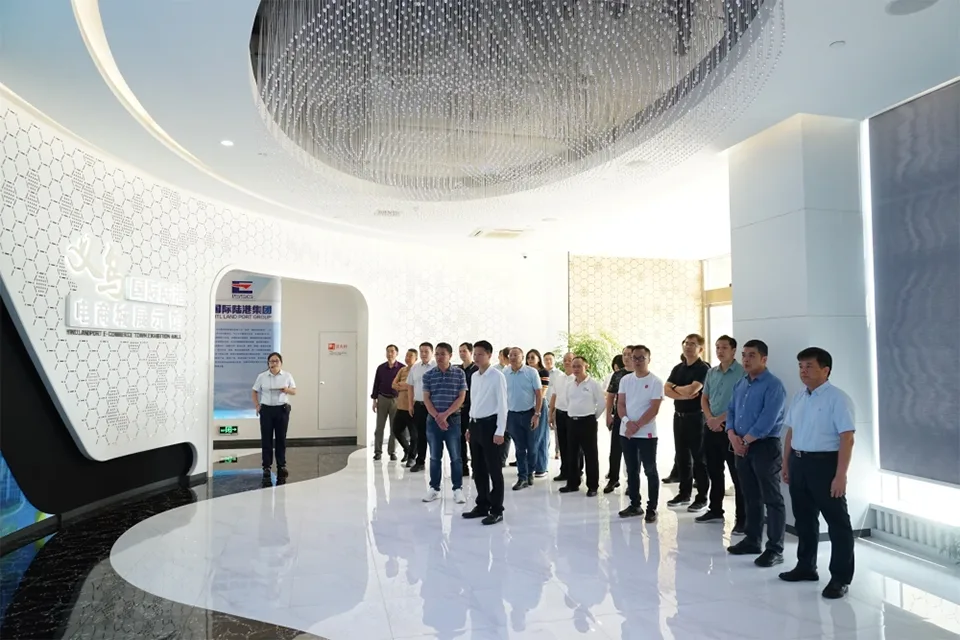
Four design elements distinguish the two, and a proposal missing any of them is the wrong product.
A stated learning question. Before anything is booked, the programme defines what the delegation is trying to understand. Not "the future of AI", which is unbounded, but something closer to: how do Chinese firms organise R&D so that a model reaches commercial deployment in eighteen months rather than forty? A question of that shape generates a shortlist, an agenda and an output.
Expert framing at both ends. A briefing on the first morning that gives the delegation the structural context it lacks, and a synthesis session at the end that ties observations back to the question. Site visits without framing produce anecdote, and anecdote does not transfer.
Comparison, not admiration. The programme should place each company in a comparative frame: how does this approach differ from what the delegation's own market does, and why. Without that discipline, visits become a sequence of impressive things.
A written output. A synthesis document, a set of decisions, a list of follow-ups with owners. Programmes without a written output lose most of their value within three weeks, which is roughly when the memory of specific conversations fades.
A tour with a company visit has none of these. A study tour has all four, and the itinerary is built around them.
Beijing: policy, platforms and frontier research. The capital is where national research institutes, standards bodies, major platform companies and the deepest concentration of foundation-model capability sit. Baidu's Apollo programme, iFlytek's speech and multimodal work, the major AI laboratories, and the policy apparatus that shapes them. A delegation whose question involves regulation, national strategy or frontier technology belongs in Beijing for at least two days.
Shanghai: finance, multinational structure and industrial integration. Shanghai holds the financial infrastructure, the largest concentration of foreign corporate regional headquarters, and a serious industrial robotics and medical device base. It is the right city for questions about capital markets, cross-border investment structure, compliance and how foreign firms actually operate inside China. Lujiazui for finance, Zhangjiang for biotech and semiconductors, Jiading and Lingang for automotive and manufacturing.
Shenzhen: hardware, consumer electronics and manufacturing speed. Shenzhen is the city where a hardware product goes from concept to volume in months. BYD, DJI, Huawei, consumer electronics supply chains, and the densest hardware startup ecosystem in the country. It suits questions about product development cycle time, supply chain depth and component sourcing.
Hangzhou: platform economy and embodied AI. Alibaba's ecosystem, Cainiao's logistics network, and Unitree's quadruped and humanoid robotics give Hangzhou an unusual combination of digital platform and physical robotics capability. Enterprise software, e-commerce operations, smart logistics and robotics hardware all sit within a compact geography.
Ningde and Hefei: batteries and electric vehicles. Ningde is the location of CATL's core manufacturing and technology base. Hefei has become a serious EV manufacturing cluster, including NIO's advanced factory. These are the cities for cell chemistry, battery supply, cost structure and EV manufacturing depth.
Suzhou, Wuxi and Changzhou: manufacturing and materials. Precision manufacturing, semiconductor packaging and testing, medical devices and new materials. Less visible than the headline hubs, and often more useful for a delegation whose question is about operational execution rather than strategy.
Chengdu, Xi'an and Wuhan: regional depth. Chengdu for consumer and electronics, Xi'an for aerospace, equipment manufacturing and defence-adjacent industry, Wuhan for optical communications and automotive. These cities are worth including when the learning question concerns regional industrial structure or when the delegation wants to see beyond the coastal tier.
A five-day programme can cover two hubs well. A seven-day programme can cover three. Attempting four produces a delegation that spent its week in transit.
Opening briefing. Two to three hours on the first morning, delivered by someone with genuine sector knowledge, covering the structural features of the environment the delegation is about to enter: how R&D is funded, how talent is recruited and retained, how intellectual property is handled, how domestic competition shapes pricing, what the current policy direction is. Delegates who skip this spend the rest of the week asking questions the briefing would have answered.
Pre-reading per visit. Two pages per company: what it does, where it sits in the value chain, its recent trajectory, and the two or three questions the delegation will raise. Circulated forty-eight hours ahead.
Daily peer exchange. Thirty to forty-five minutes at the end of each day, facilitated, in which delegates compare notes and identify contradictions. This is where most of the actual learning happens, because it forces the group to reconcile what one person saw with what another heard.
Closing synthesis workshop. Half a day, structured: what did we see, what contradicted our assumptions, what are the two or three decisions this changes, who owns each follow-up and by when. The output is a document, not a discussion.
Senior delegations benefit from a simple comparative frame applied consistently across every visit. We use a five-axis structure, and we ask hosts questions mapped to each axis.
Axis one: how is the work organised? Functional structure, project structure, matrix. Where does the decision to start a project actually get made, and who can kill it.
Axis two: where does capital come from and how is it allocated? Internal cash flow, state support, venture funding, customer prepayment. A company funded by customer prepayment behaves differently from one funded by equity, and the difference shows up in how quickly it says yes to a custom order.
Axis three: how is talent sourced and retained? University pipelines, internal academies, poaching from competitors, compensation structure including equity. Retention mechanisms explain a great deal about institutional capability.
Axis five: how is risk handled? Compliance posture, customer concentration, technology substitution exposure, export and sanctions risk.
Applied across six visits, this framework produces a comparable picture. Applied inconsistently, it produces six interesting anecdotes.
For a delegation whose learning question concerns how Chinese firms commercialise frontier technology, a workable structure looks like this.
Day one, Beijing. Arrival, orientation briefing, evening dinner with a local sector advisor. No visits, deliberately, because a long-haul arrival followed by a plant walk produces poor questions.
Day two, Beijing. Baidu, with a closed-door session on the intelligent driving division and a walk through the AI exhibition hall. Afternoon expert seminar on policy and investment direction with a university or research institute economist. Evening peer exchange.
Day three, Beijing to Hangzhou. Morning session with iFlytek on industry deployment of multimodal models. Midday high-speed rail. Afternoon free or private follow-ups. Evening lakeside dinner.
Day four, Hangzhou. Unitree Robotics, with an engineering-level discussion and a live demonstration. Afternoon with Alibaba on platform operations or Cainiao on logistics, depending on the delegation's function mix. Evening peer exchange.
Day five, Hangzhou to Shanghai. Morning transfer by rail. Afternoon with a Shanghai robotics or advanced manufacturing host, or a financial institution in Lujiazui depending on objective. Evening networking dinner with local founders and investors.
Day seven, Shanghai. Synthesis workshop completion, group presentations, certificate and departure.
That structure delivers eight substantive sessions, four expert or peer exchanges, two synthesis blocks, and about four hours of cultural content across the week. The ratio is deliberate: roughly 80 per cent learning, 20 per cent recovery and context.
A credible executive study tour produces a package, not a memory.
We also offer post-programme introductions for delegates who want to continue a conversation that started during the tour, which is often where the commercial value of the week actually lands.
Three or fewer yeses means you are buying a tour.
How long should an executive study tour to China be? Five days is the practical minimum for a programme with real learning content, and seven to nine days is the usual range for senior delegations covering two or three hubs. Programmes shorter than four days usually cannot accommodate both travel and depth.
Is it suitable for a board or an investment committee? Yes, with a different emphasis. Boards need structural and policy context plus three or four anchor visits. Investment committees need sector depth, cost structure conversations and management quality assessment, which means fewer visits and longer sessions.
Do delegates need Chinese language capability? No. Professional consecutive or simultaneous interpretation is standard, and we assign interpreters with sector familiarity so the technical register survives translation.
Can the programme include a university component? Yes. Guest lectures at institutions such as Shanghai Jiao Tong or Fudan, or research institute sessions, are commonly added for executive education groups, and give the delegation an academic counterweight to corporate visits.
How much sightseeing is appropriate? Two to four hours across a week, placed after the heaviest business days. Enough to understand the city, not enough to compete with the programme. Some delegations ask for none, which we accommodate.
What if a named company cannot host us? We carry alternates for every anchor visit and disclose them at the proposal stage. The learning theme is preserved even when a specific host is unavailable.
China's innovation hubs are not a single thing. They are a set of distinct industrial environments, each with its own logic of capital, talent, cadence and risk. An executive corporate study tour that treats them as one place produces impressions. A study tour built around a stated question, expert framing, consistent comparison and a written output produces a position your organisation can act on.
PandaStudyTour designs executive study tours across Beijing, Shanghai, Shenzhen, Hangzhou, Ningde, Hefei, Suzhou and Xi'an, with sector-familiar interpretation, pre-agreed agendas, note-taking and a synthesis report at the end. Send us the question your leadership team needs answered, and we will design a week that answers it.
