Organising a corporate delegation tour to China is a project management exercise disguised as travel planning. The visible part, hotels and transfers, is the easy half. The half that determines success is invisible to the delegates: the meeting requests that had to be filed six weeks earlier, the invitation letters that had to match the visa category, the interpreter who had to be briefed on the sector glossary, the alternate host that had to be held in reserve in case the anchor visit collapsed.
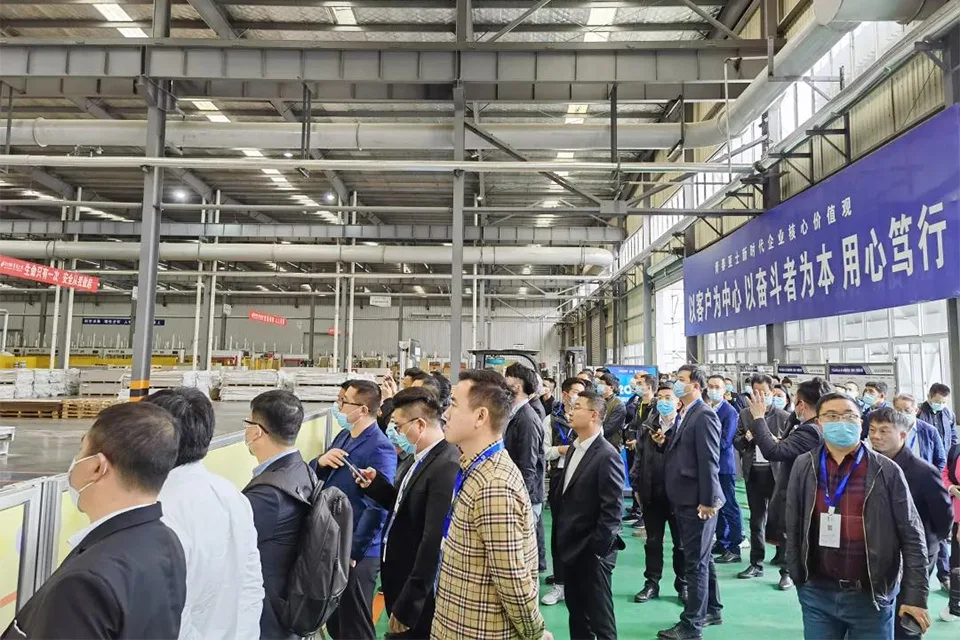
This guide is written for the person inside the company who has been handed the task, usually a chief of staff, an executive assistant, a head of corporate affairs or a programme manager, with a date range, a list of principals and a budget that arrived as a single number.
The single most common cause of a mediocre programme is a late start. Chinese corporate hosts plan on quarters, senior calendars fill months ahead, and visa processing adds weeks that cannot be compressed. Working backwards from the departure date:
Twelve weeks before: define and decide. Objective in one sentence. Delegate list with titles. Sector shortlist. City shortlist. Budget band. Decision on whether to use an operator. Everything downstream depends on these six decisions, and they belong to the client, not the operator.
Ten weeks before: longlist and requests. Operator produces twelve to twenty candidate hosts with a note on realistic access. Client cuts to six to ten. Formal meeting requests begin going out for tier three and tier four access.
Eight weeks before: visa initiation. Invitation letters issued, visa applications lodged. Chinese business visas require programme documentation and, for some categories, an invitation from a Chinese host organisation. This is not a two-week process and should never be left to the final month.
Six weeks before: confirmations and alternates. Roughly 60 to 70 per cent of requests have resolved by now. Substitutions are made from the alternates list. Travel bookings are locked, including internal rail and flights, because popular business-class rail seats on trunk routes do sell out.
Four weeks before: operating plan. Minute-by-minute run sheet drafted. Interpretation booked and briefed with a glossary. Meeting rooms and equipment confirmed. Delegation profiles circulated to hosts.
Two weeks before: briefing pack and logistics. Pre-reading issued to delegates. Hotel and transfer confirmations issued. Emergency contact protocol agreed. Optional add-ons, such as a trade fair ticket or a cultural programme, confirmed.
One week before: final reconfirmation. Every host reconfirmed in writing. Any last-minute changes handled. Cash and payment arrangements settled, because some vendors will not accept foreign corporate cards on the day.
On the ground: coordination. A bilingual coordinator travels with the delegation and manages the schedule in real time, which is where most value is created, because something always moves.
China business visas are administered through the embassy or consulate covering the applicant's location, and requirements vary by nationality and by category. Three practical points are worth knowing.
Invitation letters matter more than applicants expect. Most business visa applications require an invitation from a Chinese host entity, with the host's details, the purpose of the visit and the dates. When a delegation visits multiple companies, the letter usually comes from one coordinating host, and the programme documentation supports it. We arrange this as part of the programme, but it must be done before applications are lodged.
The stated purpose must match the programme. A letter describing cultural exchange, when the actual programme is eight corporate meetings, creates a discrepancy that can cause a refusal or a problem at the border. Documentation should describe what the delegation is actually doing.
Nationality affects timelines. Some nationalities require additional documentation and longer processing. We build a nationality matrix at the brief stage and adjust the timeline accordingly, because a delegation with mixed nationalities should not assume the slowest applicant will be ready when the fastest one is.
Delegates remain responsible for their own applications, and we do not provide immigration advice. What we provide is the documentation, and the timeline that makes the documentation useful.
Getting into a room with a vice president at a large Chinese company is a process, and treating it as an email produces silence.
What a good request contains:
Requests submitted through a chamber of commerce, an industry association, an investment promotion agency or an existing investor introduction have materially higher hit rates than cold approaches, and it is worth spending a week to find an introduction path before sending a cold request.
Response times vary from three days to three weeks. We follow up on a fixed cadence, and we tell clients which hosts have acknowledged, which have declined and which are silent, rather than reporting only at the end.
A delegation budget in China has six lines, and clients who understand the proportions negotiate better.
Meetings and access. Operator fees for shortlist development, request management, agenda writing and on-site coordination. Usually the smallest line and the one that creates most of the value.
Accommodation. Five-star business hotels in Beijing, Shanghai and Shenzhen run from roughly USD 150 to 350 per room per night depending on season and location. A well-briefed operator can often achieve corporate rates.
Transport. Airport transfers, dedicated coaches with a driver on standby, high-speed rail between cities, internal flights. Coach hire with a standby driver for a week is a fixed cost whether or not the coach moves, which surprises first-time organisers.
Interpretation and facilitation. Consecutive interpretation runs on a day rate, simultaneous equipment costs more but accelerates technical sessions substantially. A dedicated coordinator travelling with the delegation is a separate line and worth it.
Food and hospitality. Business dinners, host gifts, the reception you may host in return. Chinese host etiquette expects reciprocity where a host has entertained the delegation, so budget for it rather than being surprised.
Contingency. Ten to fifteen per cent. Something always requires a change: a host reschedules, a flight moves, a delegate needs a doctor.
Where budget is tight, the correct response is to reduce cities, not to reduce interpretation or coordination. A delegation that cannot understand the technical discussion has paid for hotels and received nothing.
Generalist interpreters are excellent for logistics and poor for technical sessions. A conversation about battery cell chemistry, domain controllers, foundation model fine-tuning or customs classification needs an interpreter who knows the vocabulary, otherwise the delegation spends its meeting listening to approximate descriptions of things it already understands.
Three practical provisions:
Assign sector-familiar interpreters wherever the agenda is technical, and send them the pre-reading and a glossary two weeks ahead.
Use simultaneous mode for sessions above ninety minutes with more than six participants, because consecutive interpretation roughly doubles the time a discussion takes.
Have a facilitator in the room whose job is to keep the agenda on track, ensure the host's quieter technical expert gets asked questions, and close the session with agreed follow-ups. In Chinese corporate meetings, the most senior host often speaks most, and the person with the actual operational answer may otherwise never be asked.
Three items that should be settled before departure rather than improvised.
Insurance. Every delegate needs medical and evacuation cover. We provide a written protocol for medical incidents, including the nearest international clinic for each city on the route, and a twenty-four-hour contact.
Data and devices. Delegates should assume that business travel involves device risk anywhere in the world. Standard hygiene applies: travel devices, no unencrypted sensitive files, clean before you go. Where hosts share confidential material, we handle it under NDA and we advise delegates on what not to photograph or transmit.
Site safety. Factory visits involve moving equipment. Hosts provide guidance and, where required, PPE. Delegations should follow it, and should not treat a production floor as a photo opportunity.
Programmes fail when responsibilities blur. A clean division:
Client owns: the objective, the delegate list, the budget, approval of the shortlist, internal communications, visa applications, and decisions on any commercial follow-up.
Operator owns: shortlist development, meeting requests and follow-up, agenda drafting, host liaison, transport and accommodation bookings, interpretation, on-site coordination, note-taking and the synthesis report.
Joint: agenda content, cultural programme scope, any NDA arrangements, and the post-programme follow-up list.
Write this into the contract. Ambiguity about who reconfirms a meeting at seven days out is the most common source of a missed appointment.
How far ahead should we start organising?
Twelve weeks for a comfortable programme with executive-level access. Eight weeks is feasible. Six weeks is possible with reduced access. Four weeks or less usually means a well-run orientation tour rather than a delegation with closed-door sessions.
Do we need a Chinese partner company, or can we do this ourselves?
Large companies with an existing China office can and do run their own programmes. Everyone else benefits from a local operator, because meeting requests, host liaison, invitation letters, on-site coordination and technical interpretation are all local-workflow skills.
How many people should be in a delegation?
Eight to fifteen is the sweet spot for access and discussion quality. Above twenty, we recommend parallel tracks for part of the day. Below six, some hosts decline on the grounds that the delegation is too small to justify executive time.
Can we add a cultural programme?
Yes, and we recommend two to four hours across a week, placed after the heaviest business day. Some delegations want more; some want none. Both are accommodated.
What currency and payment terms apply?
Contracts are typically denominated in USD or EUR with a deposit and a balance before arrival. Local vendors in China are increasingly card-friendly but not uniformly, so we handle on-the-ground payments and invoice in one currency.
Do you provide a Chinese-speaking escort throughout?
Yes. A bilingual coordinator travels with the delegation for the full programme, in addition to interpreters for specific sessions.
Organising a corporate delegation tour to China is unforgiving of late decisions, because access is a function of lead time and nothing else. Decide the objective, the people and the budget early, engage a local operator who can open doors rather than merely book hotels, and hold the schedule to a realistic number of visits.
PandaStudyTour plans and operates corporate delegation programmes end to end: shortlists with alternates, formal meeting requests, visa documentation, bilingual coordination, technical interpretation, note-taking and a written synthesis. Send us your dates and delegate list, and we will return a timeline you can actually execute against.
