A multi-city programme is the most attractive shape in student travel and the most common cause of a disappointing trip. Two cities produce depth; five cities produce a sequence of hotel lobbies, luggage, transfers and fatigue. The difference between a well-designed multi-city camp and a badly designed one is rarely the destinations chosen - it is the logic of the sequence, the realism of the transfers, and whether the itinerary has a thread that connects one place to the next.
This article sets out how to design a multi-city China summer study camp for student groups: how many cities to include, how to sequence them, how to handle the logistics that consume student energy, how to maintain an academic thread across locations, and how to keep a group safe while moving.
The single most useful rule: in a two-week programme, use three cities maximum. In ten days, two.
The reason is arithmetic. Every city move consumes a half day at minimum and often a full day once packing, checkout, transfer, station or airport, arrival, transfer and check-in are counted. A five-city fourteen-day programme therefore contains five days of transport, leaving nine days of content spread across five places. A three-city fourteen-day programme contains three days of transport, leaving eleven days of content across three places — and the depth of each visit roughly doubles.
Parents and schools frequently request more cities because the marginal cost appears low and the appeal appears high. It is worth explaining the arithmetic directly. Groups that have done both consistently prefer the shorter list.
Cities should be chosen for what each contributes in relation to the others, not for their individual fame.
The strongest pairing places a heritage-dense inland city against a modern coastal one. Beijing and Shanghai; or Xi'an and Shanghai. The contrast makes both legible.
The second strongest places a capital of national narrative against a city of regional culture - Beijing and Chengdu, for example.
The academic arc requires a thread: a discipline followed across settings. Environmental science across a megacity, a mountain region and a conservation site. Urbanism across a planned imperial capital, a colonial-era treaty port and a contemporary innovation district. Technology across research, manufacture and application.
The gradual transition works well for younger groups: start in the most structured, most easily navigated environment and move toward more demanding settings as confidence builds.
The geographic sanity check matters: Beijing to Xi'an is four and a half hours by high-speed rail and entirely practical. Beijing to Chengdu is a long flight. Urumqi to anywhere is a very long flight. Routes should be drawn on a map before being written into a schedule.
For student groups, China's high-speed rail network is the ideal transport mode. It is punctual, safe, comfortable, and stations are well organised. Practical guidance:
Book in advance for groups; seats sell out on popular routes in summer. Second class is entirely adequate for students and considerably cheaper; first class suits accompanying staff. Allow an hour at major stations before departure. Assign seating in pairs and brief students on station protocol - moving as a group, meeting points, what to do if separated.
Luggage is the main friction. Students should travel with one wheeled case and one small backpack, no more. On multi-city routes with several transfers, consider a luggage service for one leg rather than hauling everything through a station.
Overnight trains should be avoided for student groups; the sleep loss outweighs any savings.
Rhythm beats intensity. A pattern that works:
Arrival day. Light. Orientation walk, settling in, early dinner, group briefing. No major site visits.
Full day one. The main learning block in the morning, a lighter cultural or free component in the afternoon.
Full day two. Fieldwork or a workshop sequence, with structured peer interaction.
Departure day. Morning activity near the hotel, then transfer.
Two full days in a city is the minimum for the visit to register. Three is better.
A multi-city camp becomes a study programme rather than a tour when a single question is pursued across all the cities.
Practical designs:
Comparative urbanism. How does each city manage transport, water, housing, public space? Students collect comparable observations in each location and synthesise at the end.
Heritage and modernity. How does each city present its own history, and to whom? Museum curation, reconstruction policy, tourism marketing.
Environment and industry. How does each location balance growth and environmental cost? Site visits plus policy discussion.
Food systems. What does each city eat, why, and how has that changed? Market visits, cooking sessions, comparative analysis.
The thread should be visible in the schedule: a short nightly reflection session where students record comparable observations in a structured journal. That journal becomes the raw material for the final presentation.
Movement creates risk. Practical controls:
Manifest discipline. A printed and digital manifest with every student's name, passport details, medical notes, allergies and emergency contact, held by every staff member and by local coordinators.
Rooming lists and head counts. Fixed rooming groups, named leaders, and head counts at every departure and arrival.
Meeting points. Every student knows the hotel address in Chinese characters, a staff phone number, and the rule for what to do if separated.
Communication. A group messaging channel, plus a designated staff member on call through the night.
Briefings before each transfer. Ten minutes explaining the journey, the station, the timing and the behaviour expectations.
Contingency. One full day of slack in any programme longer than ten days, for weather, illness or transport disruption. Programmes without slack break the first time something goes wrong.
The cost drivers for a multi-city programme are, in order: internal transport, accommodation nights, arranged access experiences, and staff ratios. Adding a fourth city adds transport days, hotel nights and staffing complexity — usually a 10 to 15 per cent increase in total cost for a decrease in programme depth. That trade-off should be presented explicitly rather than hidden in a package price.
Days 1–4: Beijing. Orientation, imperial core and national narrative, Great Wall study day, university or research institute session, hutong fieldwork.
Day 5: Transfer. High-speed rail to Xi'an, arrival and light evening.
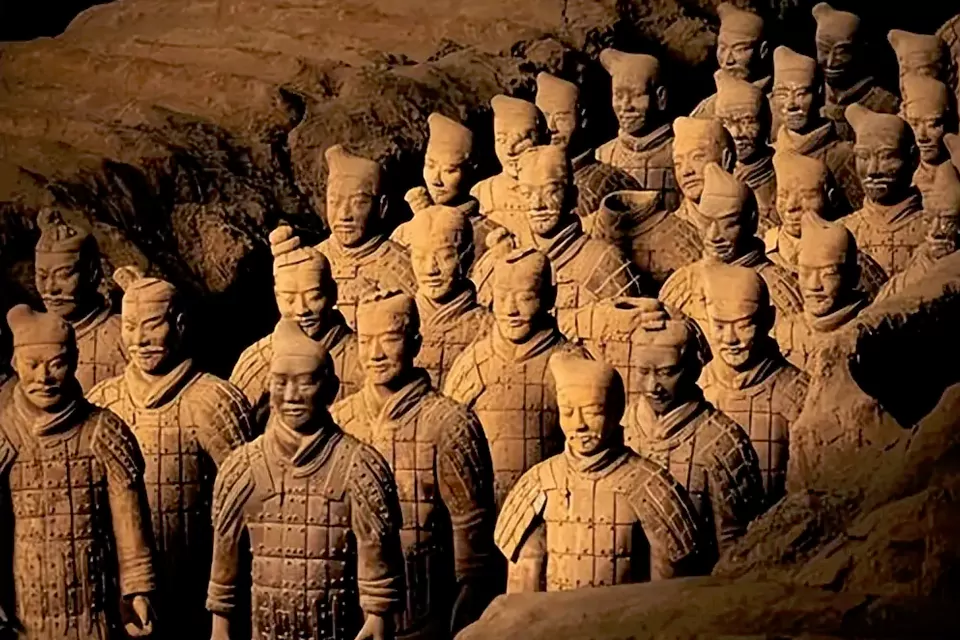
Days 6–9: Xi'an. Terracotta Army with structured study, city wall and urban form, Silk Road heritage and museum work, craft or calligraphy workshop, optional advanced manufacturing visit.
Day 10: Transfer. Flight to Shanghai, arrival and orientation.
Days 11–13: Shanghai. Urban design and waterfront study, museum session, technology or enterprise visit, comparative workshop drawing the three cities together.
Day 14: Presentation and departure. Final group presentations, certificate ceremony, transfer.
That structure contains three transfers and eleven days of content. Substituting Chengdu for Xi'an produces a science and conservation emphasis; substituting Hangzhou for Shanghai produces a slower, more aesthetic programme.
What is the minimum group size for a multi-city programme?
Around ten students. Below that, transport and staffing costs per head rise sharply.
Can we include a rural or secondary destination?
Yes, and it usually improves the programme. A village stay, a mountain area or a smaller historic town adds a dimension that major cities cannot supply.
How much walking is involved?
Six to ten kilometres daily on most itineraries, more on fieldwork days. Adjustable with vehicle support.
Is it better to travel with the school's own teachers?
Yes. Local staff handle logistics, language and venue liaison; the school's teachers carry safeguarding and pastoral responsibility.
A multi-city camp succeeds when the route is designed as an argument rather than a list. Fewer cities, chosen for contrast, joined by a single thread, sequenced to build confidence, moved along by rail, and paced so that students have energy left to think — that is what produces a programme students can describe coherently a year later.
PandaStudyTour designs multi-city student programmes on exactly these principles, with realistic transfer accounting, documented supervision and a synthesis requirement at the end. Explore further programme shapes in the China Summer Camp Insights hub, or send us your dates and group profile for a structural proposal.
