Every year, in early summer, the rivers of China erupt. Drums thunder across the water, brightly painted boats slice through the current in perfect rhythm, and the air fills with the smell of bamboo leaves, glutinous rice and fresh herbs. This is the Dragon Boat Festival - known in Chinese as Duanwu Jie (端午节) - one of China's most dramatic, colourful and delicious traditional festivals.
For travellers, the Dragon Boat Festival is one of the best windows into Chinese culture: it is loud enough to be thrilling, old enough to be mysterious, and delicious enough to be unforgettable. Here is everything you need to know, and how PandaStudyTour can put you in the middle of it.
The Dragon Boat Festival falls on the fifth day of the fifth month of the Chinese lunar calendar - usually late May or June in the Western calendar. In 2026, it falls on 19 June (lunar calendar 五月初五).
It is one of China's four major traditional festivals, alongside the Spring Festival (Chinese New Year), Qingming (Tomb-Sweeping) Festival and Mid-Autumn Festival. Unlike those quieter holidays, Duanwu is a festival of movement: racing, drumming, splashing water and the satisfying tug of a bamboo leaf as you untie your first zongzi.
Every festival in China carries a story, and the Dragon Boat Festival's is one of the most poignant in Chinese history.
More than 2,300 years ago, during the Warring States period, a brilliant poet and loyal minister named Qu Yuan (屈原) served the state of Chu. When his advice was ignored and his beloved kingdom began to collapse, he wrote some of the greatest poetry in Chinese literature — works like Li Sao (The Lament) - and then, heartbroken, drowned himself in the Miluo River in what is now Hunan Province.
According to legend, the local people rushed out in their boats to try to save him, beating drums and throwing rice wrapped in bamboo leaves into the water so the fish would not eat his body. That desperate rescue became the dragon boat race; those rice parcels became the zongzi we still eat today.
Whether the story is entirely historical or partly legend, it gave China a festival of loyalty, remembrance and community - and it gives travellers a moving story to carry with them as they watch the boats fly down the river.
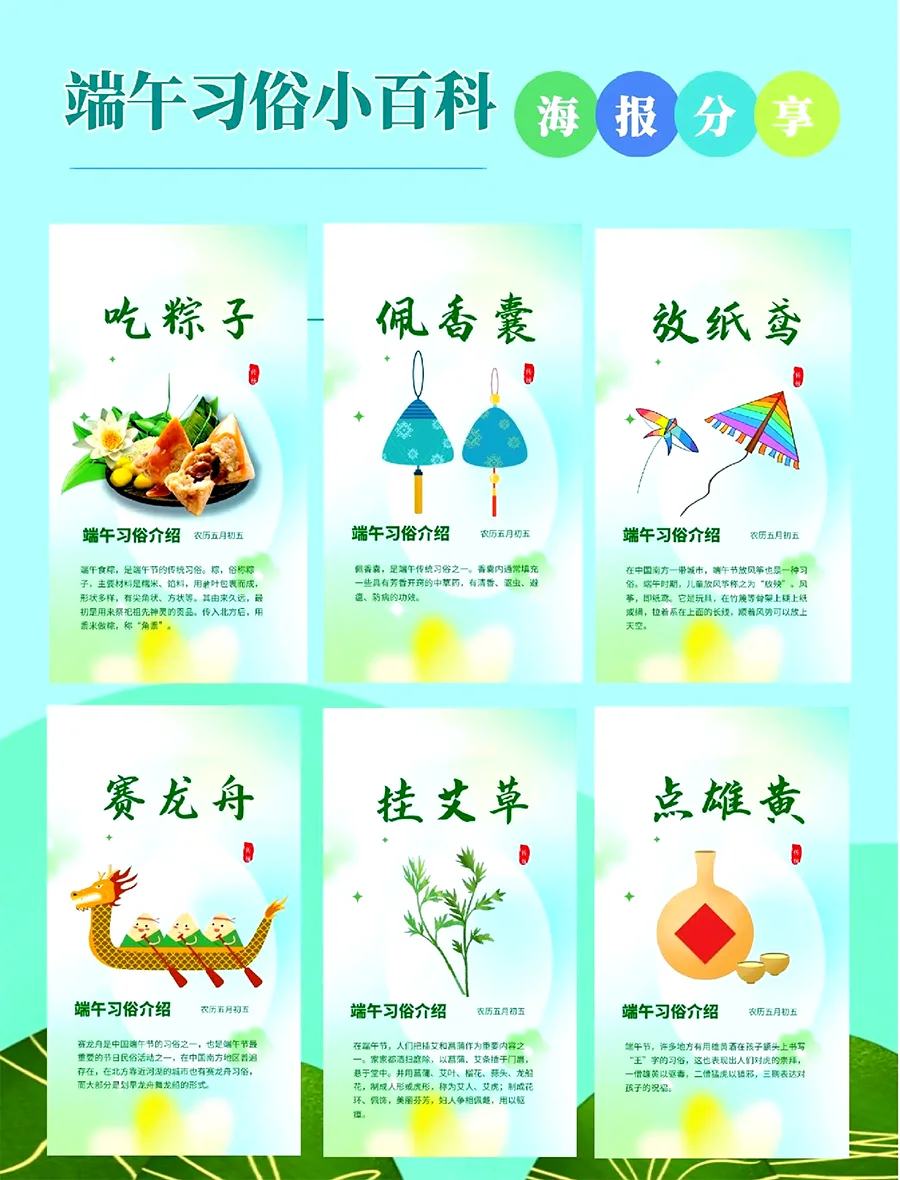
The centrepiece of the festival is the dragon boat race (赛龙舟). A dragon boat is a long, narrow vessel - usually 20 to 80 paddlers plus a drummer and a steersman - carved with a dragon's head at the bow and a tail at the stern. Teams paddle in near-perfect unison to the beat of the drum, often decorated in bright reds, golds and greens, and the boats can reach astonishing speeds.
Where to see the best races:
You cannot experience Duanwu without eating zongzi (粽子) - pyramids of glutinous rice wrapped in bamboo or reed leaves and steamed or boiled until fragrant. Every region has its own version:
Making zongzi is a skill: folding the leaf into a cone, packing the rice, and tying it with reed string without a single grain escaping. It looks simple; it is deceptively hard - which makes the workshop version of the experience so satisfying.
Walk through any Chinese town during Duanwu and you will notice the smaller rituals:
Together they form a festival that engages every sense: the sound of drums, the sight of racing boats, the smell of herbs, the taste of zongzi and the feel of silk thread on your wrist.
The festival itself is a one-day event, but the season around it offers the best travel window:
This is also a wonderful time for study groups: the festival compresses art (dragon carving, boat decoration), music (drum patterns), history (Qu Yuan and the Warring States), food culture (zongzi), and folk religion into a single, unforgettable morning.
You can watch the races from the bank - and you should - but the festival is far more memorable when you take part. PandaStudyTour specialises in hands-on, customised China travel and study programmes, and Dragon Boat Festival experiences we design include:
Because every PandaStudyTour itinerary is customised, you can combine the festival with the rest of your China trip - the Terracotta Army in Xi'an, the Great Wall in Beijing, panda research in Chengdu or the karst landscapes of Guilin.
If you want to experience the festival the way it is meant to be experienced - not just watching from the riverbank, but racing, cooking and celebrating alongside local communities - explore our dedicated Dragon Boat Festival Culture Tour. This 8-day itinerary is timed to the 2027 festival (9 June, the 5th day of the 5th lunar month), starting in Beijing's Great Wall and Forbidden City, following the legend to Qu Yuan's Miluo River, watching the Dongting Lake races at Yueyang, sailing through Guilin's karst peaks and finishing with the international races on Guangzhou's Pearl River - with zongzi-making, sachet sewing and dragon boat practice sessions built in along the way. The Dragon Boat Festival is more than a public holiday - it is 2,000 years of Chinese history racing past you on the water, wrapped in bamboo leaves and tied with five-colour silk. Whether you are a solo traveller, a family or a school group, there is a way to experience it that you will remember for decades.
Contact PandaStudyTour to design your custom Dragon Boat Festival itinerary - from watching the thunderous races in Hunan to folding your very first zongzi in a local kitchen. Your place on the riverbank is waiting.
